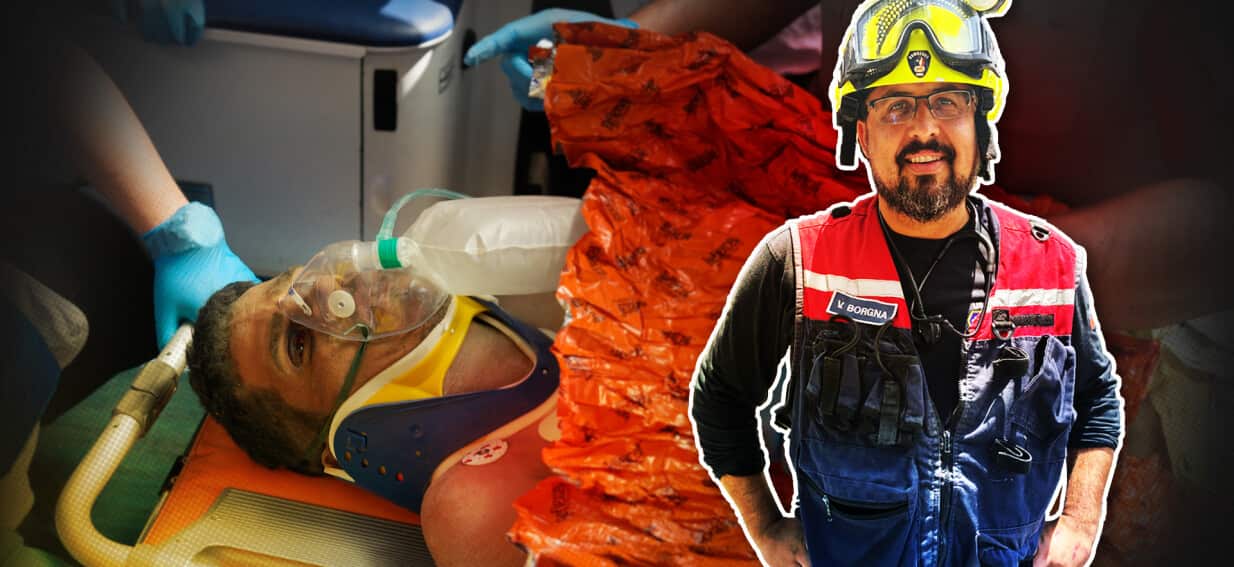
The extrication of Hernan Alberto Gil Flores from the flattened ruins of the Galerias Playa Grande shopping center in La Guaira is undeniably a triumph of human endurance. Trapped nine meters beneath pulverized concrete for eight days following the twin 7.2 and 7.5 magnitude earthquakes that struck northern Venezuela, the 43-year-old security guard survived because his reinforced steel workstation cabin acted as a shield against the cascading debris. It took an international coalition of rescue workers more than 100 hours of continuous tunneling through unstable ruins to drag him out alive.
Yet, as state television cameras broadcast images of government officials embracing the triumph, the singular focus on this "miracle" obscures a far more damning reality. The collapse of a modern, nine-story commercial complex in a known seismic zone is not just a natural disaster. It is a structural crime.
Behind the dramatic footage of international rescue teams celebrating lies a grim backdrop of systematic regulatory failure, severe equipment shortages, and an official emergency response that left families digging through concrete slabs with their bare hands.
Structural Decay in the Coastal Zone
The twin earthquakes that hit on June 24 were shallow, violent, and less than a minute apart. While the sheer energy of back-to-back tremors would test any modern structure, engineering standards are supposed to prevent total pancake collapses of commercial hubs. The Galerias Playa Grande mall was supposed to be a symbol of coastal commercial development in La Guaira, a region previously rebuilt after catastrophic mudslides decades ago.
Instead, it crumpled like cardboard.
Decades of economic isolation and institutional decay have hollowed out Venezuela’s building code enforcement. Independent engineering assessments across northern South America have long warned that structural inspections in coastal towns are frequently bypassed through informal payments or political connections. When building materials face chronic shortages, developers often resort to substandard concrete mixtures and deficient rebar reinforcement.
The security cabin that saved Gil Flores was a factory-fabricated steel unit, not a part of the building's core architectural engineering. The structure built by humans failed entirely, while a generic metal box accidentally provided the vital air pocket.
The Bare Hands Crisis on the Ground
While the international press focused heavily on the high-tech telescopic cameras and specialized seismic listening devices brought by teams from Chile, Costa Rica, and El Salvador, local civilian volunteers faced a vastly different reality. Across La Guaira, the hardest-hit province, thousands of families spent the critical first 72 hours searching for an estimated 38,600 missing people using shovels, pickaxes, and bare fingers.
The state apparatus, which has spent years prioritizing civilian-military-police alignment to maintain public order, proved completely unequipped for heavy industrial rescue operations.
- Equipment Deficits: Rescuers at the mall and nearby collapsed public housing towers repeatedly pointed out the near-total absence of heavy hydraulic cranes and concrete cutters.
- Fuel Bottlenecks: Despite the country sitting on some of the largest oil reserves on the planet, the rescue machinery that was available sat idle for days due to acute diesel shortages in the disaster zone.
- Late Interventions: It took more than a week for the Ministry of Petroleum to coordinate a dedicated fuel shipment from the Paraguana Refining Complex to power the generator units and excavators on site.
Heavily armed soldiers patrolled the main thoroughfares of Catia La Mar, directing traffic and managing media access while civilians blocks away struggled to lift multi-ton concrete slabs crushing residential blocks. The state prioritized containment over capability.
The Geopolitics of a Rescue
The successful extraction of Gil Flores required an extraordinary level of international cooperation that stands in direct opposition to Venezuela's usual foreign policy posture. The urban search and rescue effort was coordinated on the ground by Chilean firefighters, working alongside experts from the United States, Portugal, Mexico, and El Salvador.
This multi-nation presence highlights a crucial operational truth: the domestic disaster response framework was overwhelmed within hours of the first tremor.
The acting government quickly claimed credit for the successful international mobilization on social media, using the moment to project an image of global solidarity and effective crisis management. But the numbers tell a different story. With the official death toll climbing past 2,200 and the United Nations actively procuring 10,000 body bags for the country, one rescued man cannot shield the administration from the consequences of its hollowed-out emergency infrastructure.
True disaster preparedness requires long-term capital investment in local fire departments, decentralized civil protection units, and transparent structural auditing. Relying on the goodwill of foreign governments to fly in specialized equipment after the fact ensures that the survival window for thousands of others will close long before help arrives.
The ruins of La Guaira are still settling, and the stench of decay across the coastal towns indicates that the unofficial missing list remains tragically long. Celebrating a single survivor is necessary for public morale, but treating it as a validation of the current system is an insult to those still buried under the weight of regulatory neglect. Regulatory bodies must immediately enforce mandatory independent structural audits on all remaining commercial and high-density residential buildings along the northern coast, stripping local municipalities of their unchecked oversight powers before the next fault line slips.