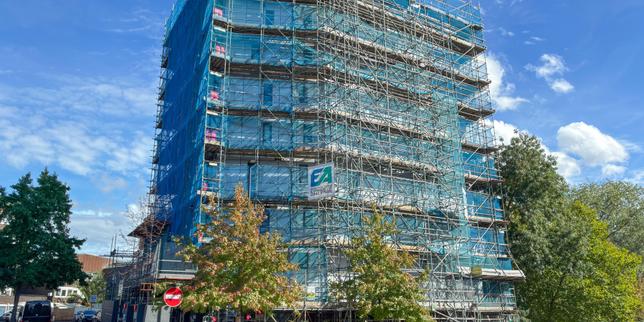
Nine years after the June 2017 Grenfell Tower fire in London killed 72 people, remediation of high-rise residential buildings across Britain remains incomplete, driven by structural bottlenecks in funding allocation, supply chain capacity, and liability enforcement rather than mere administrative inertia. This analysis dissects the mechanics of slow building safety remediation by establishing a four-part diagnostic framework: the Liability-Funding Mismatch, the Capacity-Compliance Bottleneck, the Information Asymmetry Trap, and the Incentive Distortion Loop. We will map the causal chain linking post-disaster policy shifts to delayed physical remediation, examine why standard public progress metrics obscure risk, and outline practical governance adjustments required to accelerate completion.
In standard media reporting on the Grenfell aftermath, delays are routinely framed around political promises, slow bureaucracy, or developer resistance. While those frictions exist, treating them as standalone causes misses the underlying system dynamics. Remediation is an industrial construction and legal settlement problem operating inside a heavily revised regulatory regime. When rules, funding eligibility, and liability boundaries shift mid-stream, projects pause not because actors ignore safety, but because capital and contractors cannot lock in clear risk-adjusted commitments.
The Liability-Funding Mismatch
The foundational friction in British building safety remediation lies in a persistent gap between who holds legal liability for historical construction defects and how public or private capital is mobilized to fix them. In conventional real estate markets, construction risk sits with builders, designers, and product manufacturers, while asset value sits with owners and leaseholders. After Grenfell, investigators and lawmakers uncovered widespread failures across cladding materials, cavity barriers, fire doors, and compartmentation systems that violated or exploited prior building regulations.
Assigning retrospective financial liability proved far more complex than identifying technical non-compliance. Many developers used special-purpose vehicles that no longer held capital, construction firms changed hands or entered insolvency, and product testing regimes faced scrutiny over how materials were certified. To prevent leaseholders from facing catastrophic bills, governments introduced remediation schemes, developer pledges, and building safety levies or taxes.
This creates a structural timing problem. Funding mechanisms often attach conditions—such as cost recovery from original developers, strict eligibility audits, or phased tranche releases—that require extensive verification before work starts or completes. Meanwhile, leaseholders and resident management companies face service charge disputes, building insurance cost pressures, and transaction freezes on affected properties.
Consider a mid-to-high-rise residential block where external wall systems require replacement. Before scaffolding goes up, the responsible entity must confirm scheme eligibility, complete intrusive facade surveys, agree on scope with fire engineers, and verify whether costs will be fronted by public funds, developer commitments, or recoverable claims. Each verification step adds months before physical labor begins.
The Three Pillars of Remediation Friction
- Capital Eligibility Constraints: Public and industry funding pools impose strict rules on building height, defect type, and responsible-party status, leaving edge cases in prolonged legal or administrative limbo.
- Unclear Cost Recovery Paths: Recovering remediation outlays from original contractors or manufacturers involves complex contract law and evidentiary burdens that slow private capital deployment.
- Asset Valuation Paralysis: Unresolved safety status depresses property liquidity and complicates lending, reducing financial flexibility for owners and leaseholders alike.
The Capacity-Compliance Bottleneck
Even when funding is secured and legal responsibilities are clarified, physical remediation runs into a hard operational ceiling: specialized engineering and contracting capacity. Fixing fire safety defects on occupied residential towers is not standard new-build construction. It requires working around residents, managing complex site logistics, and satisfying heightened regulatory sign-offs under the post-Grenfell building safety regime.
Under tighter oversight—including stricter gateway approvals, documented golden-thread building information, and accountable-person duties—compliance demands higher-grade technical documentation and more conservative engineering sign-offs. Fire engineers, facade specialists, chartered surveyors, and competent contractors must inspect existing structures that often lack accurate as-built drawings. Hidden defects discovered mid-project frequently force scope revisions, new design approvals, and re-priced subcontracts.
This turns a simple count of buildings into a queued production line. A government or industry program can announce funding for thousands of blocks, yet physical throughput is governed by how many qualified fire engineers can assess designs and how many specialist teams can execute high-rise facade and internal remediation safely.
Why Standard Progress Metrics Are Broken
Public debates frequently track progress using headline counts of buildings registered, assessed, or undergoing remediation work. Those metrics are structurally incomplete for three reasons.
First, registration or initial assessment does not equal completed risk reduction. A building logged in a tracking system may still await intrusive surveys, design approval, or funding sign-off. Second, headline tallies often privilege high-rise blocks above a specific height threshold, while medium-rise buildings or buildings with non-cladding internal fire defects—such as missing compartmentation or faulty fire doors—can lag behind in visibility and completion data. Third, counting buildings treats a 20-storey tower with complex multi-defect remediation identically to a smaller block with a narrower scope, masking true engineering workload.
A more rigorous operational view separates the pipeline into distinct conversion stages: verified defect identification, funded and approved scope, active physical works, and signed-off completion. Measuring conversion rates between stages exposes where work actually stalls—whether in pre-construction engineering approvals, procurement, or on-site execution.
The Information Asymmetry Trap
Slow remediation is heavily compounded by asymmetric information among residents, freeholders, managing agents, lenders, and regulators. Historically, building owners and managing agents held far more detail about building construction and fire risk assessments than leaseholders, while buyers often lacked transparent, standardized risk data prior to purchase.
After Grenfell, demand for transparency collided with technical uncertainty. Assessing whether a facade or internal fire system meets modern safety expectations requires physical inspection and specialist judgment. Two fire engineers can sometimes reach different conclusions on remediation scope depending on how risk is modeled and which standards are applied.
When information is incomplete or contested, parties default to defensive behavior:
- Insurers price for tail risk: Where fire safety documentation is incomplete or remediation timelines are uncertain, insurers raise premiums or attach strict conditions, increasing operating costs for residents.
- Lenders tighten underwriting criteria: Mortgage providers require clear evidence of fire safety compliance or approved remediation paths before lending on affected flats, stalling sales and remortgages.
- Residents face prolonged uncertainty: Living in a building awaiting assessment or remediation creates financial stress and anxiety over potential future liabilities and disruptive works.
Reducing this asymmetry requires standardized, verifiable building safety records and clear, plain-language status updates tied to concrete milestones rather than vague estimates. Without reliable baseline data, every transaction and approval carries an information penalty.
The Incentive Distortion Loop
A critical cause-and-effect dynamic missed in superficial commentary is how regulatory timelines and liability rules interact with market incentives. When policy introduces strict deadlines, penalty mechanisms, or enforcement powers alongside complex compliance rules, market actors optimize for defensibility rather than speed.
Developers, landlords, and contractors face severe reputational, financial, and legal exposure if they sign off on remediation that later proves insufficient or non-compliant. Consequently, engineering firms adopt conservative specifications, contractors build risk buffers into quotes, and building owners delay committing to irreversible scopes until every regulatory ambiguity is resolved.
Meanwhile, if public funding or enforcement focuses heavily on specific categories of buildings or enforcement waves, resources concentrate where oversight pressure is highest, leaving lower-profile buildings with fewer bidders and longer wait times. What looks on paper like sluggishness is often rational risk avoidance inside a high-stakes compliance environment.
Distinguishing Known Facts from Educated Hypotheses
Separating established realities from analytical interpretation helps clarify where policy fixes can bite:
- Known Facts: The Grenfell Tower fire occurred in June 2017 with 72 fatalities, prompting sweeping statutory and regulatory reforms in England and across the wider UK building safety landscape. Years after the tragedy, remediation across affected residential buildings remains unfinished, with ongoing public scrutiny over pace, cost, and resident protection.
- Educated Hypotheses: Delays are sustained primarily by the interaction of specialist supply constraints, multi-stage regulatory approvals, and liability/funding friction rather than a single villain or simple lack of intent. Furthermore, shifting from aggregate building counts to stage-by-stage pipeline conversion metrics would give policymakers and the public a sharper diagnostic of bottlenecks.
Limitations and Governance Trade-Offs
No regulatory or operational redesign removes all friction from fixing legacy construction defects. Fast-tracking approvals carries a real trade-off: rushing design reviews or material verification risks repeating the exact shortcuts that caused structural fire vulnerabilities in the first place. Strict safety gates exist for a reason, even when they slow project starts.
Similarly, aggressive cost-recovery mandates against developers and supply-chain actors can improve fairness for leaseholders, but prolonged litigation consumes legal time and capital that might otherwise go into physical works. Publicly funded remediation protects residents faster, yet it raises questions about taxpayer burden and moral hazard if historical cost-bearers escape full accountability.
Strategic Play for Accelerating Remediation
To move faster without sacrificing safety rigor, decision-makers should treat building safety remediation as a managed portfolio of engineering bottlenecks rather than a single political promise.
First, publish stage-gated conversion metrics across all major remediation programs—tracking movement from initial assessment to funded scope, active works, and final sign-off—and disaggregate internal fire defects from external cladding so hidden queues are visible. Second, standardize technical scopes and pre-approved procurement frameworks for common remediation archetypes to cut repetitive design reviews and attract specialist contractors into multi-building packages. Third, decouple resident protection and immediate safety works from lengthy cost-recovery litigation, allowing works to proceed on a clear funded schedule while legal teams pursue recoveries in parallel. Nine years after Grenfell, durable speed comes from aligning clear funding, scarce engineering capacity, and verifiable safety sign-off into a single predictable workflow.


