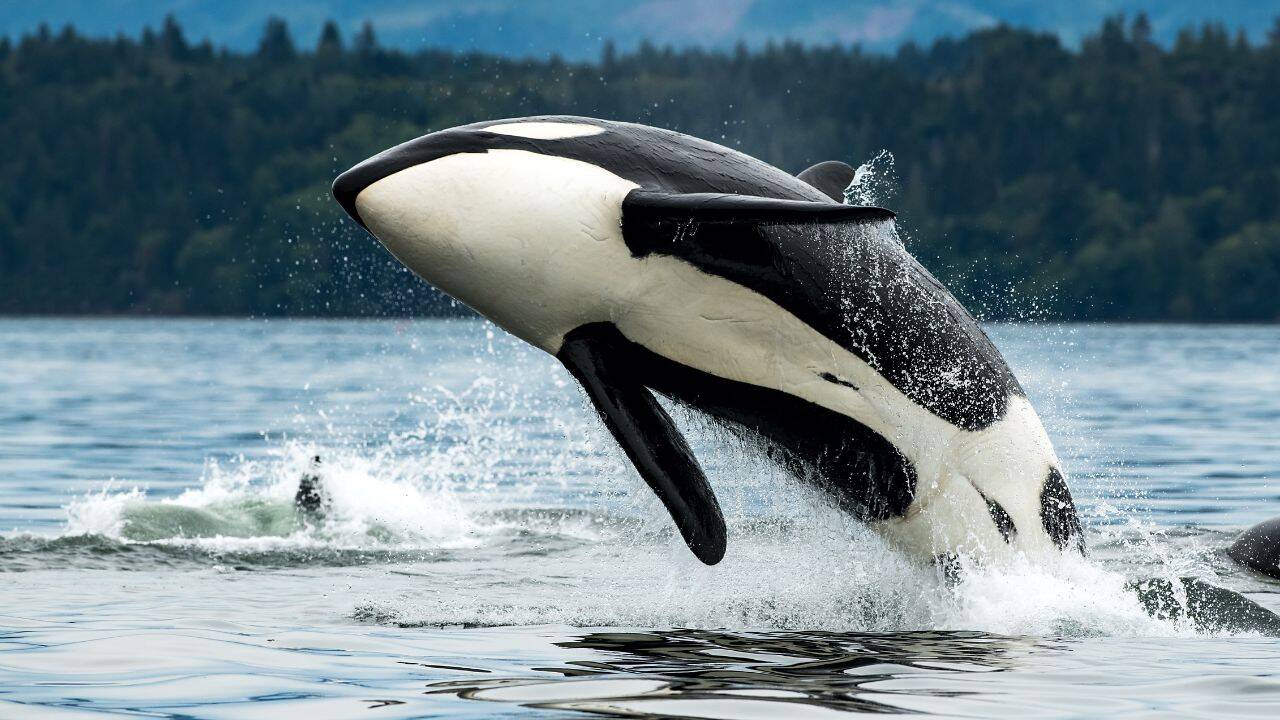
California has officially entered the fight to save the Southern Resident killer whale, granting candidate status under the California Endangered Species Act to a dwindling population of roughly 74 animals. Facing severe malnutrition, chronic vessel noise, and chemical contamination, the Pacific Coast’s most vulnerable marine mammal now receives temporary state-level safeguards while wildlife officials conduct a year-long status review. Yet behind the legal milestones lies a harsher reality: California's regulatory recognition comes decades into a catastrophic population collapse, arriving as an administrative nod to an ocean ecosystem where the whales' primary food supply has already been driven to the brink of collapse.
The Coastline Where Protections Arrive Too Late
The state's action follows a formal petition submitted in late 2025 by the conservation organization Orca Conservancy. In July 2026, the California Fish and Game Commission published findings confirming that adding the Southern Resident killer whale (Orcinus orca) to the state's endangered list may be warranted. That finding triggered candidate status, instantly applying state statutory protections to the animals while the California Department of Fish and Wildlife gathers public data through late 2026.
For marine biologists who have watched these pods for forty years, the announcement carries a heavy dose of irony.
Washington state declared the Southern Residents endangered under its local statutes back in 2004. Oregon followed suit twenty years later, listing the population in 2024. California stands as the last Pacific state to grant legal standing to a community of apex predators that has hunted along its outer coast for millennia.
"State lines mean nothing to a starving pod of killer whales," notes one veteran marine biologist familiar with West Coast salmon runs. "They do not care which state capitol claims them. They follow the fish. And when the fish vanish, the whales die."
The Southern Resident community consists of just three social groups: J, K, and L pods. While public attention often concentrates on their summer range inside the inland Salish Sea of Washington and British Columbia, the K and L pods routinely make winter treks down to the California coast, roaming as far south as Point Sur and Monterey Bay in search of adult Chinook salmon returning to spawn in the Sacramento and San Joaquin river systems.
The math is unforgiving. In 1995, the Southern Resident population peaked at 98 individuals. Today, fewer than 75 remain. More alarming still, the effective breeding population—the number of healthy, reproductive-age adults capable of passing on genetic material—has dropped below 30.
Malnutrition by Design and the Salmon Collapse
To understand why the Southern Residents are disappearing, one must abandon the popular image of the killer whale as an opportunistic hunter willing to consume anything in the water. Transient orcas, also known as Bigg's killer whales, hunt mammals like seals, sea lions, and harbor porpoises. Their populations are booming along the Pacific Rim.
Southern Residents are specialists. Over 80 percent of their diet consists of a single species: Chinook salmon (Oncorhynchus tshawytscha).
Chinook are the largest, fattest, most calorie-dense salmon in the Pacific. A single mature Chinook can deliver tens of thousands of calories in rich fats. But human engineering of Western waterways has decimated historic salmon runs. Hydroelectric dams have blocked thousands of miles of spawning habitat along the Snake, Columbia, and Sacramento rivers. Agricultural diversions drain freshwater from river systems, heating the remaining water to temperatures that kill migrating salmon before they can spawn.
+-----------------------------------------------------------------------------------+
|                  SOUTHERN RESIDENT ORCA POPULATION TRACKING                       |
+----------------------+--------------------+---------------------------------------+
| Metric / Timeline    | Status             | Impact on Population                  |
+----------------------+--------------------+---------------------------------------+
| Historical Population| ~140 animals       | Pre-industrial baseline |
| 1995 Peak Count      | 98 animals         | Post-capture recovery high |
| Current Population   | ~74 animals        | Critical endangerment |
| Effective Breeders   | Fewer than 30      | Severe genetic bottleneck |
| Pregnancy Failure    | ~69% failure rate  | Nutritional starvation |
+----------------------+--------------------+---------------------------------------+
When Chinook salmon populations drop, orca health collapses immediately. Research measuring hormone levels in target pods reveals that approximately 69 percent of all Southern Resident pregnancies fail due to nutritional deprivation. Mothers simply cannot find enough calories to carry calves to full term or produce sufficient milk to nourish newborns.
California's decision to list the species brings attention to the state's internal water management controversies. The Sacramento-San Joaquin River Delta, once a powerhouse producer of winter-run and spring-run Chinook, has seen its fish stocks plummet due to massive water exports sent south to agricultural industrial zones. When California water policy starves northern river beds, it starves the ocean ecosystem outside San Francisco Bay.
Acoustic Blindness and Toxic Bioaccumulation
Malnutrition does not work in isolation. It operates alongside two secondary human-made stressors that amplify its lethal impact: acoustic interference and chemical toxicity.
Orcas do not rely on eyesight to find prey in the murky ocean depths. They use echolocation, emitting rapid series of high-frequency sound clicks that bounce off the swim bladders of target fish, allowing the whales to construct an precise acoustic map of their underwater environment.
Commercial container ships, whale-watching motorboats, and industrial vessel traffic fill the ocean with low-frequency rumble and high-frequency propeller whine. This underwater noise effectively blinds the whales acoustically. When ambient underwater noise reaches high levels, orcas must forage harder, expend more energy, and call louder to communicate with pod members. In a low-prey environment, every extra calorie burned searching for scarce fish brings the animal closer to emaciation.
Concurrently, decades of industrial discharge have turned the Pacific marine food chain into a toxic cocktail. Synthetic compounds like polychlorinated biphenyls (PCBs) and flame retardants accumulate in marine life. Because killer whales sit at the absolute apex of the marine food chain, they absorb these persistent organic pollutants from every fish they eat.
The toxic chemicals do not sit harmlessly in the body. They bond to fat molecules in the whale's thick layer of blubber.
When an orca is well-fed, those toxins remain trapped in the blubber tissue. But when an orca starves due to a lack of Chinook salmon, its body metabolizes the fat blubber for energy. That process mobilizes toxic chemicals directly into the bloodstream, circulating poison through the animal's immune system, liver, and reproductive organs. The result is a deadly cascade: starvation releases toxins, toxins weaken the immune system, and a compromised immune system makes the animal susceptible to deadly infections.
The Federal Jurisdictional War
While California moving toward CESA candidate status offers symbolic weight, it exposes a sticky legal tangle over state versus federal jurisdiction.
Under federal law, the National Oceanic and Atmospheric Administration (NOAA) holds primary jurisdiction over marine mammals under the Marine Mammal Protection Act (MMPA) and the federal Endangered Species Act. The federal government has not formally delegated conservation authority for Southern Resident orcas to California state agencies.
This jurisdictional gap creates friction. While California can enforce state-level environmental quality acts, restrict state-regulated fisheries, and penalize local vessel operators who harass marine life, state regulations cannot directly overrule federal fishery management plans or dictate international maritime shipping lanes.
                     +---------------------------------------+
                     |  SOUTHERN RESIDENT ORCA STRESSORS     |
                     +---------------------------------------+
                                         |
         +-------------------------------+-------------------------------+
         |                               |                               |
         v                               v                               v
+-----------------+             +-----------------+             +-----------------+
| SALMON DEPLETION|             | ACOUSTIC NOISE  |             | TOXIC CONTAM.   |
| Dam blockages   |             | Ship engines    |             | PCBs & PBDEs    |
| Water diversions|             | Echolocation    |             | Blubber storage |
| Overfishing     |             | masking         |             | Metabolic poison|
+-----------------+             +-----------------+             +-----------------+
         |                               |                               |
         +-------------------------------+-------------------------------+
                                         |
                                         v
                     +---------------------------------------+
                     |  2/3 PREGNANCY LOSS & COLLAPSE        |
                     +---------------------------------------+
This dynamic was fully displayed in recent federal court battles over commercial salmon fishing off Southeast Alaska. Conservation groups sued NOAA, demonstrating that commercial troll fisheries in Alaskan waters were intercepting migrating Chinook salmon destined for southern rivers, effectively stripping prey out of the water before it reached Southern Resident hunting grounds.
A federal judge initially ordered an end to the Alaskan commercial harvest to protect the whales. But federal appellate courts and agency updates stepped in to keep the commercial fleet operating, prioritizing short-term fishery profits over the dietary requirements of an endangered species.
Paperwork Will Not Restore the Pacific Ocean
A state endangered species listing is a tool, not a fix. It creates administrative obligations, requires state agencies to evaluate state-permitted project impacts, and gives conservationists a bigger stick in state courtrooms. But a legal classification cannot magically spawn millions of mature Chinook salmon in heavily dammed rivers.
If California intends for its state listing to be more than a press release, it requires aggressive state action that targets the root causes of the species' decline:
- Breaching lower dams and restoring river flows: Flow rates in the Sacramento and San Joaquin river deltas must be managed to prioritize wild salmon survival over high-volume agricultural export pumping.
- Enforcing mandatory noise buffer zones: California can establish strict speed limits and distance buffers for non-essential commercial and recreational vessels operating near known winter foraging corridors off the coast.
- Reforming coastal salmon harvest limits: State fishery management must mandate that prey quotas account for the baseline caloric needs of apex marine predators before commercial allocations are set.
- Cleaning up legacy pollutants: Accelerating water board standards for stormwater runoff and agricultural drainage to reduce the inflow of synthetic toxics into coastal estuaries.
The Southern Resident killer whale population is down to its final generation of reproductive females. Without drastic intervention to restore wild salmon runs along the entire Pacific Coast, state listings in Washington, Oregon, and California will serve only as an itemized court record of an extinction event that public officials saw coming for fifty years and failed to stop.