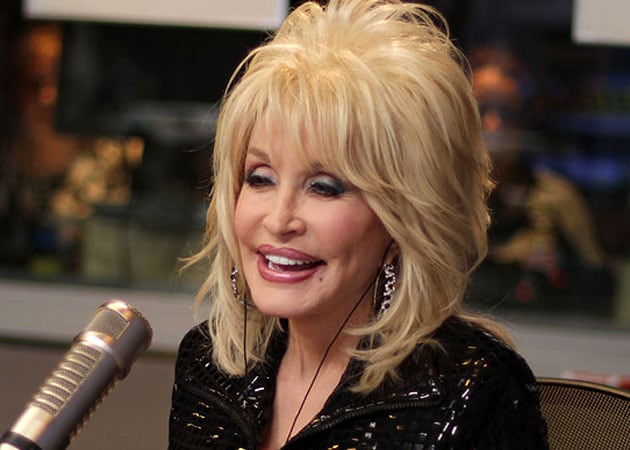
Every profile written about Dolly Parton relies on the exact same tired script. The dirt floor. The one-room cabin. The coat of many colors stitched together by a loving mother amidst grinding Appalachian poverty. It is the mandatory mythology of country music journalism, repeated ad nauseam to make a multi-hundred-million-dollar global enterprise digestible to fans who want a comforting fairy tale.
We love the narrative because it makes success look like a fairy godmother granted a wish to a barefoot kid on a Tennessee front porch. But it completely erases the cold, calculated business brilliance that actually built her empire.
Dolly Parton did not survive the music industry by being a wide-eyed Appalachian songbird plucked from the hollers. She survived because she out-negotiated every suit on Music Row while they were too busy patronizing her to notice she owned the copyright to her own catalog.
The Dangerous Trap of the Humble Origin Myth
The standard media profile frames Parton as an accidental icon. The narrative goes that her raw talent blew open doors that were slammed shut against women in the 1960s and 1970s.
This is lazy history.
Talent is cheap in Nashville. Every bar on Lower Broadway is overflowing with singers who can out-vocal half the country music Hall of Fame. If talent were the primary currency of longevity, a thousand better pure vocalists would be billionaires. Parton did not conquer Nashville through sheer vocal power alone. She conquered it by recognizing early that the romanticized poverty of her childhood was a marketing asset she could control, weaponize, and eventually transcend.
Let us look at the numbers people ignore. When Parton broke away from Porter Wagoner's television show in 1974—a messy, highly publicized legal and professional battle that would have broken a lesser artist—she did not retreat to write sad acoustic tunes about the hills. She wrote "I Will Always Love You" as a clean business severance. She turned down Wagoner’s buyout offers, kept her publishing rights, and watched Elvis Presley's camp try to bully her out of half the publishing for a cover. She said no to Elvis. Think about the astronomical weight of that refusal in 1974. Most artists would have folded instantly under the pressure of the King's management. Parton smiled, kept her asset, and waited twenty years for Whitney Houston to turn that exact publishing share into an ocean of generational wealth.
That is not rustic charm. That is ruthless venture capitalism disguised in rhinestones.
The Weaponized Persona
The most brilliant trick Parton ever pulled was convincing the world that her exaggerated physical aesthetic was a joke she was telling on herself.
"It costs a lot of money to look this cheap," she famously joked. Critics and casual fans laugh, quote the line, and move on. They assume she is self-deprecating, perhaps a bit insecure about her rural roots, leaning into camp to keep people comfortable.
The reality is the exact opposite.
By locking herself into a hyper-stylized, cartoonish caricature of femininity, Parton created an impenetrable corporate moat. When you present yourself as a walking Barbie doll, patriarchal media executives make dangerous assumptions about your intellect. They stop looking for the board room strategist. They assume the rhinestone-encrusted wig is the entire operation.
Meanwhile, Parton was quietly acquiring theme parks, building production companies, buying up real estate, and retaining absolute ownership of her master recordings. Dollywood did not happen by accident. It is the anchor of Pigeon Forge's entire tourism economy, and Parton owns a controlling stake through Herschend Family Entertainment.
Imagine a scenario where a male executive wore flashing lights, high heels, and theatrical makeup to every business meeting while quietly executing a hostile takeover of regional tourism and media rights. Wall Street would call him a cutthroat genius. Because Parton does it with a southern drawl and a giggle, historians file her under "wholesome folk hero."
It is a masterclass in misdirection. She let them underestimate her persona while she quietly bought the building they were standing in.
The Catalog Wars and Real Independence
Look at the modern music industry. Every week, legacy artists are panic-selling their publishing catalogs to private equity firms and hedge funds for lump sums, cashing out their life's work because managing rights in the streaming era is too complex. Bob Dylan, Bruce Springsteen, Neil Young—all of them have traded their crown jewels for liquid cash.
Not Dolly.
While aging rock stars hand over their legacies to Wall Street portfolios, Parton retains her independent publishing empire through Velvet Apple Music and Jolly Dolly Music. She understands a fundamental economic truth that contemporary artists ignore: rights are permanent, but cash is transient. When you sell your catalog, you are renting your own history back from an investment fund.
Her refusal to play the modern catalog-liquidation game is proof that her financial instincts remain sharper than any advisor on Madison Avenue. She didn't build her fortune by chasing trends or cashing out when the market peaked. She built it by treating her creative output like real estate in a booming market—you never sell the land, you just keep collecting the rent.
The Cost of the Icon
To maintain this level of control, Parton had to make brutal personal compromises that the hagiographies conveniently omit.
Her marriage to Carl Dean is a masterclass in boundary management. By keeping her husband entirely out of the public eye for six decades, she created a mythical private life that shielded her from the brutal tabloid scrutiny that destroys female celebrities. Critics often paint her personal life as eccentric or mysterious. It is not mysterious; it is a meticulously enforced corporate firewall. She understood that if the public ever got clear access to her actual domestic reality, the mystique—and by extension, the brand value—would deflate.
Every second of Dolly Parton's public existence is filtered through an uncompromising lens of brand preservation. Even her philanthropy, through the Imagination Library, is structured with industrial efficiency. It is not random charity work; it is a streamlined, scalable global logistics operation that delivers millions of books to children every month with zero government bureaucracy slowing it down.
When people ask why there will never be another Dolly Parton, they usually point to her voice or her songwriting. They are looking in the wrong place entirely.
There will never be another Dolly Parton because modern artists are terrified of total independence. They want the safety net of major labels, streaming distribution deals, and corporate partnerships. They want validation from the very gatekeepers Parton learned to bypass fifty years ago.
Stop looking at the rhinestones. Stop romanticizing the cabin. Look at the balance sheet. That is where the real icon lives.