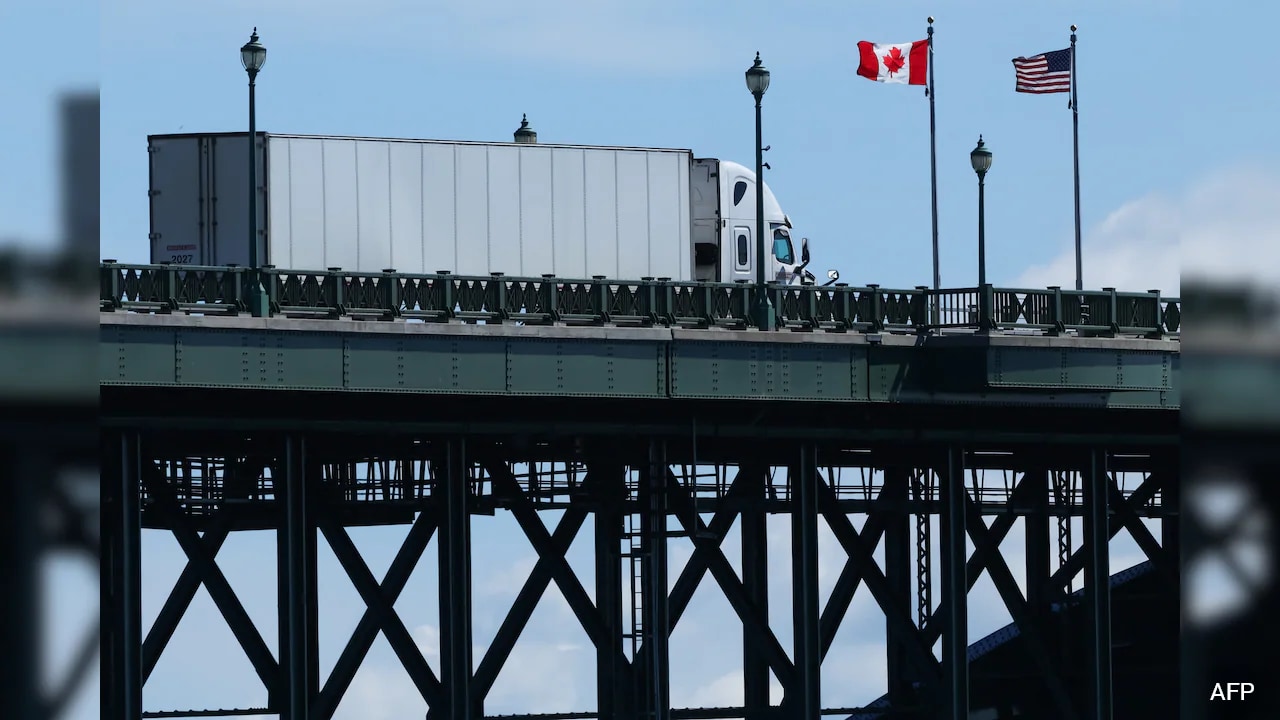
Trade negotiations between Washington and Ottawa just blew up at the eleventh hour. Prime Minister Mark Carney pulled Canadian negotiators out of Washington just as a deal seemed within reach. Why? Because the United States drew a hard line on vehicle classifications, refusing to grant tariff relief for medium and heavy trucks.
When a multi-billion-dollar trade agreement collapses overnight, people want to know what actually happened behind closed doors. You are looking at a complete breakdown of cross-border relations driven by stubborn industrial policies, sudden shifts in Washington's terms, and Ottawa's refusal to accept an incomplete economic compromise.
The Truck Tariff Sticking Point
For days, officials signaled that a breakthrough on autos was coming. The Trump administration had temporarily delayed steep 50 percent tariffs on Canadian goods, giving everyone hope that a comprehensive framework would survive. But the text of the agreement revealed a glaring omission. The United States offered concessions on standard passenger cars while explicitly carving out medium and heavy vehicles like trucks.
That exclusion wasn't a minor administrative oversight. It hit the heart of major assembly plants in Ontario, including the Ford facility in Oakville handling F-series trucks and General Motors operations in Oshawa. Canadian leadership realized that accepting a deal leaving heavy trucks exposed would render domestic production uneconomic over time. Ottawa refused to sign off on a partial victory that sacrificed a massive segment of its automotive workforce.
Sovereignty and Foreign Policy Strings
Trucks were only part of the friction. The talks unraveled further when Washington introduced last-minute language designed to restrict Canada from striking independent trade agreements with other nations.
Carney made it clear that Ottawa values its status as an independent middle power. Since initial tariff pressures began, Canada has actively pursued diverse global markets, securing numerous trade understandings from Asia to the Middle East. Washington wanted alignment on external tariffs and limits on external partnerships. For Canadian negotiators, tying their hands on foreign economic policy crossed a red line.
Disagreements also flared over domestic cultural protections and language rules, adding fuel to an already volatile mix. Trade representative Jamieson Greer claimed Washington offered the best market access of any major exporter, but characterized Canada's late objections as a missed opportunity. Ottawa saw it differently, viewing the final conditions as an unfair ultimatum rather than a genuine partnership.
What Happens Now
The breakdown triggered immediate economic shockwaves. The United States pushed forward with 50 percent tariffs on roughly $28 billion worth of Canadian exports, spanning everything from manufactured items to agricultural goods.
Canada responded instantly by promising dollar-for-dollar retaliatory measures targeting American steel, dairy, and consumer appliances. Trade ministers in Ottawa are rolling out support packages for local industries caught in the crossfire, while businesses brace for a protracted economic standoff.
If you run a cross-border supply chain, stop holding out for a quick administrative fix. Expect higher operational costs, audit your material inputs for tariff exposure, and look seriously at non-American export channels to protect your margins.