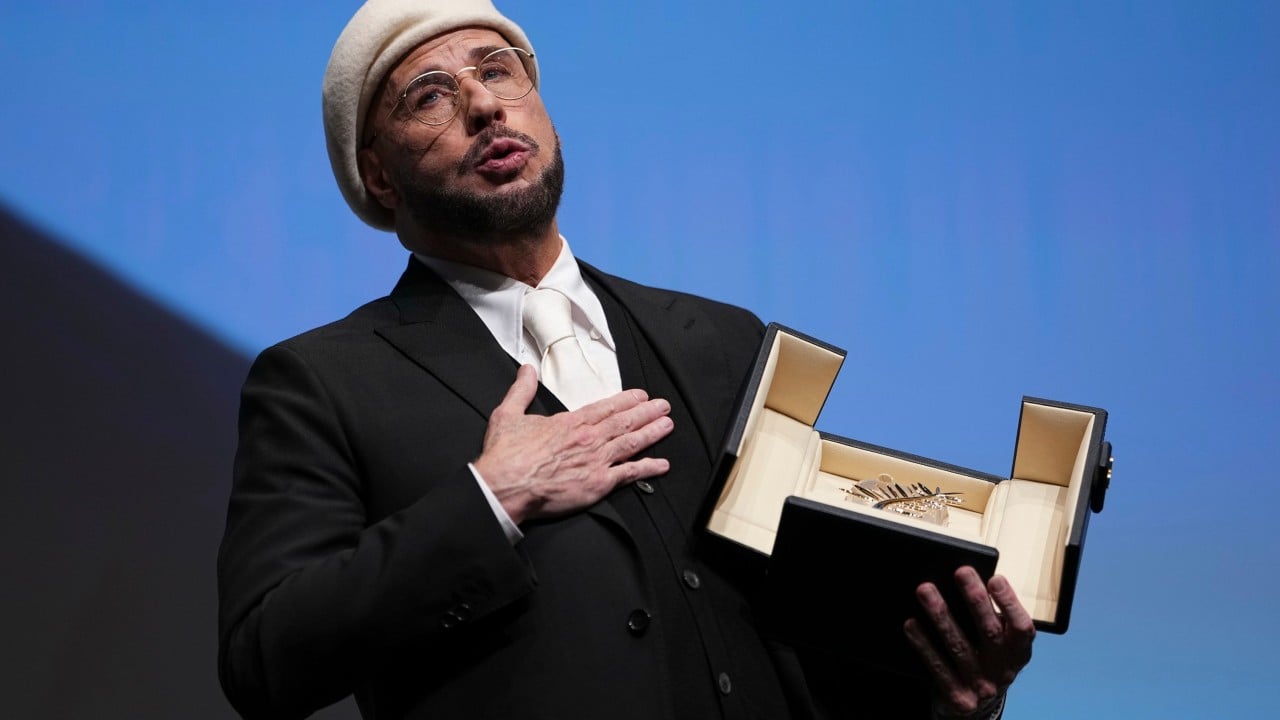
The global entertainment press is weeping tears of joy because Cannes handed John Travolta an honorary Palme d'Or.
They are calling it a well-deserved celebration of a cinematic icon. They are writing breathless retrospectives about Pulp Fiction and Saturday Night Fever. They are treating a marketing stunt like a holy coronation.
It is absolute nonsense.
I have spent twenty years sitting in the screening rooms of the Croisette, watching the slow decay of European film curation. I have watched major festivals trade artistic integrity for red carpet flash photography. This latest move isn’t a celebration of cinema. It is a desperate cry for American press coverage from a festival that used to pride itself on standing against the Hollywood machine.
Giving Travolta a lifetime achievement award ignores decades of objective box office data, critical consensus, and the actual mechanics of a Hollywood career. The lazy consensus says we are honoring a legend. The brutal reality is that Cannes is cheapening its highest honor to chase social media metrics.
The Myth of the Travolta Renaissance
The narrative surrounding Travolta always relies on the idea of the great comeback. Audiences love a resurrection story. Quentin Tarantino famously rescued him from the straight-to-video wilderness in 1994 by casting him as Vincent Vega.
But look at the cold, hard numbers of the subsequent thirty years.
A true cinematic titan maintains a baseline of quality or, at the very least, commercial viability. After the brief post-Pulp Fiction spike—which gave us decent turns in Get Shorty and Face/Off—Travolta’s filmography entered a historic tailspin. We are talking about a actor who headlined Battlefield Earth, a film widely regarded as one of the worst pieces of celluloid ever manufactured.
Let’s look at the data the mainstream press ignores:
- Gotti (2018): Holds a 0% rating on Rotten Tomatoes.
- The Fanatic (2019): Grossed a pathetic $3,153 in its opening weekend across 52 theaters.
- Speed Kills (2018): Universally panned, making no cultural or financial impact whatsoever.
To present a lifetime achievement award to an actor whose recent output consists almost entirely of critically reviled VOD thrillers is an insult to past recipients like Agnès Varda, Ingmar Bergman, and Akira Kurosawa. Cannes used to be the vanguard of high art. Now, it functions as a PR firm for aging stars looking to rehabilitate their brands.
The Cannes Double Standard
People always ask: "Why shouldn't a festival celebrate popular culture?"
The premise of the question is completely flawed. Cannes was never supposed to celebrate popular culture for the sake of popularity. Its historical mandate was to elevate the directors and actors who push the medium forward.
When the festival honors an actor whose primary contribution to the craft over the last two decades involves wearing questionable hairpieces in low-budget action movies, it breaks its promise to the filmmaking community.
Imagine a scenario where the Nobel Prize in Literature was awarded to a writer who hadn't published a coherent book since 1997, simply because they wrote a bestseller in the seventies. The literary world would revolt. Yet, the film industry claps politely because they are terrified of losing access to the talent agencies that control the talent pool.
This isn't about snobbery. It's about standards. If the Palme d'Or can be handed out as a lifetime achievement award to anyone who was famous during the Clinton administration, the award ceases to mean anything. It becomes a participation trophy for surviving Hollywood.
The Financial Realities Behind the Red Carpet
Let's pull back the curtain on how these festival honors actually work. I have seen studios and public relations firms spend hundreds of thousands of dollars lobbying festival directors for these specific honors.
An honorary award is rarely a spontaneous gesture of appreciation. It is a transactional agreement.
- The Festival's Benefit: Cannes gets guaranteed international headlines, a massive star on the red carpet to satisfy high-paying luxury sponsors, and footage of a standing ovation that looks great in promotional reels.
- The Star's Benefit: The actor receives an immediate injection of prestige, allowing their agents to demand higher fees for future projects by rebranding them from "washed-up star" to "Cannes laureate."
It is a cynical cycle that feeds the industry's obsession with nostalgia while starving new, innovative talent of the spotlight. Every minute the international press spends discussing John Travolta's dance moves from forty years ago is a minute they aren't spending on the young director from Senegal or Colombia who actually brought something new to the screen.
The Danger of Nostalgia
The entertainment industry is currently suffocating under the weight of its own past. We live in an era of endless reboots, sequels, and legacy awards. By validating this obsession with the past, Cannes is abandoning its role as a tastemaker.
If you want to look at true lifetime achievements in acting, look at performers who consistently challenge themselves, take risks on independent cinema, and refuse to coast on past glories. Look at Willem Dafoe. Look at Isabelle Huppert. Look at Tilda Swinton. Those are careers defined by an ongoing dedication to the evolution of film.
Travolta’s career is defined by a few brilliant peaks surrounded by vast valleys of mediocrity. Honoring the peaks while pretending the valleys don't exist isn't journalism; it's hagiography.
Stop pretending this award matters to the art of filmmaking. Stop writing articles about how beautiful the moment was. Admit the truth: Cannes needed a famous face to satisfy its corporate sponsors, and an old-school star needed a quick injection of cultural relevance.
The festival didn't honor John Travolta. It compromised itself.