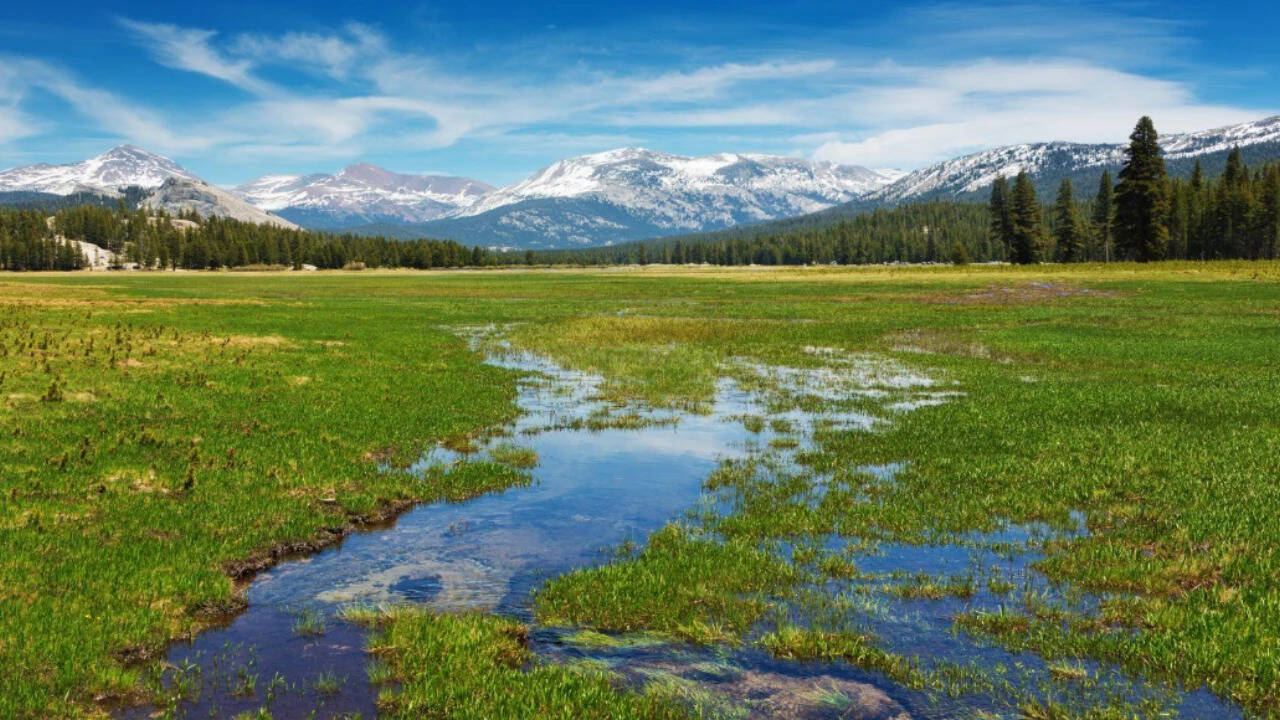
Forty thousand green shoots planted across a burned Yosemite meadow were supposed to lock away atmospheric carbon for decades. Three years after restoration crews finished dropping seedlings into the ash, soil sensors tell an uncomfortable story. The meadow is still bleeding carbon into the atmosphere faster than it can trap it.
That finding cuts against the core of modern corporate and governmental climate accounting. Billions of dollars flow into tree-planting and ecosystem restoration projects under the assumption that disturbing soil and planting vegetation instantly kicks off a reliable carbon sink. Reality proves far more stubborn. When restoration alters soil microbiomes, or when heavy machinery disrupts centuries-old organic matter, the baseline soil respiration outpaces the photosynthetic intake of young trees.
The immediate culprit is soil disturbance. To plant forty thousand seedlings, crews broke the surface layer across acres of fragile alpine earth. Exposing that buried organic matter to oxygen triggers a massive microbial feast. Microbes consume the carbon-rich material and respire carbon dioxide back into the atmosphere in volumes that dwarf what tiny, knee-high saplings can sequester.
Scale this dynamic across thousands of global offset projects, and a structural flaw emerges in voluntary carbon markets. Buyers pay for projections based on mature forest absorption rates. They rarely account for the initial multi-year carbon deficit caused by site preparation, root shock, and hydrological shifts.
Yosemite's Tuolumne and Merced river corridors have witnessed centuries of shifting management, from Indigenous burning practices to aggressive twentieth-century fire suppression. When high-severity wildfires swept through the park, they charred not just the timber canopy, but the organic humus layer in the soil. Replanting trees onto a landscape with a compromised soil matrix ignores the foundational biology of a meadow. Meadows are fundamentally wetland and grass-dominated ecosystems, not pine plantations. Forcing conifers into wet meadows or attempting to fast-track reforestation on burned peatlands creates an ecological mismatch.
Water table dynamics compound the problem. Healthy mountain meadows act like sponges, holding water high in the watershed and keeping subsurface organic matter saturated. Saturation slows decomposition, locking carbon away in thick, dark muck. Decades of erosion, trail compaction, and climate-driven drying have lowered water tables across the Sierra Nevada. Once a meadow dries out, oxygen penetrates deeper into the soil profile. Microbes wake up. The carbon sink turns into a carbon source, regardless of how many pine seedlings grace the surface.
Field ecologists have tracked these dynamics for years, but the financial incentives point elsewhere. Corporate buyers want simple metrics. They want a certificate stating that X dollars purchased Y seedlings that will offset Z tons of carbon. Nuance does not fit onto a balance sheet. Admitting that restoration can temporarily accelerate emissions threatens the credibility of entire corporate net-zero strategies.
Yet ignoring the data guarantees failure. If a restoration site continues to emit net carbon three years in, five years in, or a decade in, the offset credits generated from that project represent a paper illusion. The atmosphere does not care about planting receipts or future projections. It registers only the net exchange of gases.
Fixing this requires a complete overhaul of how ecological restoration projects are funded and audited. Instead of paying upfront for planting events, carbon credit frameworks must tie financial returns to empirical, multi-year soil gas measurements. If a meadow loses carbon, the credits associated with it should be revoked or discounted.
Furthermore, restoration strategies must pivot away from a carbon-tunnel-vision approach that prioritizes tree count over hydrological health. Restoring a meadow often means plugging eroded gullies, bringing back beaver populations, and re-establishing high water tables before a single tree goes into the ground. Water retention revives native grasses and sedges, which build soil carbon through root turnover far more efficiently than stressed conifer saplings struggling in ash-laden earth.
The Sierra Nevada holds millions of acres of damaged watersheds. Each one represents a complex web of hydrology, microbiology, and climate pressures. Treating them like green billboards for corporate emissions reports ignores the physics of the ecosystem. Until the accounting reflects the dirt beneath our boots, the math will continue to fail.