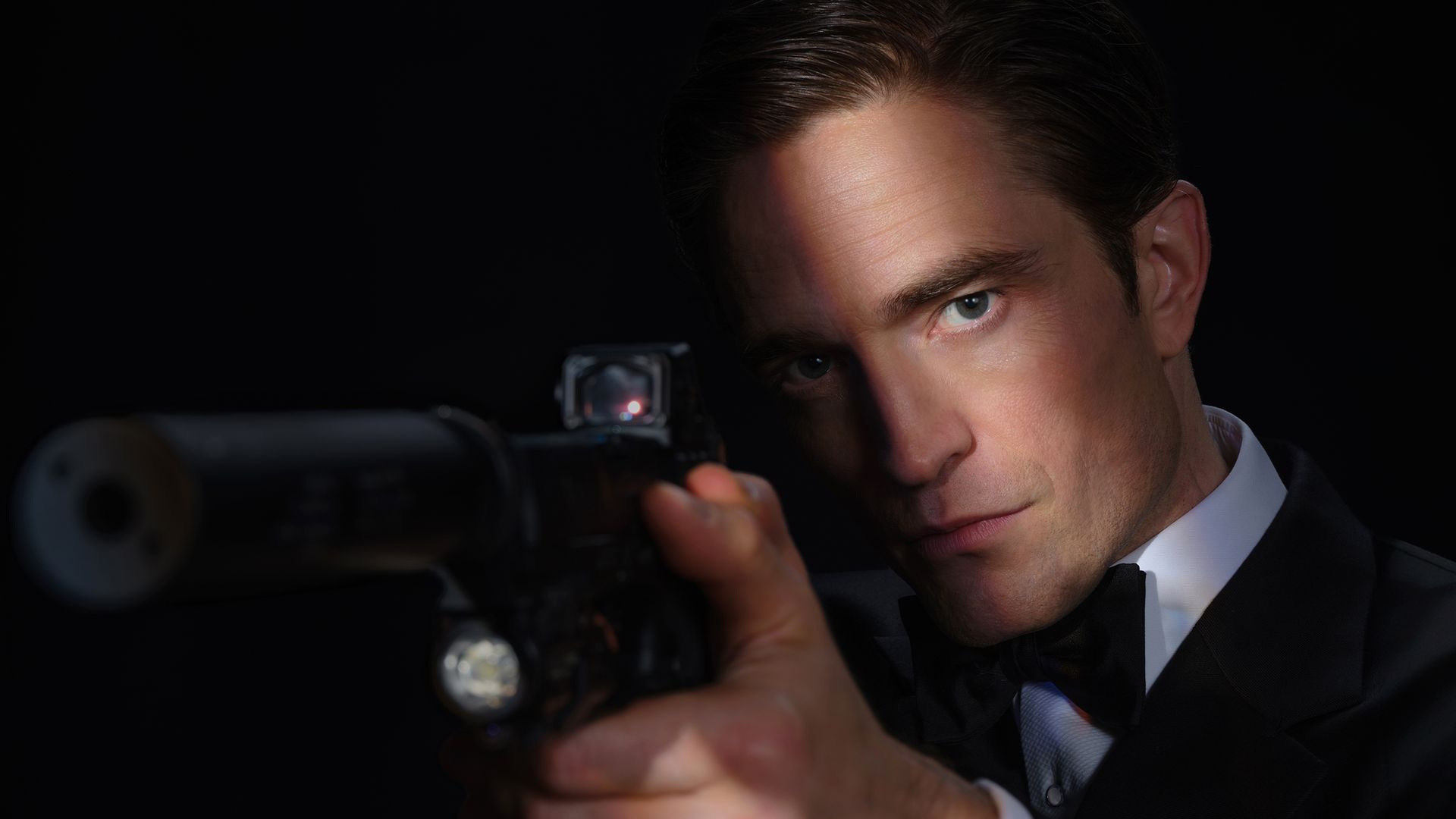
Casting the next James Bond is an exercise in risk mitigation, multi-decade asset management, and tonal recalibration rather than a popularity contest. While entertainment commentary routinely treats the selection of 007 as a reaction to betting odds or social media sentiment, Eon Productions operates under a strict set of commercial and creative constraints. Evaluating Robert Pattinson as the primary candidate for the role requires stripping away tabloid speculation and analyzing the structural mechanics of franchise longevity, actor availability, physical profile, and box-office economics.
The Asset Lifecycle Constraint
Eon Productions does not cast an actor for a single film; the studio acquires a human asset intended to anchor a multi-billion-dollar intellectual property for twelve to fifteen years. Historically, the franchise experiences its sharpest commercial declines when an actor ages out of physical credibility or when production delays stretch the timeline between installments.
Consider the baseline metrics of previous tenures. Sean Connery began at age 32. George Lazenby was 29. Roger Moore started at 45, a decision that forced the franchise into increasingly comedic territory by his final appearance at 57 to compensate for declining physical plausibility. Timothy Dalton entered at 41, Pierce Brosnan at 42, and Daniel Craig at 38. Craig’s tenure spanned fifteen years across five films, ending when he was 53—a timeline prolonged by studio bankruptcies, creative departures, and global theatrical shutdowns.
To protect against production bottlenecks, the ideal candidate must fall within a narrow age bracket: old enough to project institutional authority and weathered experience, yet young enough to sustain high-impact stunt work across four or five films spaced three to four years apart. Born in May 1986, Robert Pattinson sits directly inside this optimal operational window. Casting an actor in his late thirties or early forties ensures he remains physically viable through his early fifties without requiring the script to constantly apologize for his age, a narrative crutch that dominated the latter half of the Craig era.
The Tonal Reset Mechanism
Every successful Bond transition relies on a deliberate pendulum swing in characterization to prevent audience fatigue. When an iteration reaches its thematic exhaustion point, the producers invert the formula.
- Connery to Lazenby/Moore: Shifted from cold, brutalist espionage to aristocratic camp and gadget-heavy spectacle.
- Moore to Dalton: Stripped away the humor to reintroduce Ian Fleming’s literary cynicism and vulnerability.
- Dalton to Brosnan: Synthesized action spectacle with sleek, Cold War-era nostalgia for a globalized 1990s market.
- Brosnan to Craig: Abandoned invisible cars and quips for visceral, parkour-driven realism in the wake of the Bourne franchise.
Daniel Craig’s five-film arc concluded with an unprecedented narrative finality: the literal death of the character. This eliminates the option of a soft reboot. The next iteration cannot simply ignore the emotional weight of the previous era; it must establish an entirely distinct psychological baseline.
Pattinson’s post-2012 filmography demonstrates a specialized capacity for playing psychologically fractured, obsessive, and morally ambiguous protagonists. In Good Time, The Lighthouse, and The Batman, he exhibited an ability to command frame presence through stillness and suppressed volatility rather than traditional matinee-idol charm. For Eon Productions, this profile solves a critical creative problem. Modern audiences reject the unexamined misogyny and effortless superiority of mid-century Bond, yet they grow weary of the brooding, reluctant martyr archetype. Pattinson occupies a third space: an enigmatic, slightly detached operator whose charm reads as a tactical cover rather than an inherent personality trait. This aligns closely with the literary Bond—a blunt instrument who uses sophistication as camouflage.
Box-Office Economics and Brand Insulation
From a distribution standpoint, casting James Bond involves managing a delicate financial equation. The actor must possess enough international recognition to guarantee opening-weekend theatrical floor numbers, yet not so much personal celebrity baggage that their off-screen persona eclipses the intellectual property.
The primary risk of casting an established A-list star is IP dilution. If Tom Cruise or Leonardo DiCaprio were to play Bond, the audience would watch the star performing a role, subordinating the character to the actor's existing brand. Conversely, casting a complete unknown—the route taken with George Lazenby and briefly considered for Daniel Craig—introduces severe marketing friction in non-domestic territories where theatrical attendance relies heavily on recognizable faces.
Pattinson represents a rare equilibrium in contemporary cinema: high global recognition paired with low celebrity overexposure.
- Four-Quadrant Recognition: His early tenure in the Twilight saga established permanent name recognition across global demographics, particularly in European and Asian markets critical to Bond’s international box-office split (which routinely accounts for over 70% of total theatrical gross).
- Critical Prestige: A decade of deliberate work with auteur directors—David Cronenberg, Claire Denis, Christopher Nolan, Robert Eggers—scrubbed away teen-idol associations and replaced them with critical legitimacy. This dual appeal satisfies both the casual multiplex audience and the prestige-oriented demographic that propelled Skyfall past the billion-dollar threshold.
- Controlled Public Footprint: Unlike peers who maintain aggressive social media presences or pervasive lifestyle branding, Pattinson maintains a low public profile. When he appears on screen, there is minimal interference from tabloid familiarity, allowing the 007 persona to remain the dominant visual and narrative symbol.
The Structural Bottleneck of Franchise Overlap
The strongest counterargument against a Pattinson casting is not creative or commercial, but logistical. Opportunity cost and contractual exclusivity govern modern franchise filmmaking.
Pattinson is currently anchored to Warner Bros. and DC Studios as the lead in Matt Reeves’ The Batman universe. While The Batman operates outside the main DC Universe continuity, it remains a flagship theatrical asset with planned sequels and spin-offs. Committing to James Bond requires signing an exclusive, multi-picture contract that dictates an actor's schedule for over a decade, including exhaustive global press tours, commercial tie-ins (watches, automobiles, menswear), and prolonged physical conditioning blocks.
Two structural conflicts emerge from this overlap:
- Scheduling Collision: Tentpole productions require six to eight months of principal photography, followed by months of reshoots and promotional commitments. Coordinating production schedules between Amazon MGM Studios (which holds distribution rights for Bond) and Warner Bros. Discovery would create constant bottlenecks, delaying both franchises and inflating holding costs.
- Archetype Cannibalization: Bruce Wayne and James Bond share foundational DNA. Both are wealthy, orphaned, emotionally guarded men who utilize advanced technology, tailored formalwear, and brutal hand-to-hand combat to neutralize systemic threats. Asking an actor to alternate between both roles risks diluting the distinctness of each property. Audiences and critics would inevitably draw visual and tonal comparisons, undermining the bespoke identity Eon Productions fiercely protects.
The Eon Selection Heuristic
To determine whether Pattinson will ultimately secure the role, one must look at the historical decision-making patterns of producers Barbara Broccoli and Michael G. Wilson. Eon Productions rarely bends to external consensus. Their casting methodology relies on screen tests that evaluate chemistry, physicality in formalwear, and the ability to deliver exposition under pressure—specifically testing candidates using classic scenes from From Russia with Love.
Furthermore, Eon prefers actors whom they can mold into icons rather than stars who arrive with entrenched creative demands. While Pattinson has demonstrated willingness to collaborate within massive studio ecosystems, his career trajectory indicates a preference for director-driven projects over producer-controlled franchises. Bond is the ultimate producer-controlled franchise; directors are hired to execute a specific house style, and scripts undergo continuous corporate vetting.
If Eon Productions prioritizes a rapid turnaround and an immediate, high-floor global launch to justify Amazon’s acquisition of MGM, Pattinson is the highest-probability asset on the board. He possesses the exact intersection of British nationality, classical screen presence, modern edge, and international bankability required to stabilize the brand after a major narrative reset.
However, if the producers intend to rebuild the franchise from the ground up with a clean ten-year runway, the logistical friction of Pattinson’s existing commitments to Gotham City becomes an unacceptable liability. In franchise management, availability is the primary ability. Unless Warner Bros. concludes its Batman trilogy within an accelerated timeframe, Eon Productions will likely bypass the obvious frontrunner in favor of an actor with an unencumbered calendar—securing total operational control over their most valuable asset.