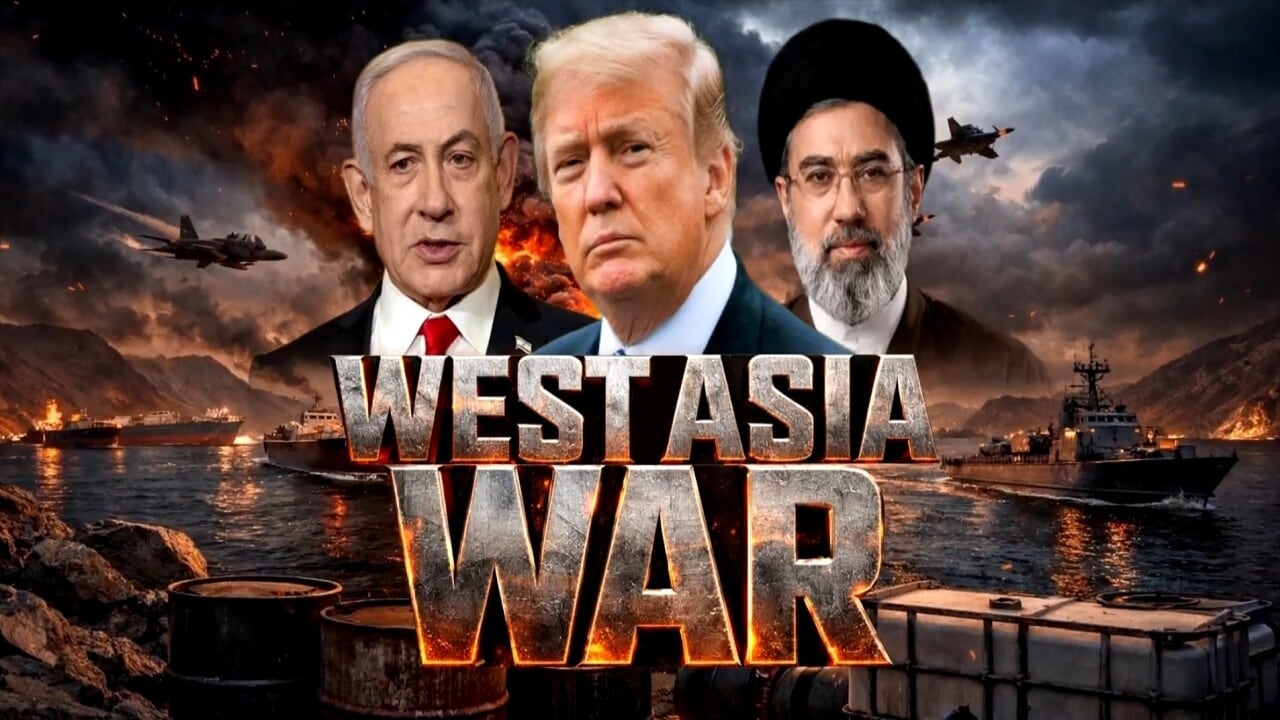
The vibration begins in the tea glass. It is a tiny, rhythmic shudder, a ripple that starts at the center of the dark liquid and moves outward to the rim. In Tehran, this is often the first sign that the world is shifting. It isn’t always an earthquake. Sometimes, it is the weight of history moving across the desert.
Arjun (a name we will use to represent the thousands currently navigating this tension) watches the tea. He is an engineer, a man trained to respect structural integrity and predictable outcomes. He moved from Delhi to a bustling district in Iran eighteen months ago, lured by a specialized contract and the promise of a Persian winter. Now, he sits in an apartment where the walls feel thinner than they did yesterday. He checks his phone. The notification from the Ministry of External Affairs (MEA) is brief, scrubbed of emotion, and heavy with implication.
Stay put. Avoid unnecessary movement.
It is a strange directive to receive when every animal instinct you possess screams at you to run. The air over West Asia is currently thick with the invisible arcs of geopolitical signaling, and Arjun is caught in the quiet center of a very loud storm.
The Weight of a Stationary Foot
To the strategist in a climate-controlled room in New Delhi, "stay put" is a logistical necessity. It prevents chaos on the roads. It keeps the flight paths clear for essential services. It ensures that the embassy knows exactly where its citizens are located should the situation transition from "tense" to "critical." But to the person on the ground, "stay put" is a psychological marathon.
Imagine the city outside your window. Usually, Tehran is a cacophony of gears and voices, a place where the scent of saffron and exhaust fumes compete for dominance. Today, the silence has a different texture. It is the silence of a held breath. When the MEA issues a travel advisory of this magnitude, they aren’t just giving advice; they are drawing a digital perimeter around your life.
Arjun thinks about the airport. He thinks about the thin, silver line of a jet bridge and the way the air smells inside a plane—recycled, dry, and safe. But the advisory is clear. The escalating situation between Iran and Israel has turned the sky into a chessboard where the pawns are grounded. To move now is to risk being caught in the open, away from the relative safety of a known address, at a time when borders can turn from gates into walls in the span of a single heartbeat.
The Anatomy of an Advisory
We often treat news alerts as background noise, like the hum of a refrigerator. We see the scrolling ticker at the bottom of a news channel: MEA urges Indians in Iran to remain vigilant. We acknowledge it and move on to the weather. Yet, these words are the result of a frantic, high-stakes calculation.
Behind that one-sentence advisory are diplomats who haven't slept in thirty-six hours. There are intelligence analysts mapping the trajectory of potential strikes and evaluating the capacity of local infrastructure to withstand a sudden shock. When the government tells its people to "avoid movement," it is because the variables have become too volatile to track.
The risk isn't just a direct hit. The risk is the breakdown of the ordinary. It’s the sudden closure of a metro line. It’s the unpredictability of a crowd. It’s the way a simple trip to the grocery store can become a labyrinth of checkpoints and confusion if a siren sounds while you’re standing in the checkout line.
Shadows and Steel
The tension in West Asia isn't a new story, but it has entered a chapter written in a much sharper ink. For the 4,000 Indians currently living in Iran—technicians, students, merchants—the geopolitical is suddenly very personal.
Consider the student in Shiraz, miles from the capital but connected by the same invisible thread of anxiety. She has a mid-term exam on Monday. She has a mother calling every twenty minutes from Bengaluru. She has a bag packed by the door, just in case. The MEA’s instruction to "stay in touch with the Embassy" sounds simple, but it is a lifeline. It is the only thing tethering her to a sense of order when the news reports suggest the world is unraveling.
The embassy is no longer just a building with a flag; it is a sanctuary of information. In a crisis, information is more valuable than currency. People are hungry for it. They scan Telegram channels and refresh Twitter feeds until their thumbs ache. They look for patterns in the movement of officials. They try to read the tea leaves, or in Arjun’s case, the tea ripples.
The Logistics of the Long Wait
What does "staying put" actually look like?
It looks like checking your pantry and realizing you only have three days of rice left. It looks like charging every power bank in the house. It looks like the frantic, whispered conversations between neighbors who don't speak the same language but understand the universal dialect of a worried glance.
The MEA isn't just concerned about physical safety from a kinetic strike. They are managing the human element of a mass diaspora. India has one of the most sophisticated evacuation machines in the world—we have seen it in Yemen, in Ukraine, in Sudan. But an evacuation is a last resort, a surgical intervention. The advisory to stay put is the preventative medicine. It is the attempt to keep the patient stable before the surgery becomes necessary.
The geography of the region is a tapestry of tight spaces. A missile fired from one point can cross several national boundaries in minutes. For an Indian citizen in a city like Isfahan, the proximity to military sites or strategic infrastructure becomes a mental map they never intended to memorize. They start to look at the hills not as scenery, but as barriers. They look at the basement of their apartment block not as a storage space, but as a shelter.
The Invisible Stakes
There is a hidden cost to these moments that doesn't make it into the MEA press releases. It is the cost of the interrupted life.
There are weddings planned in Delhi that might not have a groom if the flights stay cancelled. There are business deals in Mumbai that are stalling because the lead engineer is currently sitting in a darkened room in Tehran, following orders to avoid unnecessary movement. The economy of a nation is built on the movement of its people, and when that movement stops, the gears grind.
But there is also a profound resilience in this "staying put." It is a collective act of discipline. By following these advisories, the Indian community in Iran is participating in a quiet form of diplomacy. They are refusing to succumb to the panic that would make the situation ten times worse for the local authorities and their own embassy. They are holding their ground.
The Mirror of History
This isn't the first time the tea has rippled. From the Gulf War to the more recent flare-ups across the Levant, the Indian worker has often been the silent witness to the region’s volatility. We are a people who go where the work is, even if the work is in the shadow of a volcano.
The MEA knows this. Their communication style is calibrated to be "calm but firm." They don't want to spark a stampede, but they cannot afford to be complacent. The advice to "avoid movement" is a way of saying: The situation is out of our hands for the moment, but you are still in our sight.
Arjun finally puts his phone down. He decides to follow the advice. He doesn't go to the market. He doesn't try to find a taxi to the embassy. He stays in his apartment. He listens to the city.
He notices things he hadn’t before. The way the light hits the blue tiles of the mosque across the street. The sound of a child laughing in the courtyard below—a sound that feels defiant in the face of the headlines. He realizes that staying put isn't just about safety. It’s about waiting for the world to remember its own sanity.
The Architecture of Uncertainty
Uncertainty is a heavy fog. It distorts distances. It makes small sounds seem like explosions and makes actual danger seem surreal. The Indian government's role in this moment is to act as a lighthouse. The "stay put" order is the beam of light that says, Here is the shore. Do not wander into the waves.
But lighthouses only work if the ships watch them. The success of the MEA’s strategy depends entirely on the trust of the thousands of Arjuns scattered across the Iranian plateau. It is a social contract signed in a time of crisis: We will guide you, if you will listen.
As night falls over Tehran, the ripples in the tea finally stop. The city settles into a restless sleep. The drones and the missiles might be out there, somewhere beyond the horizon, but for now, the walls hold. The engineer checks his locks, looks at his packed bag one last time, and lies down.
He is staying put.
He is waiting for the sky to stop falling, or at least for the morning to bring a different kind of silence. In the grand theater of West Asian conflict, this is the scene that rarely gets filmed: a man in a quiet room, choosing stillness over flight, anchored by a text message from a government thousands of miles away. It is not a story of heroic charges or dramatic rescues. It is a story of the hardest thing a human being can do when the world is on fire.
Staying still.
The horizon remains a dark, jagged line of mountains. Somewhere in the distance, a dog barks. The air is cold. The phone sits on the nightstand, its screen dark, waiting for the next instruction, the next ripple, the next sign that the path home is finally open.
Until then, the most powerful move is not to move at all.



