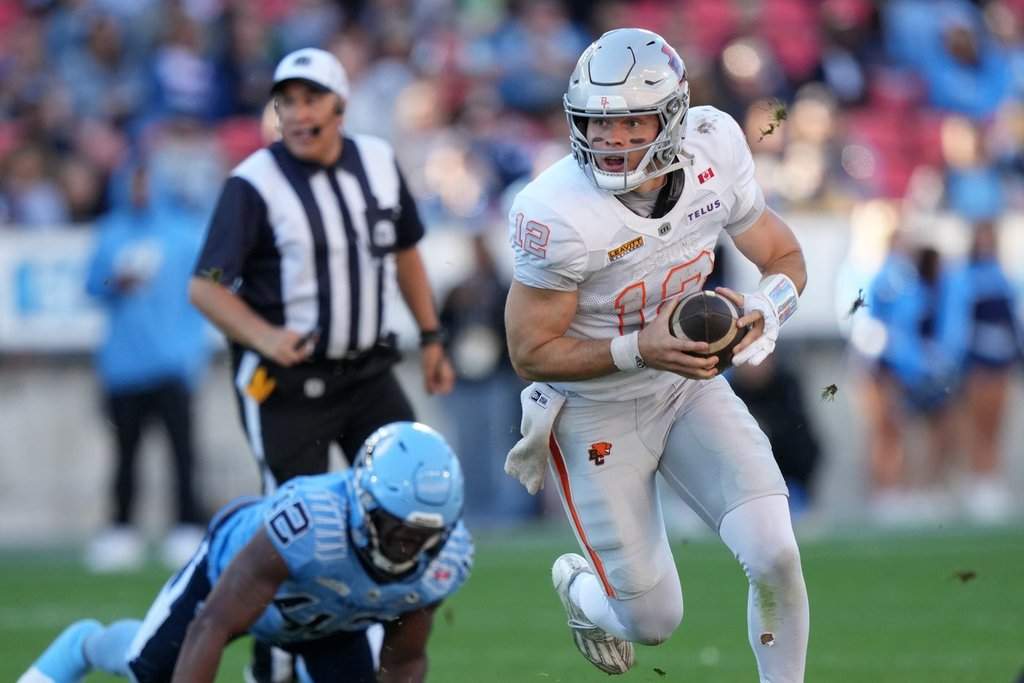
The ballots are counted. The press releases are printed. Nathan Rourke and Davis Alexander are sitting atop the Canadian Football League all-star selections, and the entire north-of-the-border sports media ecosystem is throwing a parade.
Stop clapping.
If you look at the standard coverage of these selections, you get the same tired, box-score-obsessed narrative. Writers tally up passing yards, highlight a couple of fourth-quarter comebacks, and declare that the league's quarterback future is officially saved. It is lazy consensus at its finest. It treats postseason honors like a fantasy football trophy rather than what they actually represent in three-down football: a massive, blinking warning sign for front offices trying to build a Grey Cup contender.
Let’s be clear about what is happening here. Celebrating individual quarterback dominance in the CFL without looking at the structural rot it creates on a salary-cap sheet is how general managers get fired. I have watched front offices across professional football fall into this exact trap for twenty years. They fall in love with the marquee name, hand out market-resetting contracts based on all-star hardware, and then wonder why their offensive line collapses by Labor Day and their special teams give up two return touchdowns a month.
The Box-Score Illusion of Modern CFL Quarterbacking
Everyone wants to talk about the arm talent. Nathan Rourke returns from his NFL stint, steps back onto the wider Canadian field, and immediately reminds everyone why his release and pocket mobility look like they were engineered in a lab for three-down football. Davis Alexander steps into the breach in Montreal, executes a hyper-efficient short-to-intermediate passing attack, and proves that poise under pressure is not something you can teach in a film room.
The standard argument says these two leading the all-star voting proves the league has entered a new golden age of Canadian and young quarterbacking talent.
That argument ignores how modern CFL defenses actually operate.
Defenses in this league have shifted almost entirely to light boxes and pattern-matching zone concepts designed to take away the deep vertical shots that used to define the Canadian game. Because of the extra yard off the ball at the line of scrimmage and the unlimited pre-snap motion, a competent offensive coordinator can scheme open five-to-seven-yard completions all afternoon. When a quarterback like Alexander or Rourke executes that system at a high level, the completion percentages look staggering. Passing efficiency ratings skyrocket. Voters see 72 percent completion rates and automatically check the box.
What the voters miss is how much of that production is systemic rather than transcendent.
In three-down football, you only have two downs to get ten yards before you are punting. That mathematical reality forces coaches into conservative, high-percentage passing trees. When you award all-star status primarily on cumulative passing metrics and team win-loss records, you are rewarding the system architecture just as much as the player under center. You are mistaking offensive volume for irreplaceable value.
The Canadian Ratio Myth vs. Roster Reality
The biggest distortion in how media and fans evaluate Nathan Rourke specifically comes down to his passport. Because he is a National player, the prevailing wisdom claims his value is practically infinite. Having a starting quarterback who counts toward your mandatory Canadian starter quota theoretically unlocks the ability to start an extra American playmaker at receiver, defensive back, or pass rusher.
On paper, that sounds like a cheat code. In practice, it frequently becomes a roster-building mirage.
Consider the actual salary cap mechanics of the CFL. The league operates under a strict, hard salary cap where the margin for error is razor-thin. Unlike the NFL, where you can push dead money into void years and manipulate signing bonuses to hide massive quarterback contracts, CFL general managers have to pay the piper every single week.
Imagine a scenario where a team pays top-of-market quarterback money to a National starter while simultaneously using that freed-up American spot to sign a high-priced imported receiver or edge rusher. Suddenly, two players are eating up nearly twenty percent of your entire forty-five-man active roster budget. What happens when your starting National left guard tears an ACL in Week 4? You do not have the cap space to carry experienced National depth behind him, because all your money is tied up at the top of the depth chart.
The ratio advantage only works if the National quarterback plays on a discount, or if your scouting department is elite at drafting late-round Canadian offensive linemen and linebackers who can play immediately on entry-level deals. The moment an all-star selection drives a quarterback's market value to the ceiling, the ratio advantage evaporates. You are no longer getting a discount; you are just shifting the cap squeeze to the trenches, where CFL games are actually won in November.
Why Voters Get All-Star Selections Backwards
If you ask ten football writers how they vote for all-star teams, nine of them will tell you they look at the best players at each position. What they actually do is vote for the players who had the loudest moments in nationally televised games.
Look at the mechanics of Davis Alexander’s rise. Stepping into a championship-caliber environment in Montreal, surrounded by an established defense and a disciplined coaching staff, Alexander did not have to play hero ball. He managed games, protected the football, and capitalized on short fields created by a relentless defensive front. He played smart, winning football.
Does playing smart, winning football make you a great teammate? Yes. Does it make you an elite, game-wrecking force who deserves to be the singular face of the league's all-star roster? That is a completely different question.
Voters consistently confuse contextual efficiency with individual dominance. They look at a quarterback’s touchdown-to-interception ratio without accounting for average depth of target, dropped interceptions, or the starting field position provided by their special teams units. In a nine-team league where the talent gap between the top roster and the bottom roster is smaller than in almost any other professional sport, contextual factors are everything.
When you strip away the narrative fluff, all-star voting in the CFL functions as a lagging indicator of team success rather than a true measure of individual superiority. If Alexander were playing behind a porous offensive line in Edmonton or Hamilton, throwing into tight windows while trailing by two scores in the fourth quarter every week, his stats would look pedestrian, and he would not be anywhere near an all-star ballot. Conversely, a quarterback grinding out ugly, high-degree-of-difficulty throws on a mediocre team gets ignored because his team finished below .500.
What People Get Wrong About Quarterback Development in Canada
Every time a young quarterback breaks out in this league, the same predictable questions flood the internet. Fans want to know if this is the next Doug Flutie, or if the player is guaranteed to bolt for an NFL practice squad the second the Grey Cup confetti hits the turf.
Both questions completely miss the point of how modern football talent flows between the two leagues.
First, the era of the singular, unstoppable CFL quarterback who stays in Canada for a decade and throws for 6,000 yards every season is dead. The NFL is too starved for quarterback depth, and its offensive schemes have borrowed too heavily from the spread, RPO, and motion-heavy concepts that used to be exclusive to the Canadian game. Any quarterback who displays elite processing speed and accuracy in the CFL is going to get an NFL look. That is not a crisis; that is the permanent ecosystem of North American football.
Second, fans obsess over whether a player like Rourke can sustain his peak performance across an eighteen-game schedule, when the real question is whether CFL coaching staffs can resist the urge to over-expose their quarterbacks.
Three-down football is brutal on quarterbacks. Because passing is mandatory on second-and-long, defensive coordinators pin their ears back and dial up exotic simulated pressures on more than half of all offensive snaps. Unlike the NFL, where a team can lean on a zone-blocking run game to bleed clock and protect a banged-up passer, CFL offenses live and die through the air. When you crown a young quarterback as the league's premier all-star, defensive coordinators spend the entire offseason building specific pressure packages designed solely to hit him.
The second year in the spotlight is always harder than the first. The league adjusts. The throwing lanes shrink. The hits accumulate.
The Uncomfortable Truth About Championship Rosters
Let’s look at the actual blueprint for winning a Grey Cup over the last fifteen years.
You do not win championships in November by having the leading all-star vote-getter at quarterback. In fact, having the league's most celebrated passer often correlates with an early playoff exit when the weather turns freezing, the wind starts howling off Lake Ontario or across the prairies, and precision passing becomes physically impossible.
Championships in Canada are built from the inside out:
- Dominant Defensive Interior: Two defensive tackles who can collapse the pocket without needing a blitz. In a twelve-man game, if you can get pressure with four, you can drop eight into coverage and suffocate even the best all-star quarterback.
- Versatile National Linebackers: Canadian players who can play both the run and the pass, allowing the defense to stay in base personnel without giving up mismatch advantages to slotbacks.
- A Ruthless Kick-Coverage Unit: Field position in a three-down game with a 110-yard field is worth more than raw offensive yardage. A single missed tackle on a punt return flips twenty yards of hidden production instantly.
- An Offensive Line That Can Run Inside Zone in November: When the temperature drops below freezing, you cannot throw forty-five times a game. You have to be able to hand the ball off on first down and get five yards when everyone in the stadium knows it is coming.
Notice what is missing from that list. You do not need a record-breaking quarterback to execute that formula. You need a quarterback who takes care of the ball, converts third-and-short sneaks, and hits the open man when the defense sells out to stop the run.
When front offices let all-star hype dictate their roster construction, they invert that pyramid. They pay the quarterback like a savior, skimp on the interior defensive line, and watch helplessly as a physical, run-heavy team bullies them out of the playoffs in the division final.
The Contrarian Playbook for CFL Front Offices
If I am running football operations for a CFL franchise right now, I am looking at the Rourke and Alexander all-star headlines and doing the exact opposite of what the fan base wants.
1. Never pay peak market value for a quarterback coming off a career year.
The data across every cap-restricted sports league is undeniable: paying for past statistical peaks guarantees future cap inefficiency. If your quarterback just won all-star honors, his value will never be higher, and his supporting cast will never be cheaper. Either lock him in before the breakout happens, or be disciplined enough to let another desperate franchise overpay while you build an impenetrable offensive and defensive front.
2. Draft and develop quarterbacks every single year, regardless of who your starter is.
The biggest mistake CFL teams make is treating the backup quarterback spot as a clipboard-holding charity role for aging veterans. Look at how Davis Alexander got his shot. Look at how every great CFL starter over the last decade emerged. They came off the bench when an injury struck, armed with reps in an offense tailored to their specific athletic traits. You should always have two young, cheap, mobile quarterbacks on your negotiation list and active roster, ready to step in without forcing you to rewrite the playbook.
3. Weaponize the slotback position over the quarterback position.
In the CFL, the Waggle—allowing receivers a running start toward the line of scrimmage before the snap—is the single greatest offensive advantage in football. An elite, explosive American slotback who can separate at full speed at the snap makes an average quarterback look like a Hall of Famer. Spend your top offensive dollars on the receivers who win at the line of scrimmage and create yards after the catch. Let them inflate your quarterback's stats, not the other way around.
Admitting the Risk of the Contrarian Approach
There is an obvious downside to refusing to build your franchise around an all-star quarterback, and any honest executive will admit it: you have to survive the fan base and the ownership group.
Selling tickets in a gate-driven league requires star power. Nobody buys a season ticket package to watch a rotational defensive tackle or a disciplined punt-coverage unit. Fans want to see Nathan Rourke firing laser beams down the sideline. They want to buy Davis Alexander jerseys. If you let a popular all-star walk over a hundred thousand dollars in salary cap space, or if you refuse to mortgage your future to keep a marquee passer happy, you are going to get roasted on talk radio every morning until the wins pile up.
If your scouting department misses on the offensive linemen and defensive backs you signed with that saved money, you do not just lose games—you lose your job, and you look like an arrogant fool who let a superstar walk out the door. This approach requires absolute conviction from ownership and a personnel department that hits on seventy percent of its mid-tier free-agent signings.
Stop Watching the Ball
The next time you turn on a CFL broadcast and see the graphics celebrating Nathan Rourke, Davis Alexander, or whoever else leads the next wave of all-star selections, force yourself to look away from the quarterback.
Watch the left guard picking up a delayed linebacker blitz. Watch the boundary corner fighting through a pick play to take away the first read. Watch the special teams coordinator dialing up a directional punt that pins the opponent inside their own ten-yard line.
All-star ballots are great for selling newspapers, generating podcast arguments, and giving players a nice bonus check in the offseason. They are terrible for predicting who is going to hoist the Grey Cup when the snow starts falling. Build the trenches, protect the cap, and let the other teams fight over the headlines.


