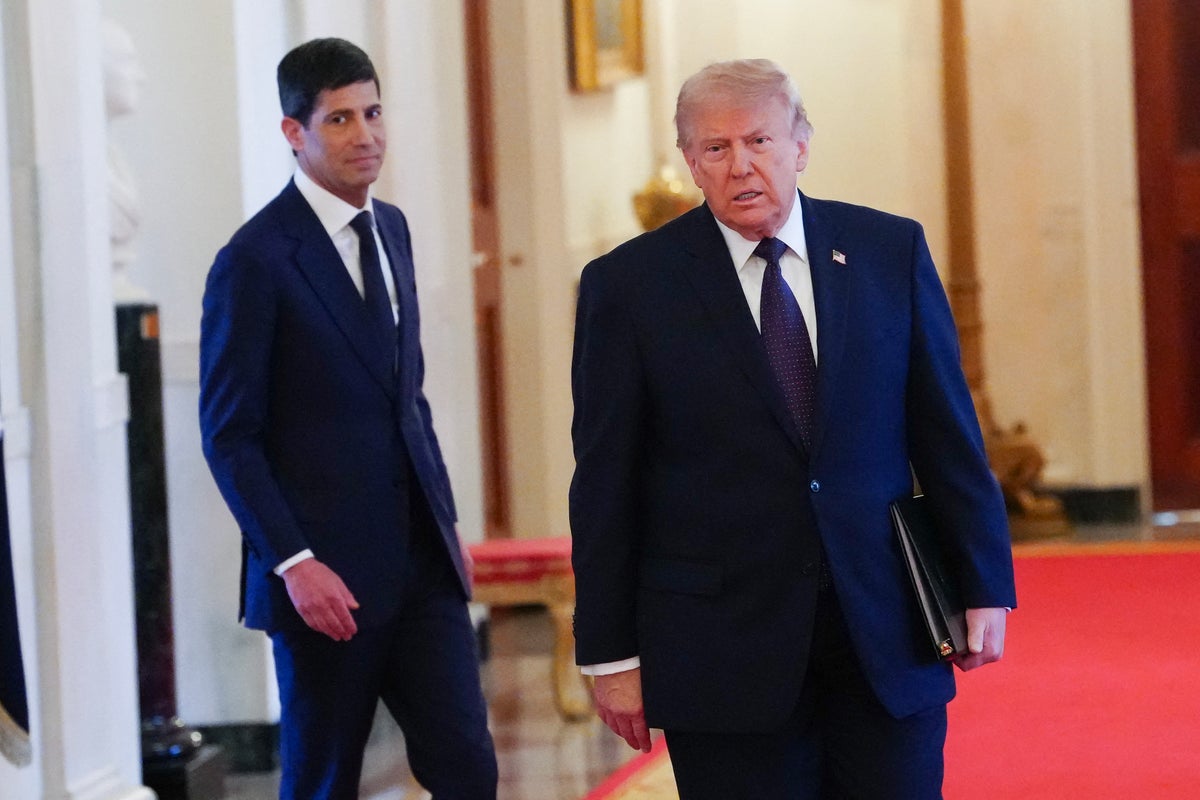
When President Donald Trump handpicked Kevin Warsh to succeed Jerome Powell at the helm of the Federal Reserve, the administration did not just select an experienced Wall Street insider and former central bank governor. They checked off a very specific aesthetic criterion. Reports indicate the president regularly compliments Warsh on his television presence and appearance, invoking the classic "central casting" phrase that has long dictated how this administration vets high-profile appointees.
Yet behind the surface-level compliments and televised approval lies an aggressive institutional realignment. The relationship between the executive branch and the world's most powerful central bank has entered a volatile new phase. The core issue is not simply whether a central banker fits a certain visual profile or commands a room on cable news. The deeper question is whether the architecture of American monetary independence can survive an era where personal rapport and direct telephone consultations replace arms-length separation. If you found value in this piece, you might want to read: this related article.
The Anatomy of Direct Access
Traditional monetary governance rests on a foundation of calculated distance. For decades, institutional norms dictated that the President of the United States and the chair of the Federal Reserve maintained a polite, professional insulation. This buffer was designed to prevent short-term political incentives from corrupting long-term monetary stability.
That buffer has worn thin. Reports detail sporadic, direct phone calls between the Oval Office and the Eccles Building. President Trump reaches out to Warsh not necessarily to bark commands about benchmark interest rates, but to solicit unvarnished perspectives on complex geopolitical shocks, artificial intelligence integration, and the economic fallout of foreign conflicts like the ongoing war in Iran. For another perspective on this event, check out the latest update from Reuters.
On its face, consulting an economic thinker on global macro trends sounds prudent. In practice, it bridges a historical chasm. When a central bank chief becomes a regular sounding board for the sitting executive outside official channels, the psychological contract of independence begins to fracture. Markets notice. Bond traders and currency speculators do not evaluate central bank autonomy based on formal declarations. They watch behavior patterns, communication loops, and the frequency of presidential praise.
The Illusion of Compliance
When Warsh took the oath of office in May inside the White House East Room—a break from decades of tradition that alarmed institutional purists—critics immediately labeled him a political instrument. Senator Elizabeth Warren famously dubbed him a sock puppet for the administration.
Yet reality on the ground has proven more complex. Warsh is not reading directly from a West Wing script. During his early press appearances following the Federal Open Market Committee decisions to leave borrowing costs unchanged, Warsh demonstrated a stubborn independence that irritated the White House. While the administration spent months pushing aggressively for immediate and deep rate cuts to juice economic velocity, the central bank under Warsh held its ground. More striking still, Warsh hinted that if inflation pressures refuse to abate, the next move might be a rate hike rather than the easing cycle the executive branch demands.
This creates a fascinating friction. The president praises Warsh as a brilliant guy and swoons over his television presentation, yet the actual policy output of the central bank refuses to bend to presidential whims.
This dynamic highlights a common miscalculation among political observers. An appointee can look the part, speak the language of corporate boardrooms, and enjoy a warm personal rapport with the commander-in-chief without turning into a rubber stamp. Warsh brings a distinctly conservative, market-oriented philosophy to monetary policy. His worldview prioritizes long-term price stability over cyclical political relief. If inflation stays sticky due to energy shocks or trade friction, his intellectual framework demands tightening, regardless of what the executive branch tweets or requests.
Outsourcing to the Open Market
The true risk of the current Federal Reserve leadership does not stem from direct subordination to the White House. It emerges from a philosophy of deliberate ambiguity.
Warsh has long championed a minimalist approach to forward guidance. Rather than telegraphing policy intentions through detailed statements and press conferences after every meeting, his strategy leans toward leaving market participants to interpret the tea leaves themselves. He has openly pointed to rising long-term bond yields as evidence that the financial markets are doing the heavy lifting of tightening conditions, allowing the central bank to sit back.
This strategy carries substantial hazards. When a central bank retreats into opacity and outsources its disciplinary function to volatile private markets, uncertainty multiplies. Businesses trying to plan multi-year capital expenditures find themselves navigating a dense fog. Investors pricing risk must factor in not just macroeconomic data, but the unpredictable whims of a central bank chief who believes that keeping everyone guessing is a virtue.
The Cost of Style Over Substance
The obsession with aesthetic qualifications and central casting aesthetics obscures the structural transformation underway in Washington. By elevating a figure who blends elite Wall Street pedigree with a willingness to engage directly with the executive, the administration has permanently altered the optics of the central bank.
Even if Warsh continues to defy political pressure on interest rates, the institutional damage may already be done. Future presidents will view the direct phone call, the White House swearing-in ceremony, and the public compliments on personal appearance as the new baseline. Independence is rarely lost in a single dramatic confrontation. It erodes slowly, one compliment, one late-night phone call, and one styled television appearance at a time.