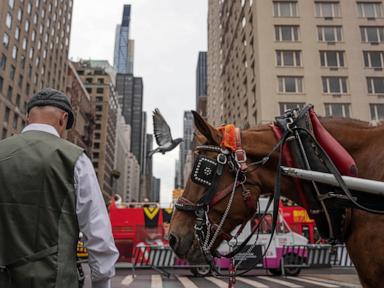
Standard reporting on New York City's ban on horse-drawn carriages frames the conflict as a zero-sum clash between animal welfare advocates and roughly 300 workers fighting to keep their jobs. That framing misses the structural mechanics driving the policy shift: a high-visibility safety shock that compressed political tolerance, a regulatory regime that priced compliance onto operators without eliminating tail risks, and an asset wind-down that strips away human capital, medallion value, and animal care obligations simultaneously.
The blueprint of this analysis maps the competitor coverage's blind spots across four operational layers: how a single fatal incident overrides decades of incremental safety rules, how fixed-asset and labor exposure behaves during a multi-year phaseout, why alternative mobility hardware faces distinct physical and municipal constraints, and what concrete steps operators, unions, and city agencies can take before the June 1, 2028 sunset.
Deconstructing the Standard Livelihood Narrative
Typical coverage of the legislation—signed into law by Mayor Zohran Mamdani in November 2026 as Romanch's Law after passing the City Council in October—relies on personal distress and binary political sides. Drivers fear losing their income; owners point to multi-generational operations and medallions; activists celebrate a humane milestone.
What that narrative omits is political salience dynamics. For years, carriage regulations evolved through incremental adjustments—veterinary checks, scheduled rest periods, and retirement rules—while bans stalled. A high-salience shock alters the political calculus abruptly. Following the June 2026 fatality in which an 18-year-old tourist died after being thrown when a carriage horse bolted, public risk perception shifted from routine oversight to intolerable tail risk. Even where statistical accident rates look low against millions of park visits, a vivid, fatal event carries disproportionate weight in municipal policymaking.
Standard coverage also treats livelihood loss as a single event occurring on the final day of operation. In reality, a statutory phaseout running to June 1, 2028 creates a two-stage economic squeeze:
- Expectation and asset-value erosion: Once enactment becomes certain, secondary transfer value for permits, equipment, and specialized goodwill drops sharply because future operating cash flows have a hard termination date.
- Operational attrition: As the sunset approaches, maintaining full stables, insurance coverage, and skilled staff becomes harder to justify against shrinking remaining operating months, potentially forcing earlier exits than the statutory deadline.
The Cost Function of a Regulated Legacy Industry
To evaluate what carriage drivers and owners actually stand to lose, treat a carriage operation as an asset-heavy micro-enterprise governed by three cost and risk variables: biological maintenance costs, regulatory compliance overhead, and asset specificity.
Unlike a standard delivery van or rideshare vehicle that can be parked idle with minimal daily upkeep, a working horse requires continuous feeding, stabling, farrier care, and veterinary attention regardless of tourist demand or weather. When heat, cold, congestion, or adverse press reduces ride volume, those biological carrying costs do not pause. Conversely, banning the sale or transfer of carriage horses for slaughter or another carriage business—a core provision of the law—restricts disposition pathways and places humane placement responsibility squarely on owners, welfare groups, and transition frameworks.
Regulatory rules add a second layer of fixed friction. Mandatory rest intervals, seasonal limits, and safety protocols raise unit operating costs while capping peak utilization. Those rules are a known fact of the industry's recent operating environment. What remains an educated hypothesis—and a central point of legal contention—is whether the city's phaseout timeline and promised transition program will sufficiently offset unrecovered capital and lost earning power.
Asset specificity explains why career transition feels acute for drivers. Driving a horse-drawn carriage in dense urban traffic requires specialized handling skills, park route familiarity, and comfort working around unpredictable pedestrians, cyclists, and motor vehicles. Those skills do not map one-to-one onto standard white-collar or general logistics roles without retraining, creating a friction gap between current wages and entry-level alternatives.
Why Legal Challenges Face Narrow Odds
Lawsuits from the Transport Workers Union and industry attorneys argue that the ban amounts to an unconstitutional taking of property and business value without adequate compensation or economic impact analysis. In municipal law, however, courts generally grant wide latitude to local governments exercising police power over public safety, street congestion, and animal welfare.
The first legal vulnerability for challengers is doctrinal: regulation that reduces profitability or ends a licensed activity is rarely treated as a compensable taking unless it strips all economically viable use from an absolute property right that existed independent of state permission. The second friction point is procedural: municipal legislatures typically face a low bar when justifying safety and public-order measures after documented incidents. Even if litigation delays or modifies implementation details, relying solely on a courtroom reversal is a high-risk strategy for workers who need income continuity before June 2028.
Cause-and-Effect Gaps Around Alternatives and Park Congestion
City officials have pointed to a feasibility study examining electric carriages and electric pedal-assist bicycles inside Central Park or along its perimeter. Replacing a horse with an electric vehicle or pedal-assist cycle solves the biological welfare and bolting-animal hazards, but it introduces a different set of operational trade-offs that competitor articles rarely examine.
- Speed and sightline differentials: Electric assist and motorized leisure vehicles can accelerate faster or move more quietly than a horse walking at a steady pace, creating new collision or pedestrian-startle dynamics on shared park drives and perimeter lanes.
- Charging, storage, and fleet weight: Electric carriages require depot charging infrastructure, battery thermal management in extreme heat and cold, and weight limits that affect passenger capacity and braking distances.
- Demand elasticity: A known fact of tourism economics is that novelty experiences attract willingness to pay. An educated hypothesis is that electric replicas will capture only a fraction of historic carriage demand unless paired with distinct routing or pricing, because the appeal of a live animal in an urban park differs from a light electric vehicle.
Removing horse carriages also does not automatically solve street or park congestion. If carriage slots disappear while pedicabs, tour buses, delivery vehicles, and rideshares continue operating nearby, total vehicle density around Central Park South and perimeter roadways may shift in composition rather than decline.
Practical Moves Before the June 2028 Sunset
Because the statutory clock is running toward June 1, 2028, stakeholders face distinct tactical priorities depending on their role. None of these steps is a silver bullet—municipal budgets can tighten, transition programs can stall, and re-skilling takes time—but structured action beats passive waiting.
For Drivers and Stable Workers
- Audit transferable skills immediately: Document commercial driving records, safety compliance, customer service experience, and animal-care credentials so they can be packaged for adjacent roles such as municipal fleet operations, park maintenance, freight/delivery, or equine facilities outside commercial street carriage work.
- Track the April transition blueprint: Monitor the Horse Carriage Worker Industry Program and Department of Consumer and Worker Protection rollout promised for April 2027 to identify concrete stipends, training vouchers, and placement pipelines rather than relying on general announcements.
- Plan equine transitions early: For workers who own or care for specific horses, begin vetting accredited sanctuaries, adoption networks, and private placements well ahead of the final months so animal care decisions are not compressed into a rushed wind-down.
For Carriage Owners and Operators
- Model cash flow through June 2028: Stress-test monthly operating margins under conservative tourist demand and rising insurance or maintenance costs, identifying the exact month when continuing operations produces negative cash flow.
- Separate legal claims from operational exits: Pursue constitutional and procedural challenges through counsel if desired, but avoid tying family solvency or horse welfare to an uncertain judicial injunction.
- Evaluate adjacent mobility or hospitality niches: Assess whether equipment, brand recognition, or guiding expertise can pivot toward private estate events, non-urban tourism, or electric mobility trials if municipal rules permit.
For Policymakers and City Planners
- Tie worker compensation directly to phaseout milestones: Pair job training and entrepreneurship grants with clear eligibility rules and direct transition support so displacement costs do not fall disproportionately on low-tenure workers.
- Publish hard safety and flow metrics in the mobility study: Evaluate electric carriages and pedal-assist bicycles against concrete braking, speed-cap, pedestrian-conflict, and perimeter traffic benchmarks rather than treating hardware swaps as an automatic fix.
The Strategic Play Ahead
The decisive battle over New York City's carriage ban will not be won by repeating slogans about heritage or animal rights; it will be decided by execution quality between now and June 2028. The most effective strategic move for unions and industry representatives is to stop treating the transition plan as an afterthought to litigation and instead negotiate binding, enforceable terms around direct buyouts or transition stipends, accredited horse-retirement funding, and priority placement into regulated city or transit roles before the April rollout locks in program design.