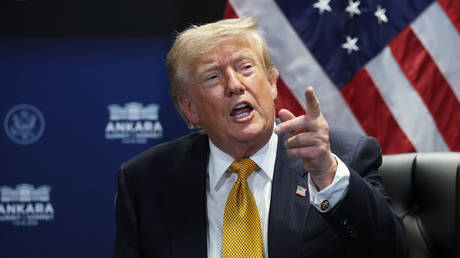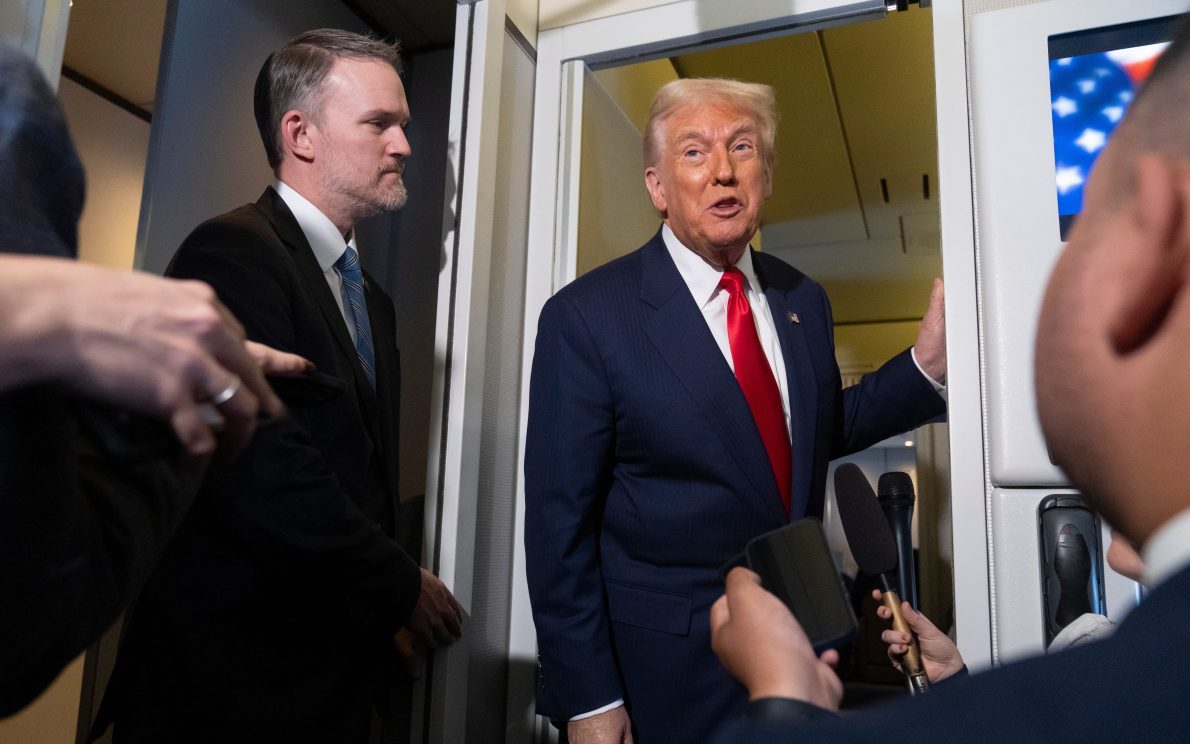
Section 338 tariffs originate from an obscure provision of the Tariff Act of 1930 that grants the U.S. president sweeping unilateral power to levy retaliatory duties of up to 50 percent on foreign goods. They bypass the Canada-United States-Mexico Agreement (CUSMA) because the statute contains no exception for preferential trade treaties, allowing the executive branch to claim that presidential determinations of foreign trade discrimination override existing treaty commitments under domestic statutory authority. When President Donald Trump invoked Section 338 on July 20, 2026, he deployed a long-dormant weapon that fundamentally alters North American trade mechanics.
The proclamations hit Canadian motor vehicles, dairy, and alcoholic beverages with an immediate 50 percent duty scheduled for implementation 30 days after signing. But the real story is not just the suddenness of the announcement. It is how an almost forgotten piece of Depression-era trade legislation has rendered modern free trade guarantees virtually meaningless overnight.
The Resurrected Weapon of 1930
Smoot-Hawley defined an era of economic isolationism. Passed in 1930 during the Herbert Hoover administration, the Tariff Act contained dozens of provisions designed to wall off the domestic market from foreign competitors. Most of those provisions were eventually repealed, modified, or superseded by modern trade architecture like the General Agreement on Tariffs and Trade (GATT) and the World Trade Organization (WTO).
Section 338 remained.
The provision, codified at 19 U.S.C. § 1338, gives the chief executive the power to impose additional duties whenever he finds "as a fact" that a foreign country places an unequal burden or disadvantage on American commerce. It was designed for a world of aggressive bilateral trade spats, long before multi-party regional blocks existed. For nearly a century, policymakers considered it a relic, an antique stored in the basement of federal trade law.
The White House dusted it off.
By relying on Section 338 rather than standard trade enforcement tools, the administration avoided the protracted investigations required by other trade statutes. Under Section 232 national security reviews or Section 301 unfair trade investigations, federal agencies must conduct lengthy public hearings, collect testimony, and issue extensive evidentiary reports before duties can be applied. Section 338 requires none of that procedural delay. The law charges the International Trade Commission with collecting information, but the ultimate declaration of "fact" rests solely with the president.
That single statutory quirk turned an obscure policy clause into a rapid-fire trade missile.
The Legal Mechanism Overriding Regional Free Trade
A fundamental question puzzles corporate boardrooms and legal scholars. How can a domestic law enacted in 1930 override a international treaty ratified by Congress in 2020?
The answer lies in how American courts handle statutory interpretation and trade agreements.
Under U.S. constitutional structure, trade agreements like CUSMA (known as USMCA in the United States) are implemented through federal legislation. When Congress passes an implementing act for a trade treaty, that treaty carries the weight of federal statute. However, domestic legal doctrine holds that older statutes do not simply disappear because a newer treaty is signed, unless Congress explicitly repeals the older law.
Section 338 was never repealed.
Furthermore, CUSMA itself contains explicit carve-outs for specific statutory mechanisms, but it lacks a direct prohibition against Section 338 enforcement actions. Because Section 338 allows the executive to act whenever he determines that foreign discrimination exists, the White House position is that the law operates outside the preferential framework of CUSMA. In practical terms, a foreign good can meet every single rule of origin required under CUSMA and still face a 50 percent penalty at the border.
Trade lawyers call this the dual-track system.
On one track sits preferential duty-free access under regional agreements. On the other track sits non-preferential administrative enforcement actions. When the White House triggers an administrative enforcement statute like Section 338, it overrides the preferential rate with a non-negotiable surcharge applied directly at entry.
The legal friction is immediate. Canadian trade officials argue that applying Section 338 duties to origin-qualifying goods is a direct breach of the pact's core promise of tariff-free access. But until a court orders U.S. Customs and Border Protection to stop collecting the money, the administrative machinery moves forward without pause.
A Target List Expanding Beyond The Headlines
Official White House press briefings focused on headline disputes. They highlighted Canada's 25 percent surtax on non-CUSMA U.S. vehicles, provincial liquor board distribution restrictions, and dairy tariff-rate quota allocations.
The actual target list tells a very different story.
Tucked into the annexes of the three presidential proclamations are over 550 individual tariff classifications. The line items reach deep into cross-border industrial manufacturing and everyday retail goods.
The motor vehicle proclamation demonstrates the extreme scope of the orders. While the narrative centers on passenger cars and SUVs, the technical annexes sweep in industrial components, specialized tools, and commercial machinery. Other annexes target Portland cement, furniture, plywood, textiles, ice skates, and hockey sticks.
Consider a hypothetical commercial supply chain scenario.
A Canadian manufacturer produces specialized steel components for commercial construction in Illinois. The components easily pass CUSMA rules of origin because all raw steel is melted and poured in North America. Under standard CUSMA operations, the importer pays zero duty. Under the Section 338 order, that same importer faces an additional 50 percent ad valorem tax upon entry into the United States.
A $100,000 shipment instantly becomes a $150,000 liability at the customs checkpoint.
The economic shock is compounded by how the tax is calculated. The 50 percent duty applies to the total custom value of the imported product. Importers cannot subtract the value of U.S.-made subcomponents previously shipped into Canada for assembly. If a Canadian factory uses 40 percent American parts to construct a finished assembly, the entire finished good is taxed at the full 50 percent rate when re-entering the United States.
That structural reality turns integrated cross-border supply chains into double-taxation traps.
High Stakes Court Battles and Structural Vulnerabilities
The White House assumes Section 338 is an unassailable executive tool. That assumption will face intense testing in domestic courts.
Importers and industry associations are preparing filings for the U.S. Court of International Trade in New York. Their legal strategy hinges on three structural arguments.
First, challengers argue that Section 338 requires an objective evidentiary record, not merely a political declaration of discrimination. While the statute gives the president the power to find facts, opponent lawyers maintain that arbitrary findings without an underlying agency investigation violate basic standards of administrative procedure.
Second, legislative intent plays a major role. Opponents point to subsequent trade legislation—specifically the Trade Expansion Act of 1962 and the Trade Act of 1974—as evidence that Congress intended to replace Depression-era unilateral authorities with modern, structured enforcement frameworks.
Third, constitutional non-delegation arguments are resurfacing. Article I, Section 8 of the U.S. Constitution explicitly grants Congress the exclusive power to lay and collect duties and regulate foreign commerce. Delegating unlimited authority to the president to declare discrimination and unilaterally impose 50 percent duties without time limits or congressional review tests the limits of executive power.
Unlike Section 122 of the Trade Act of 1974, which caps emergency import surcharges at 150 days unless Congress grants an extension, Section 338 contains no statutory expiration date. The duties remain in place indefinitely until the president decides to terminate or modify them.
That lack of a timer creates immense political pressure.
In Capitol Hill corridors, lawmakers from border states are watching the fallout with deep concern. Legislation like H.R. 2464, designed to explicitly repeal legacy trade provisions including Section 338, has sat stagnant in committee. The sudden activation of 50 percent tariffs across hundreds of product categories could force congressional leadership to take up statutory reform to pull back executive tariff authority.
Shockwaves Across Integrated Industrial Supply Chains
North American industry did not evolve in isolation. Over thirty years of integrated trade under NAFTA and CUSMA created intricate, hyper-connected production networks. Parts often cross the U.S.-Canada border multiple times before final assembly.
A 50 percent tariff applied at the border breaks that model entirely.
In automotive manufacturing, engine blocks cast in Ontario cross into Michigan for machining, return to Ontario for assembly into powertrains, and travel back to Ohio for final installation in vehicles. A 50 percent penalty levied at any single crossing destroys the thin margin structure of automotive production.
For middle-market manufacturers, the choices are immediate and harsh.
They can absorb the 50 percent cost surge and exhaust operating cash flow in weeks. They can attempt to pass the cost along to American consumers, risking lost market share to foreign competitors outside the tariff scope. Or they can shut down cross-border production lines entirely.
The timing of the proclamations adds another layer of pressure.
The 30-day grace period between the July 20 signing and the August 19 effective date forces companies into immediate logistical maneuvering. Freight forwarders report an immediate surge in requests to clear inventory through customs before the deadline hits. But bonded warehouses offer little escape. Under U.S. customs rules, goods held in bonded warehouses or Foreign Trade Zones will face the 50 percent tax the moment they are withdrawn for domestic consumption after the August 19 deadline.
The buffer period is not designed to help businesses adjust. It is designed to maximize leverage at the negotiating table.
Strategic Escalation and The CUSMA Review
The activation of Section 338 is not an isolated policy decision. It is an opening salvo in a broader geopolitical strategy tied directly to the upcoming joint review of CUSMA.
Under the terms of the agreement, the party nations must conduct a comprehensive review of the treaty. By invoking a severe, 50 percent tariff penalty outside the CUSMA framework, the White House has effectively altered the baseline of negotiations.
Canada faces an asymmetric predicament.
Retaliating with equivalent surtaxes on American imports runs the risk of escalating the conflict further, potentially triggering full import bans authorized under the second tier of Section 338. Yet failing to respond leaves domestic industries vulnerable to unilateral economic pressure.
Ottawa's initial response has been aimed at rallying provincial premiers and highlighting the mutual harm to American buyers who rely on Canadian industrial inputs. But moral suasion carries little weight against an administrative action grounded in a statutory power that treats presidential findings of fact as unappealable reality.
The precedent established here reaches far beyond Ottawa and Washington.
If the executive branch can successfully deploy a 1930 trade statute to override a modern free trade agreement, no trade treaty signed by the United States provides absolute protection for foreign investors. Every preferential tariff rate becomes conditional, subject to the political environment in Washington and the sudden revival of century-old statutory authorities.
Companies operating across the border can no longer treat CUSMA compliance as a guarantee of market access. They must now map their exposure to domestic administrative trade law, accounting for provisions that lay dormant for decades until political conditions make them useful once again.
The era of predictable regional free trade has given way to an environment governed by executive discretion and forgotten statutes.