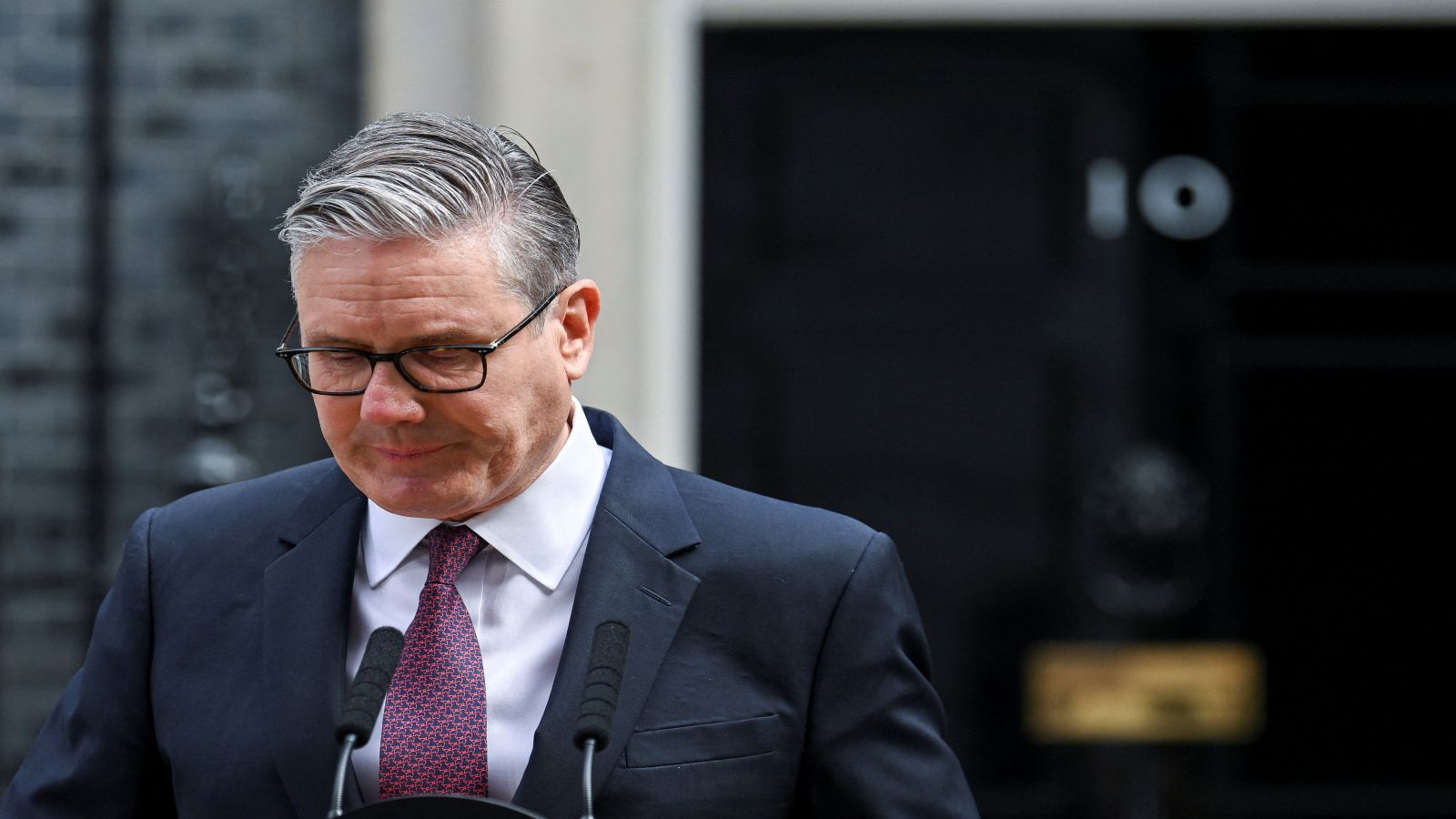
Keir Starmer stepped outside 10 Downing Street, his voice cracked with emotion, and resigned. He lasted less than two years. Britain has now chewed through six prime ministers in a single decade. It is the fastest political turnover the country has seen in nearly two centuries.
If you are looking at the UK from the outside, it looks like a circus. If you live here, it feels like a broken machine. Voters are exhausted, the bond markets are twitchy, and the national infrastructure is literally crumbling.
But swapping leaders out like underperforming football managers will not change anything. The endless revolving door at Downing Street is not the cause of Britain's problems. It is just a glaring symptom of a much deeper, structural decay that has been building for twenty years. Britain is trapped in an economic chokehold, and no single politician can magically wish it away.
The Real Reason Britain Swings the Ax So Fast
Voters keep backing new leaders hoping for a reset. They get disappointed almost instantly. The 2024 election delivered a massive landslide for Labour, but that victory was built on quicksand. It was not a passionate endorsement of Starmer. It was a desperate cry to get the Conservatives out after fourteen years of chaos.
When the new government failed to quickly fix public services or boost wages, the public mood curdled. The recent local elections proved that the old two-party duopoly is completely dead. The political scene has fragmented into a five-party fight, with Reform UK and the Greens eating away at the traditional base.
Our electoral system used to guarantee stability. Now, it creates hyper-vulnerability. In 2024, the number of marginal parliamentary seats more than doubled to 115. Backbench MPs know their political survival is on a knife-edge. The moment a prime minister becomes a electoral liability, their own party knives come out. It is a vicious cycle. A leader fails to deliver instant miracles, backbenchers panic, the media feeds the frenzy, and the leader gets dumped.
The Broken Economic Engine and the Productivity Mirage
The rot started long before Brexit. The global financial crisis of 2008 dealt a devastating blow to the UK, which relied way too heavily on the city of London's banking sector. Ever since, real disposable income has stagnated.
Recent data from the Office for National Statistics shows a weird anomaly. UK productivity—the output per hour worked—actually jumped by over 3% recently. On paper, that looks great. In reality, it is a grim process of creative destruction.
Interest rates are no longer near zero. Energy costs are high. The minimum wage went up. Zombie companies that survived for a decade on cheap money are finally going bust. Corporate insolvencies are at their highest levels since 2011. The productivity growth is not happening because businesses are investing in better technology or smarter systems. It is happening because companies are firing people and shutting down.
Destruction is happening, but creation is completely missing. Displaced workers are not moving into high-tech, high-wage roles. They are falling into economic inactivity or struggling in a brutal job market. The UK economy grew by a miserable 0.1% in the final quarter of last year. Business investment dropped by 2.7%. Construction fell by 2.1%. The economic engine is sputtering out of fuel.
The Great British Tax Delusion
Britain has a fundamental identity crisis that nobody wants to admit. The public wants European-style public services but only wants to pay American-style taxes. You cannot have both.
Decades of underinvestment have left public infrastructure in ruins. Hospitals have enormous backlogs. Schools are dealing with structurally unsafe concrete. Roads are potholed. Yet, the national debt is sitting right against 100% of GDP. The government runs a budget deficit of over 4%.
When Liz Truss tried to fund massive tax cuts through borrowing, the bond markets revolted, spiking gilt yields and destroying her premiership in weeks. The markets are still watching Downing Street like hawks. Any sign that a new prime minister wants to print money or borrow heavily to buy voter popularity will trigger another immediate financial meltdown.
The fiscal space is gone. The UK faces massive new spending pressures from an aging population, the green energy transition, and a cross-party consensus to ramp up defence spending due to global threats. To fix the NHS and repair the roads, taxes have to go up significantly, or public spending must be slashed to the bone. No politician has the guts to tell voters the truth. They prefer to tinker at the edges, get blamed for the inevitable failure, and pass the buck to the next occupant of Number 10.
Stop Blaming Brexit for Everything
It is easy to point to the 2016 Brexit vote as the sole point of failure. Economists generally agree that leaving the European Union cost the UK between 4% and 8% of GDP in lost trade and investment. It certainly created massive friction and severed long-standing economic ties.
But treating Brexit as the root cause ignores the pre-existing conditions. The UK was already underinvesting in skills, regional development, and infrastructure for decades before 2016. Brexit simply exposed the structural weaknesses that cheap European labor and easy access to the single market used to mask.
The state is too centralized. Power is hoarded in Whitehall. The central government offices are too small and reactive to manage a modern economy properly. Politicians face a 24-hour news cycle and social media outrage, forcing them to draft hasty, poorly thought-out legislation. We do not need more laws. We need better execution.
What Needs to Happen Right Now
The next prime minister, whether it is Andy Burnham or anyone else, will face the exact same wall of reality. If they try the same old playbook of short-term fixes and media management, they will be gone in eighteen months too.
To actually turn the ship around, the government must execute three immediate, painful shifts.
First, the UK must overhaul its restrictive planning system. The OECD has repeatedly pointed out that building anything in Britain—from a railway line to a laboratory space—is an absolute nightmare of red tape. Swift planning reform is the quickest way to unblock private business investment without spending taxpayers' billions.
Second, the tax system needs immediate simplification. It is clogged with counterproductive exemptions and complexities that disincentivize small business growth and capital investment.
Finally, the government has to look voters in the eye about the cost of public services. If the country wants a functioning National Health Service, it requires a dedicated, long-term funding strategy funded by transparent taxation, not short-term emergency cash injections.
The era of easy answers is over. The UK does not need another charismatic savior or a slick media operator. It needs a leader willing to take immense political damage to fix the structural plumbing of the state. Until that happens, the conveyor belt of short-lived prime ministers will just keep moving.