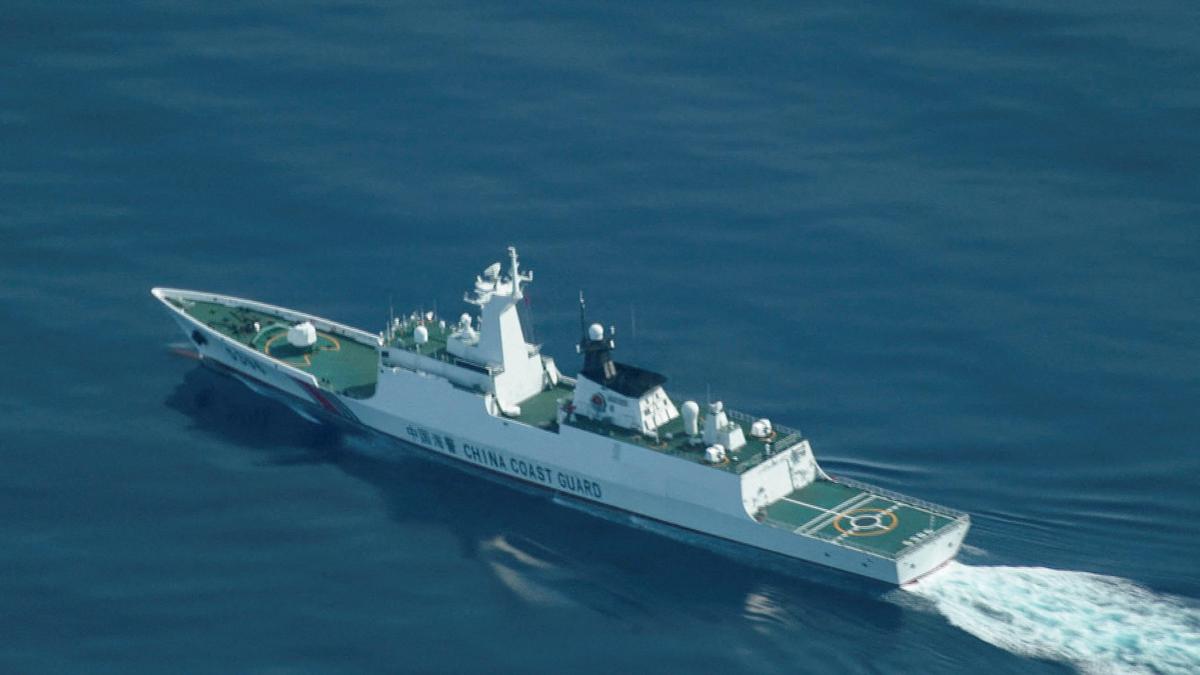
Diplomacy at the United Nations is usually a slow burn of polite disagreements, but things just got incredibly heated in New York. On Monday, April 27, 2026, the UN Security Council became the stage for a sharp verbal brawl. China didn't hold back, unloading on both Japan and the European Union for their latest commentary on the South China Sea. If you think this is just another dry bureaucratic spat, you aren't looking closely enough. This is about who controls the world's most vital shipping lanes and whether outside powers have any business telling Beijing how to run its backyard.
The tension wasn't an accident. It's the result of a coordinated push by Tokyo and Brussels to frame China’s maritime activities as a threat to global stability. Beijing’s response? They’re essentially telling everyone else to mind their own business.
The UN Showdown Explained
The spark for this latest firestorm was a maritime security meeting where Ayano Kunimitsu, Japan’s vice foreign minister, expressed "serious concern" about the East and South China Seas. Kunimitsu didn't name China directly—that's the "polite" part of UN theater—but the target was obvious. She hammered on the importance of the "status quo" and freedom of navigation.
Then Stavros Lambrinidis, the EU’s man at the UN, piled on. He argued that tensions in the region are messing with critical shipping routes and challenging the "rules-based international order." When you hear that phrase, it's almost always a jab at China’s refusal to follow the 2016 international tribunal ruling that invalidated its sweeping maritime claims.
China’s deputy UN ambassador, Sun Lei, was ready for them. He didn't just disagree; he went on the offensive. He called the Japanese remarks "unwarranted" and accused Japan of "confounding black and white." Honestly, the rhetoric was some of the harshest we've seen in months. Sun dismissed the EU’s concerns as "irresponsible" and "unsubstantiated," insisting that the South China Sea is actually one of the freest and safest shipping lanes on the planet.
Japan and the Taiwan Strait Connection
The real reason Beijing is so furious with Tokyo right now goes beyond just a few islands and reefs. Sun Lei explicitly linked Japan's comments to what he called "provocative behavior" in the Taiwan Strait.
I've been tracking this for a while, and the math is simple. Japan is scared. Since Prime Minister Sanae Takaichi took office, Tokyo has been much louder about Taiwan. Takaichi previously stated that a Chinese attack on Taiwan would be an "existential crisis" for Japan. In the world of geopolitics, those are fighting words. It signals that Japan might actually use its military to intervene if things kick off.
Sun Lei didn't let that slide. He accused Japan of "flexing its muscles" by sending vessels into the Taiwan Strait to send signals to "separatists" in Taipei. Basically, China sees Japan’s concern for maritime law as a thinly veiled excuse to expand its military footprint and back Taiwan’s independence.
Why the EU is Getting Dragged Into This
You might wonder why China cares what the EU thinks about a sea thousands of miles away from Paris or Berlin. It's about legitimacy.
If it's just the US and Japan complaining, China can frame it as "Cold War thinking" or regional rivalry. But when the EU joins the chorus, it looks like a global consensus against Beijing’s actions. China hates this. They want the South China Sea to be a regional issue settled between them and Southeast Asian nations—not an "internationalized" conflict where Europe gets a vote.
Sun Lei’s message to Brussels was blunt: stop talking about things you don't understand. From Beijing's perspective, the EU is just echoing Washington’s talking points to help the US contain China's rise.
The Reality of the "Status Quo"
When people talk about the "status quo," they're usually talking about two very different things depending on which side of the ocean they're on.
- For Japan and the EU: The status quo means no more artificial islands, no more harassing Philippine or Vietnamese fishing boats, and following the UN Convention on the Law of the Sea (UNCLOS).
- For China: The status quo means their historical "Nine-Dash Line" claim. They believe they're just reclaiming what was always theirs and that any "change" is coming from Western-backed provocations.
The situation is objectively messy. While Sun Lei claims the sea is stable, we’ve seen countless videos of water cannons being used against supply ships and "grey zone" tactics where maritime militia boats crowd out competitors. Calling it "stable" is a stretch, but in the halls of the UN, perception is everything.
What This Means for You
This isn't just a map dispute; it’s a trade dispute. About a third of global shipping passes through these waters. If the verbal sparring at the UN turns into a physical blockade or a "miscalculation" between naval vessels, your morning coffee, your smartphone, and your car parts are going to get a lot more expensive.
Japan is currently planning its biggest military expansion since World War II. China is restricting exports of rare earth materials to Japan in retaliation for various diplomatic slights. We're looking at a slow-motion decoupling of the world's second and third-largest economies.
If you're looking for a sign that things are cooling down, this UN meeting wasn't it. In fact, the rhetoric suggests both sides are digging in their heels. China is signaling that it won't be bullied by "outside powers," and Japan is signaling that it's done staying quiet about its security fears.
Watch the Taiwan Strait. That’s where the next real test will happen. If Japan continues its naval patrols and China continues its "resolute countermeasures," the verbal fireworks at the UN will be the least of our worries. For now, keep an eye on trade restrictions. When the diplomats start yelling, the trade ministers usually start signing sanctions shortly after. Don't be surprised if your "Made in Japan" or "Made in China" tech gets caught in the crossfire sooner rather than later.