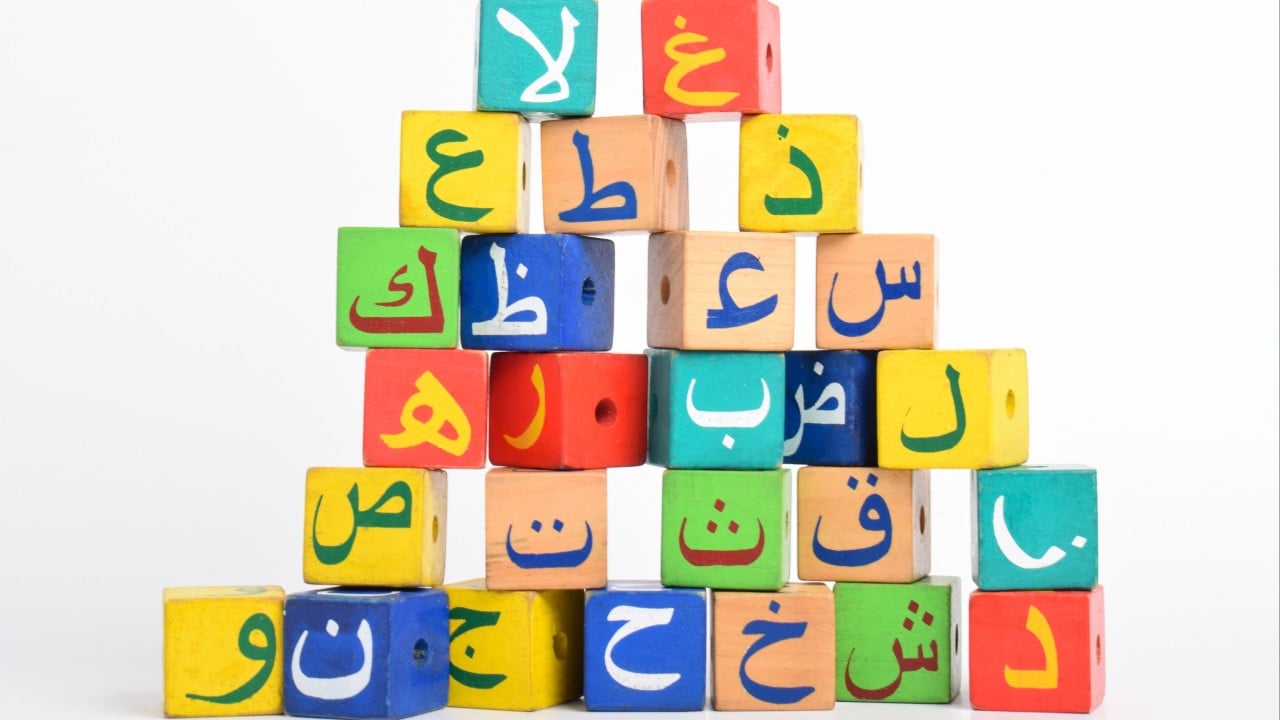
The race for linguistic dominance in the Middle East just took a sharp turn toward Beijing. While Silicon Valley giants struggle to make sense of the vast morphological complexities of the Arabic language, a new contender named Habibi has emerged from the Chinese AI sector. It is not just another chatbot. It is a strategic attempt to bridge the gap between twenty distinct Arabic dialects that have long been a graveyard for Western natural language processing efforts.
Most large language models (LLMs) operate on a diet of Modern Standard Arabic (MSA), the formal "newspaper" version of the language that almost nobody speaks at home. This creates a functional wall. When a user in Riyadh or Cairo interacts with an AI, they are often forced to code-switch into a formal register that feels unnatural and stiff. Habibi targets this friction point by training on the messy, vibrant realities of regional speech.
Data is the new oil in the Gulf, but raw data without cultural context is useless. The developers behind Habibi understood that the nuances of a Levantine greeting differ fundamentally from a Maghrebi one. By integrating these specificities into a single architecture, they have moved past the "one size fits all" approach that has limited the utility of AI in the Middle East for years.
The Architecture of Regional Influence
Traditional models fail in the Arab world because they treat Arabic as a monolithic block. It isn't. The linguistic distance between a Moroccan Darija speaker and an Iraqi villager can be as wide as the distance between a Spaniard and an Italian. To solve this, Habibi uses a tiered training approach that prioritizes dialectal tokenization.
Standard models often break Arabic words into chunks that make sense mathematically but fail linguistically. They strip away the "Harakaat" (vowel marks) or misinterpret the "roots" that form the backbone of Semitic languages. Habibi’s engineers specifically optimized the model to recognize how the same root word transforms across different borders. This is a technical feat that requires more than just raw computing power; it requires a deep understanding of the sociolinguistics of the MENA region.
This isn't just about making a better translation tool. It is about economic integration. If a company in Dubai wants to automate customer service across the entire Arab world, they currently have to hire separate teams or build separate bots for different markets. Habibi promises a single point of entry. It is a play for the backbone of the region's digital economy.
Why Silicon Valley Lost the First Round
The failure of American AI in the Middle East is a story of neglect. For years, the big players treated Arabic as a "Tier 2" language. They threw massive datasets at their models and hoped the patterns would emerge. But Arabic is a high-context language where meaning is often buried in cultural references and historical idioms.
Chinese tech firms have a different playbook. They are used to operating in environments with complex linguistic hierarchies and heavy government oversight. They see the Middle East not as a secondary market, but as a primary testing ground for their global expansion. Habibi is the physical manifestation of this focus. While American firms were arguing about safety guardrails in English, Chinese developers were on the ground in Riyadh and Abu Dhabi, collecting the specific data points needed to make a model sound human in Arabic.
The result is a model that handles code-switching—the habit of mixing Arabic and English or French—with a fluidity that GPT-4 still struggles to match. In cities like Beirut or Dubai, people don't speak a "pure" language. They speak a hybrid. Habibi’s ability to navigate these linguistic intersections makes it feel less like a machine and more like a local.
The Geopolitical Stakes of Data Sovereignty
We cannot look at Habibi through a purely technical lens. This is a geopolitical maneuver. As Gulf nations like Saudi Arabia and the UAE push their "Vision 2030" and "Centennial 2071" plans, they are desperate for technological independence. They want "Sovereign AI"—systems that reflect their values, their culture, and their language without being filtered through a Western ideological lens.
By partnering with Chinese firms to develop or deploy models like Habibi, these nations are diversifying their tech stack. They are sending a clear message to Washington: if you won't build tools that respect our linguistic and cultural nuances, someone else will.
There is also the matter of data privacy and hosting. Habibi is designed to be deployed in local data centers. This matters to regional governments that are increasingly wary of sending their national data to servers in Virginia or Oregon. The ability to keep the "brain" of the AI within the borders of the country using it is a massive selling point that the Chinese are exploiting to the fullest.
The Dialect Problem is a Business Problem
For a long time, the inability of AI to understand dialects was seen as a minor annoyance. It isn't. It is a massive barrier to entry for e-commerce, healthcare, and legal services.
Imagine a patient in a rural part of Egypt trying to explain their symptoms to a telehealth bot. If that bot only understands Modern Standard Arabic, the patient will struggle to find the right words. Miscommunication in that context isn't just a technical bug; it's a safety risk. Habibi’s focus on the "street" version of the language addresses this directly.
In the business world, the stakes are equally high.
- Marketing: A campaign that uses the wrong dialect feels "off" and loses its impact.
- Customer Support: Resolving an issue in the user's native tongue builds a level of trust that a formal bot cannot achieve.
- Content Creation: Social media is driven by dialect. A model that can generate content in Kuwaiti or Sudanese opens up new avenues for creators.
Habibi isn't just "uniting" dialects; it is commodifying them. It is turning the way people actually speak into a set of actionable data points that can be bought, sold, and optimized.
The Risks of a Single Linguistic Filter
There is a danger in letting a single model become the arbiter of "correct" dialect. Language is fluid. It changes every day on the streets and in chat rooms. When you freeze a dialect into an AI model, you run the risk of creating a digital caricature.
Critics point out that Habibi, despite its impressive reach, still relies on the datasets it was fed. If those datasets were biased toward certain regions—say, the more affluent Gulf states—the model might inadvertently marginalize the dialects of poorer or more peripheral populations. There is a "linguistic imperialism" at play here, where the most commercially viable dialects get the most attention, leaving others to fade into the digital background.
Furthermore, the involvement of Chinese tech brings up inevitable questions about censorship. How does Habibi handle sensitive political topics? Does it mirror the speech restrictions of its creators, or does it adapt to the local laws of the Middle East? The answer is likely a bit of both, creating a complex web of "allowable" speech that users will have to navigate.
Beyond the Chatbot
The true potential of Habibi lies in its integration into the physical world. We are looking at a future where smart cities in the desert are managed by AI that speaks the local tongue. From voice-activated elevators in the Burj Khalifa to automated police reports in Riyadh, the language of the machine will be the language of the people.
This requires an immense amount of localized compute power. The partnership between Chinese hardware providers and Middle Eastern capital is the real story behind the software. They aren't just building an app; they are building the infrastructure for an AI-powered Arab world.
Habibi is a wake-up call for the rest of the industry. It proves that the most successful AI will not be the one with the most parameters, but the one that understands the user's soul. And the soul of the Middle East is found in its dialects.
The Technical Debt of the West
The West is currently suffering from a form of linguistic arrogance. There is an assumption that because English is the lingua franca of the internet, an English-centric model can simply be "translated" into effectiveness elsewhere. Habibi proves this is a fallacy.
To compete, Western firms will have to do more than just scrape the web for more Arabic text. They will need to invest in "human-in-the-loop" training with native speakers from every corner of the Arab world. They will need to rethink their tokenization strategies and their data collection ethics. Most importantly, they will need to show up.
The Chinese have shown up. They have spent the time in the cafes of Cairo and the boardrooms of Riyadh. They have listened to how people actually talk, and they have built a machine that reflects that reality.
A New Era of Digital Diplomacy
Habibi represents a shift in how soft power is projected. In the past, influence was spread through movies, music, and news. Today, it is spread through the algorithms that tell us what to think, how to write, and how to communicate. By providing the tools for communication, China is positioning itself as an indispensable partner in the Arab world's future.
This isn't a "game-changer"—it's a hostile takeover of the linguistic landscape. It is a reminder that in the world of technology, being first is often less important than being right. And right now, Habibi is speaking the right language.
The Middle East is no longer waiting for Silicon Valley to catch up. The region is moving forward with partners who are willing to build for their specific needs. Habibi is just the beginning. The next decade will see a proliferation of these localized models, each one carving out a piece of the global digital identity.
If you want to understand where the next frontier of AI will be fought, don't look at the labs in San Francisco. Look at the data centers rising in the sands of the Peninsula. That is where the future of the Arab mind is being coded, one dialect at a time.


