China Exporting Drone Farming to Emerging Markets
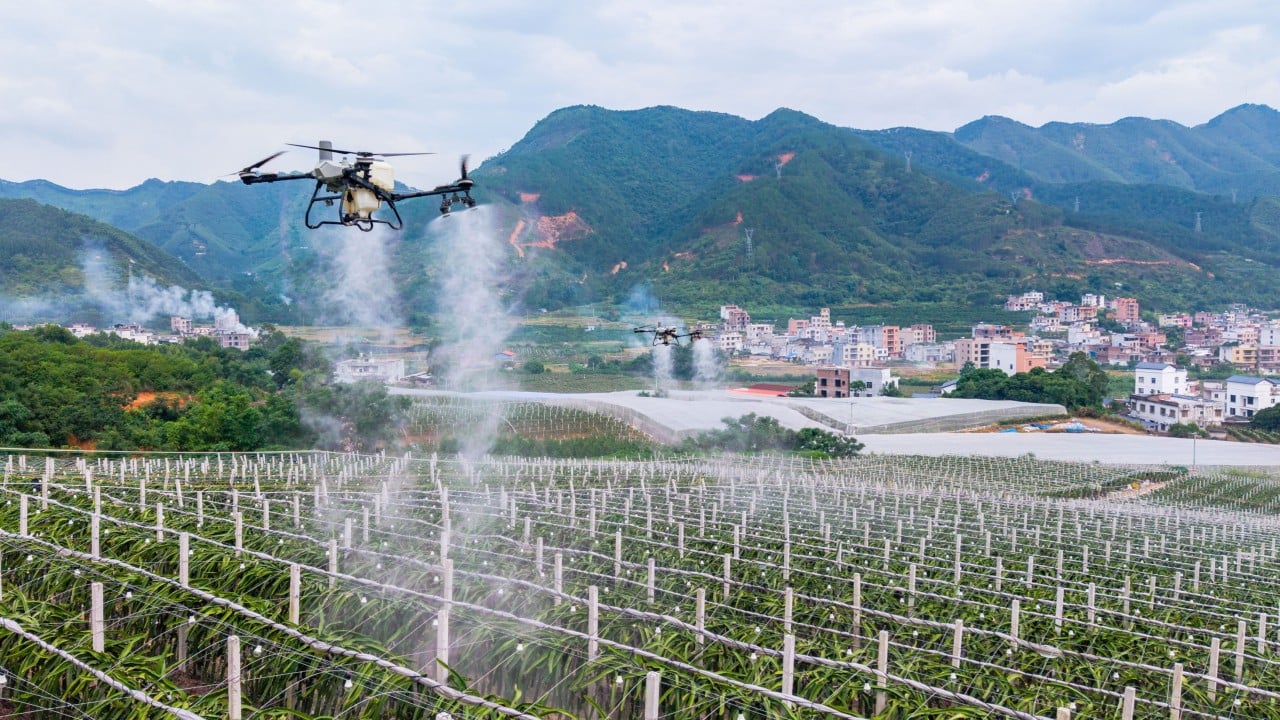
Agriculture automation is undergoing a massive geographic shift. Chinese manufacturers of agricultural unmanned aerial vehicles are aggressively exporting drone farming technologies to emerging markets across Latin America, Africa, and Southeast Asia. This movement is not merely a commercial expansion; it represents a calculated strategy to dominate the global food production supply chain at its operational root.
For years, companies like XAG and DJI Agriculture saturated domestic testbeds. They mapped millions of hectares of terraced rice paddies and sprawling northern wheat fields. Now, domestic market saturation has forced these firms outward. They are targeting developing economies where traditional labor pools are shrinking, farm sizes vary wildly, and regulatory hurdles for autonomous flight remain minimal.
To understand why this export wave is accelerating, one must look past the sleek marketing videos of multi-rotor craft dusting crops at sunrise. The reality on the ground involves complex logistical bottlenecks, hardware durability tests in tropical climates, and a quiet contest for agricultural data sovereignty.
The Economic Pressure Driving Outbound Expansion
Margins in the domestic hardware sector have compressed drastically. Price wars among hardware makers drove down unit costs for crop-spraying drones. Manufacturers needed new revenue streams immediately. Developing nations offered the ideal proving ground.
Many emerging economies face a severe demographic squeeze. Young rural populations continue migrating to urban centers. Farms are left short of manual labor during critical planting and harvesting windows. Traditional machinery, such as large tractors or heavy self-propelled sprayers, often fails in wet or fragmented terrain. Small-holder farmers cannot afford expensive Western heavy equipment, nor can their land accommodate it.
Autonomous crop-dusting aircraft fill this exact vacuum. They cost a fraction of a traditional tractor. They require minimal infrastructure. A single operator can manage multiple units with basic tablet training.
Financing Models That Lower Barriers
Hardware export alone does not solve the purchasing power problem for smallholders in developing regions. Chinese firms have adapted by introducing service-oriented business models.
Instead of selling expensive hardware upfront, distributors often deploy a drone-as-a-service framework. Local entrepreneurs buy a fleet with micro-loans or revenue-sharing agreements. They then travel from farm to farm, charging smallholder farmers per acre for spraying services. This lowers the barrier to entry entirely.
Technical Adaptation in Developing Regions
Operating a precision flight machine in Henan province is vastly different from flying over a rugged coffee plantation in Colombia or a maize cooperative in Kenya.
Engineers have had to re-engineer hardware for harsh operational realities. High humidity, erratic power grids, and intense heat destroy sensitive lithium-ion batteries and flight controllers. Export models now feature upgraded thermal management systems and reinforced composite frames to withstand accidental impacts with dense brush.
The Connectivity Mirage
A persistent myth in agritech circles assumes that high-speed cellular coverage blankets the developing world. It does not.
Autonomous sprayers often operate in deep rural zones where 4G signals fluctuate or vanish entirely. Manufacturers responded by upgrading offline navigation capabilities. Modern export units rely heavily on localized RTK base stations and pre-mapped offline route caching. A pilot can set boundaries manually via a handheld controller, ensuring the unit executes its spray pattern even when cloud connections drop.
The Geopolitical Dimension of Agritech
When a developing nation adopts a foreign agricultural automation ecosystem, they import more than carbon-fiber blades and electric motors. They integrate foreign cloud infrastructure, flight telemetry software, and diagnostic protocols.
Every flight logs terabytes of valuable data. Soil composition estimates, crop health indices, local yield projections, and regional pest movement patterns flow directly back into software platforms. While commercial entities frame this as routine agronomic optimization, foreign policy analysts view it differently. Control over localized crop data provides deep insights into a nation's food security status and economic vulnerability.
Regulatory Vacuums in Target Markets
Western nations maintain stringent aviation and chemical-application regulations that slow down autonomous deployment. The Federal Aviation Administration in the United States and the European Union Aviation Safety Agency enforce rigorous certification processes for beyond-visual-line-of-sight operations.
In contrast, many emerging markets lack comprehensive legal frameworks for agricultural drones. Ministries of agriculture and civil aviation authorities often struggle to draft rules fast enough to keep pace with imports. This regulatory lag allows foreign manufacturers to establish deep market footholds before local compliance standards can be formalized.
Operational Friction Points on the Ground
Despite aggressive expansion, the transition to automated farming encounters severe friction. Technology cannot easily bypass deep-seated structural issues in rural economies.
- Supply Chain Deserts: When a rotor motor burns out or a spray nozzle clogs in a remote province, replacement parts can take weeks to arrive. Local repair networks are practically nonexistent in many target regions.
- Chemical Compatibility: Autonomous sprayers use ultra-low volume application methods. Traditional chemical formulations designed for high-volume tractor spraying often clog fine nozzles or drift dangerously in high winds. Farmers must retrain on specialized chemical concentrates.
- Cultural Resistance: Older generations of farmers frequently distrust autonomous machinery. Convincing a seasoned grower to surrender crop protection to an uncrewed flying machine requires extensive trust-building and localized field demonstrations.
What Comes After the Initial Hardware Wave
The current phase centers on hardware sales and basic spraying services. The next phase will pivot toward software monetization and integrated farm management ecosystems.
As millions of hectares fall under automated management, the competitive advantage will shift from who builds the cheapest carbon-fiber frame to who controls the agronomic intelligence layer. Companies are already developing artificial intelligence models tailored to regional pest species and localized soil chemistries.
The widespread adoption of autonomous agriculture in emerging markets is fundamentally altering global food production networks. Efficiency gains will lower production costs for staple crops across the Global South. Simultaneously, the deep integration of foreign technology stacks locks developing agricultural economies into long-term proprietary dependencies that will shape trade and diplomacy for decades