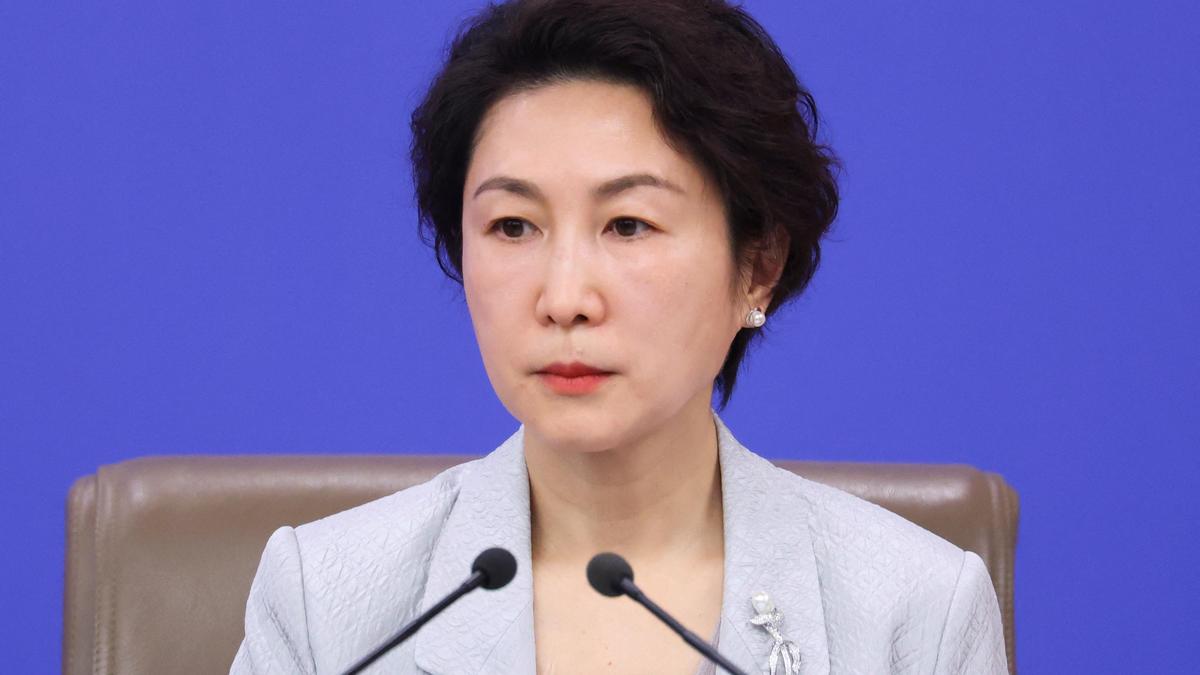
The recent diplomatic intervention by Beijing to prevent a total collapse in relations between Afghanistan and Pakistan is less a breakthrough and more a desperate stabilization effort. While Chinese officials claim both sides have agreed to avoid further escalation, the reality on the ground remains volatile. This trilateral mediation aims to halt the exchange of cross-border fire and cooling the rhetoric that has brought two neighbors to the brink of a localized war. For China, this isn’t about altruism; it is about protecting the multi-billion dollar investments tied to the Belt and Road Initiative and preventing regional instability from leaking into its own borders.
The Fragile Geometry of a Forced Handshake
To understand why this agreement is held together by little more than thin air, one must look at the fundamental shift in the Kabul-Islamabad dynamic since 2021. For decades, the Pakistani security establishment viewed a Taliban-led Afghanistan as a source of "strategic depth." That theory has disintegrated. Instead of a compliant proxy, Pakistan now faces a sovereign Taliban government that refuses to recognize the Durand Line as a permanent border and, more critically, provides a safe haven for the Tehrik-i-Taliban Pakistan (TTP).
Beijing’s entry as a mediator is a response to the failure of bilateral talks. When Chinese Foreign Minister Qin Gang met with his counterparts, the goal was simple: stop the bleeding. The agreement to "avoid escalation" is a diplomatic euphemism for a temporary ceasefire in words and artillery. However, the core grievances—militant sanctuaries and border disputes—remain entirely unaddressed.
China is playing the role of the frustrated landlord. It wants a quiet neighborhood so it can continue with the expansion of the China-Pakistan Economic Corridor (CPEC) into Afghan territory. If the Taliban and the Pakistani military are trading rocket fire over the Kunar Province, the prospect of mining copper at Mes Aynak or building trans-Afghan railways becomes a non-starter.
The TTP Factor and the Limits of Influence
The elephant in every room where these three nations meet is the TTP. Pakistan’s central demand is that the Afghan Taliban must arrest, disarm, or deport TTP fighters who use Afghan soil to launch attacks on Pakistani police and military outposts. The Afghan Taliban, however, find themselves in a theological and political bind. Many TTP fighters fought alongside them against the Americans. For the leadership in Kabul to turn on their "brothers-in-arms" at the behest of a foreign power—especially one they view as increasingly secular or aligned with Western interests—would risk a mutiny within their own ranks.
This creates a cycle of violence that a mere "agreement to avoid escalation" cannot fix. When a TTP attack kills Pakistani soldiers in Khyber Pakhtunkhwa, Islamabad feels compelled to retaliate with airstrikes. These airstrikes, in turn, violate Afghan sovereignty, forcing the Taliban to respond with heavy weaponry at the border.
Security Costs of a Porous Border
The financial burden of this tension is staggering. Pakistan has spent over $3 billion on fencing the border, a project the Taliban actively sabotage by pulling down wire sections with tractors. This isn't just a physical barrier; it's a symbolic rejection of the colonial-era lines that the Taliban claim split the Pashtun heartland.
- Economic Paralysis: Every time the Torkham or Chaman border crossings close due to skirmishes, millions of dollars in trade evaporate. Perishable goods rot in trucks, and the already crippled Afghan economy takes another hit.
- Insurgent Mobility: Small arms left behind by withdrawing NATO forces have flooded the black market, making both the TTP and various Baloch separatist groups more lethal than ever.
- The ISIS-K Shadow: Both nations fear the Islamic State Khorasan Province (ISIS-K), which thrives in the chaotic gaps left by the Taliban-Pakistan feud.
Beijing’s Mercantilist Diplomacy
China’s approach to the Middle East and Central Asia is often described as "non-interference," but that is a misnomer. They interfere through the pocketbook. By dangling the carrot of infrastructure development and international legitimacy, Beijing is trying to house-train a revolutionary movement. The Taliban want Chinese investment to prove they can govern and provide jobs. Pakistan needs Chinese loans to keep its economy from defaulting.
This gives China immense leverage, but leverage is not the same as control. The Chinese have watched as their own citizens were targeted in attacks in Kabul and Karachi. They are realizing that "investment-led peace" is a slow process in a region where historical grievances move at the speed of a bullet.
The agreement signaled in the trilateral talks suggests a mechanism for hotline communication between the military leaders of Kabul and Islamabad. This is a standard de-escalation tool, yet it relies on the assumption that both centers of power have total control over their local commanders on the frontier. They often do not. A rogue commander or a misunderstood movement of troops can ignite a skirmish that no phone call from Beijing can stop in time.
The Illusion of a Shared Vision
The fundamental flaw in the current diplomatic path is the assumption that Afghanistan and Pakistan want the same thing. They don't.
Pakistan wants a stable, predictable neighbor that suppresses anti-Pakistan militants. The Afghan Taliban want a neighbor that respects their sovereignty, provides an economic gateway to the sea, and doesn't interfere with their internal social policies. These two visions are currently irreconcilable. Pakistan’s recent move to deport hundreds of thousands of undocumented Afghans is a blunt instrument of state pressure, one that has created a massive humanitarian crisis and fueled deep resentment in Kabul.
China’s role as the "honest broker" is also under scrutiny. While they provide the table for these talks, they offer no security guarantees. They will not put boots on the ground to patrol the border, nor will they provide the kind of multi-billion dollar aid packages that don't come with strings attached to resource extraction.
Weapons and Rhetoric
We are seeing a significant shift in the hardware being moved to the border regions. Pakistan has deployed more sophisticated surveillance drones and rapid-response units. The Taliban, meanwhile, have moved heavy artillery and captured Humvees toward the Durand Line. This isn't the behavior of two parties that trust a piece of paper signed in a Chinese conference room.
The rhetoric remains jagged. Even as the foreign ministries talk of cooperation, the state-controlled media in both countries continue to trade barbs. In Kabul, the narrative is one of resisting "Pakistani bullying." In Islamabad, it is about "Afghan betrayal."
The agreement to avoid escalation is a tactical pause, a chance for both sides to catch their breath and for China to save face on the international stage. It does nothing to solve the underlying reality that the Taliban’s victory in 2021 did not end the war for Pakistan—it simply changed the nature of the enemy and the location of the front lines.
The Economics of Despair
For the average citizen in the border towns of Spin Boldak or Landi Kotal, these high-level summits mean very little. They see the reality of rising food prices and the constant threat of a border closure that separates families and livelihoods. The "stabilization" China seeks is a macro-economic goal, but the micro-economic reality is one of survival.
If the TTP continues its campaign of urban terrorism inside Pakistan, the pressure on the Pakistani military to "do something" will eventually override any diplomatic promises made to Beijing. Domestic politics in Pakistan are too volatile to allow a perceived defeat at the hands of a group operating from a neighboring state.
China is attempting to build a house on a foundation of shifting sand. They are betting that the promise of future wealth will outweigh the pull of immediate ideological or security interests. History in this region suggests that is a losing bet. The agreement is a band-aid on a gunshot wound, and while it might stop the immediate bleeding, the infection underneath is spreading.
The next move will not come from a diplomat in a suit. It will come from a militant group in the mountains or a border guard with an itchy trigger finger, testing whether the "agreement to avoid escalation" has any teeth when the shooting starts again. True stability in this region requires a fundamental shift in how the Taliban views its responsibility to its neighbors and how Pakistan views its role as a regional power, shifts that no amount of Chinese infrastructure can buy.
The silence at the border right now isn't peace. It is the sound of both sides reloading.


