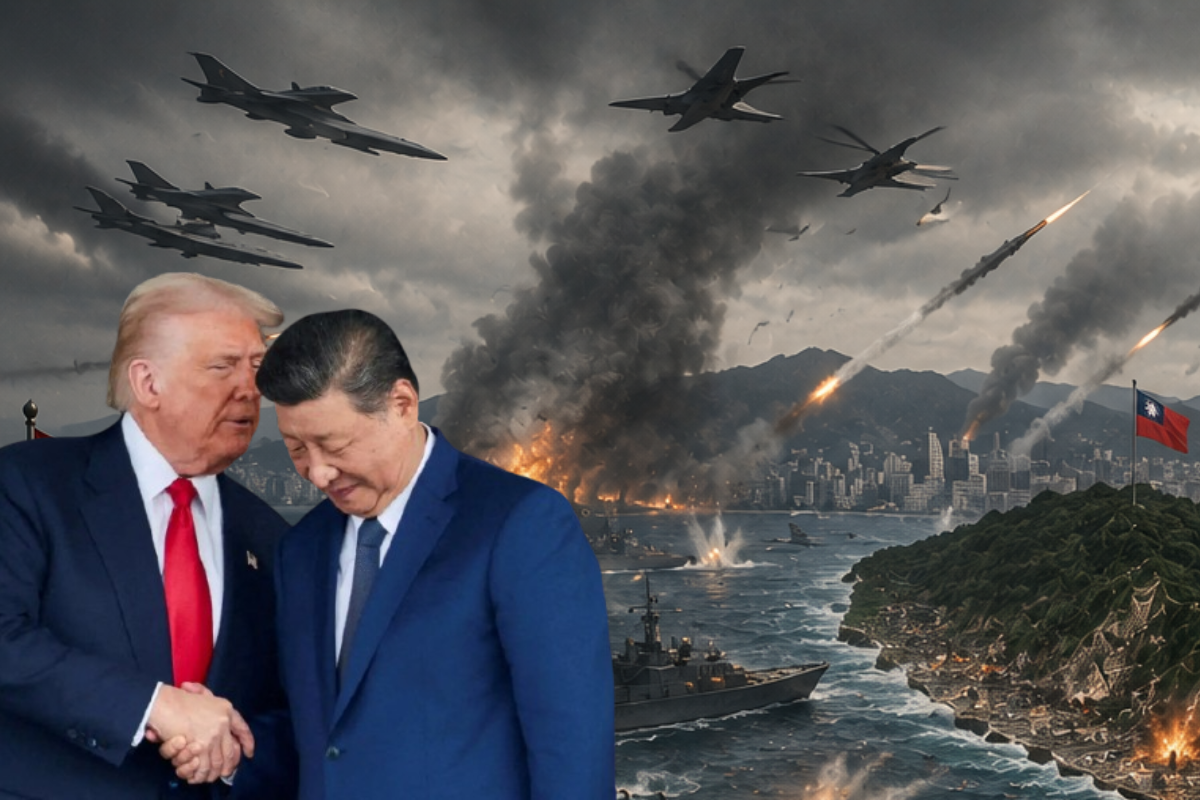
China wants Taiwan. That's no secret. But the way Beijing plans to take it isn't just about massive beach landings or endless missile barrages. Military analysts are watching a much darker strategy unfold. It looks a lot like what happened to Venezuelan asset operations or historical forced removals of state leaders. China is preparing a "decapitation strike" to kidnap or eliminate Taiwan's top leadership before a single troop transport hits the beaches.
If you think a cross-strait invasion starts with a months-long naval blockade, you're missing the real danger. Beijing knows a protracted war draws in the United States and Japan. They can't afford that delay. Instead, the Chinese Communist Party (CCP) is betting on a lightning-fast psychological and military shutdown. They want to grab Taiwan’s President, cut off the island's communications, and force a surrender within 48 hours.
Let's look at how this plan actually works and why traditional defense strategies might be looking at the wrong threat.
The Decapitation Strategy China is Practicing Right Now
Beijing isn't even hiding its intentions anymore. Look at the satellite imagery from China’s Zhurihe combat training base in Inner Mongolia. For years, the People's Liberation Army (PLA) has maintained a full-scale replica of Taiwan’s Presidential Office Building right in the desert. They aren't practicing urban pacification there. They're practicing assault, infiltration, and abduction.
This isn't a standard military assault. It's a highly coordinated special operations plan. The goal is simple. Neutralize Taiwan's command structure before the government can issue mobilization orders. If the President is captured or dead, who orders the firing of Taiwan's anti-ship missiles? Who coordinates with Washington?
Military planners call this a decapitation strike. It relies heavily on fifth-column agents already inside Taiwan. Beijing has spent decades embedding assets within Taiwan’s military, police, and criminal underworld. In a crisis, these saboteurs switch off power grids, assassinate key generals, and guide PLA special forces directly to the leadership's secure bunkers.
Why the Venezuela Comparison Matters
People often bring up historical operations when discussing these tactics. Think back to how the US targeted General Manuel Noriega in Panama, or the legal and covert netting of Venezuelan figures like Alex Saab. Western powers have long used deep extraction tactics to remove foreign figures who threaten their interests.
China watched those operations closely. They learned that taking out the head of a regime collapses resistance faster than leveling a city.
But Taiwan presents a much tougher nut to crack than a broken state. Taiwan is a tech superpower with a highly trained military. To pull off a similar extraction or elimination, China can't just send in a few black hawks. They have to combine cyber warfare, electronic jamming, and raw terror.
Taiwan’s Ministry of National Defense explicitly noted in its recent security assessments that PLA exercises like Joint Sword focus heavily on sealing off the island’s ports and simulating strikes on high-value political targets. They're openly rehearsing the isolation and capture of the island's leadership.
The 48-Hour Window of Chaos
An actual invasion won't look like D-Day. It starts with silence.
First, undersea internet cables get cut. Taiwan goes dark. Simultaneously, millions of deepfake videos flood local social media showing the Taiwanese President surrendering. While the public panics, civilian-dressed PLA commandos, who entered the country months prior as tourists or business professionals, strike key communication hubs.
Timeline of a Decapitation Strike:
Hour 0: Cyber attacks take down power and communications. Undersea cables cut.
Hour 2: Internal saboteurs assassinate local commanders; deepfakes spread panic.
Hour 6: Special forces drop into Taipei via civilian-marked helicopters.
Hour 12: Assault on the Presidential Office and secure bunkers.
The primary target isn't the geography. It's the will to fight. If China secures Taipei’s government district within hours, they present the world with a fait accompli. By the time US carrier strike groups steam into the Philippine Sea, Beijing expects to have a puppet government installed, signing a unification treaty.
How Taiwan is Fighting Back Against the Noose
Taiwan isn't sitting ducks. They know exactly what China is planning. The Taiwanese military has drastically shifted its training to counter these specific assassination and abduction plots.
Every year during the Han Kuang exercises, elite Taiwanese troops practice defending the Songshan Airport in Taipei and the Tamsui River estuary. Why? Because those are the two primary avenues for a Chinese airborne or marine commando assault aimed directly at the capital.
Taiwan’s presidential security detail, known as the "Special Service Center," continuously updates escape routes using armored vehicles like the locally made CM-34 Clouded Leopard. They know the biggest threat isn't a bomb from the sky. It's a hit squad at the door.
Taiwan is also decentralizing its command structure. They're learning from Ukraine. You don't rely on one central bunker. You give local commanders the authority to fire their weapons even if Taipei goes completely silent. This blunts the effectiveness of a decapitation strike. If capturing the President doesn't stop the anti-ship missiles from firing, the entire Chinese strategy falls apart.
What This Means for Global Security Right Now
If Beijing attempts this and succeeds, the global economy breaks instantly. Taiwan produces over 90% of the world's advanced semiconductors. A chaotic, violent power grab in Taipei freezes global tech supply chains within hours.
But if the decapitation strike fails—if the Taiwanese President evades capture and rallies the troops—China faces a catastrophic, grinding war that could trigger a regime-ending backlash for the CCP.
For corporate leaders, policymakers, and everyday citizens, the takeaway is clear. Stop watching for a slow buildup of troop ships. Watch the cyber space, watch domestic political subversion in Taipei, and watch how China trains its elite airborne units. That's where the real war begins.
If you manage global supply chains or invest in tech, diversify your operations away from single-source dependencies in the Taiwan Strait immediately. The timeline for a potential conflict isn't decades away. It's an active operational plan being refined every single day in the deserts of Inner Mongolia. Ensure your crisis management protocols account for a sudden, total communications blackout across East Asia.