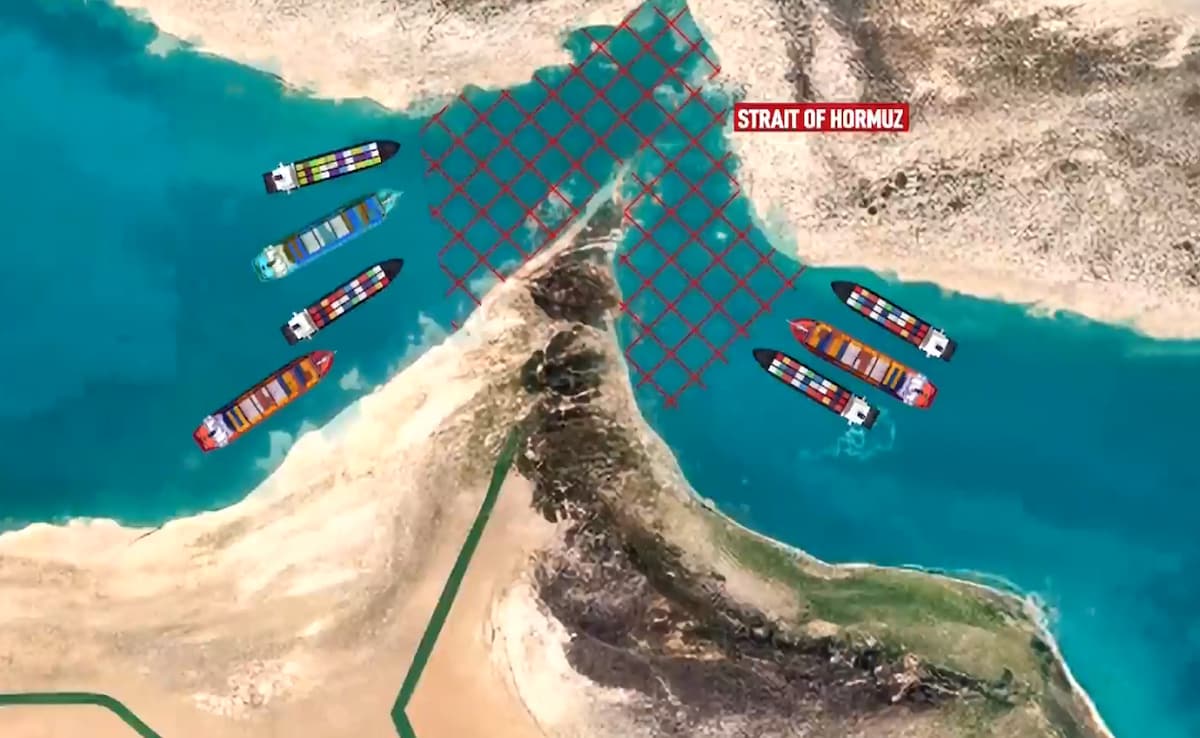
The steel hull of a container ship vibrates with a low, bone-deep hum that never stops. For the crew on board, that vibration is the sound of safety. It means the engines are turning, the props are biting into the salt water, and the world is moving exactly as it should. But when a vessel approaches the Strait of Hormuz, that hum gets swallowed by a suffocating silence.
Everyone on the bridge looks out at the same patch of gray-blue water. They know that twenty-one miles of sea are all that separate the rocky cliffs of Oman from the coast of Iran. They also know that through this tiny geographic needle eye passes one-fifth of the world’s petroleum. It is the jugular vein of the global economy. Cut it, and the world bleeds out in days.
When Iranian authorities recently tightened their grip on this vital passage, seizing vessels and disrupting the flow of trade, they weren't just flexing military muscle. They were shifting the price of a gallon of milk in Berlin. They were changing the cost of heating a home in Lyon.
Now, the European Union is striking back. Brussels is preparing a sweeping wave of targeted sanctions aimed directly at the Iranian officials responsible for the blockade. It is a bloodless war of spreadsheets, asset freezes, and travel bans. Yet, the stakes could not be more visceral.
The Invisible Thread
To understand why a narrow strip of water in the Middle East matters to a family sitting in a cafe in Madrid, you have to look at the invisible threads of global logistics.
Consider a hypothetical captain named Marcus. He has spent thirty years at sea. He understands the wind, the currents, and the fragile geometry of a cargo hold. When Marcus guides a massive crude carrier into the Strait of Hormuz, he is acutely aware that his ship is a sitting duck. Speed boats from the Islamic Revolutionary Guard Corps can appear on the horizon in minutes.
When those boats arrive, when the radio goes dead, and when men with assault rifles board a vessel, the ripple effect is instantaneous.
It starts with insurance premiums. Lloyd's of London underwriters look at the risk assessment maps, see a red zone, and spike the cost of insuring a hull by ten percent overnight. The shipping company passes that cost to the refinery. The refinery passes it to the distributor.
By the time you pull up to a petrol station, you are paying for the fear felt on that bridge.
The European Union’s decision to penalize the architects of this blockade isn't standard diplomatic theater. It is an act of economic self-defense. For months, European diplomats tried the quiet route. They issued statements. They expressed "grave concern."
Concern does not protect a oil tanker. Sanctions, if designed with surgical precision, just might.
The Architecture of Pressure
How do you punish a bureaucrat or a military commander who has never set foot in Europe?
The mechanism of modern sanctions is often misunderstood. People imagine trade embargoes that stop shipments of grain or medicine, harming the vulnerable while the elites live in luxury. But the EU’s latest strategy relies on a different blueprint. This is targeted financial warfare.
The human beings ordering the seizure of commercial ships do not live in total isolation. They have families. They have wealth. They have aspirations that require access to the Western financial system.
The new EU package targets the individuals at the top of the chain of command: the naval commanders of the Revolutionary Guard, the port officials who log the seized ships, and the political masters who sign the decrees.
When the EU places an individual on a sanctions list, several things happen simultaneously. Every bank operating within Europe must freeze accounts tied to that person. Any property they own in southern France or Spain is locked down. They cannot fly into Paris for medical treatment or send their children to universities in Switzerland.
The goal is simple: make the personal cost of enforcing the blockade higher than the political reward.
But the real problem lies elsewhere. Sanctions are a slow poison, and a blockade is an immediate crisis.
Europe is currently wrestling with its own vulnerability. For years, the continent relied heavily on energy corridors that proved far more fragile than anyone cared to admit. The conflict in Ukraine forced a painful, rapid decoupling from Russian gas. That pivot turned Europe's eyes toward the Gulf states.
Now, the very waters carrying that alternative energy are being restricted.
Consider what happens next if the blockade holds. Energy analysts predict that a sustained closure of the Strait of Hormuz could send oil prices soaring past one hundred dollars a barrel. For a European economy already struggling with inflation and a stuttering manufacturing sector, that is not a statistic. It is a disaster. It means factory closures in Germany. It means small businesses across the continent turning off the lights because they can no longer afford the electric bill.
The View From the Bridge
It is easy to get lost in the macroeconomics of a geopolitical standoff. We talk about percentages, barrel counts, and diplomatic frameworks. We forget the human beings trapped inside the gears.
Imagine being a low-wage deckhand from the Philippines or India, working on a Liberian-flagged tanker owned by a Greek conglomerate. You signed up for a grueling contract to send money back to your family. You don't care about the theological or political disputes between Tehran and the West.
Yet, you find yourself staring down the barrel of a rifle because your ship happened to be crossing a specific coordinate on a map.
The crew of the seized vessels often spend months in limbo. They are chips on a geopolitical poker table. Their families wait for news, listening to the static of international reporting, wondering if a breakthrough will come from a summit in Brussels or a backchannel negotiation in Oman.
The EU knows this. The sanctions are designed to break the will of the captors without escalating the situation into an open shooting war. It is a delicate, terrifying balancing act. If the sanctions are too weak, Iran continues the blockade with impunity. If they are too broad, they risk alienating regional allies and driving oil prices even higher out of sheer market panic.
The truth is, no one knows if this pressure will work. Sanctions have a mixed track record. Dictatorships are remarkably resilient, often shifting the pain of economic isolation onto their own populations while the ruling class finds ways to bypass the restrictions using dark fleets of uninsured tankers and shadow banking networks.
But the alternative is inaction. To allow the Strait of Hormuz to become a no-go zone is to concede that the rules of international shipping no longer apply. It would mean accepting that any nation with a coastline and a few missile batteries can hold the rest of humanity hostage.
The low hum of the ship’s engine continues to vibrate through the soles of Marcus’s shoes as he steers toward the open ocean, away from the coast. The horizon looks clear for now. But every sailor knows that the weather in the Gulf can change in an instant, and the storms brewed by politicians are the hardest ones to survive.