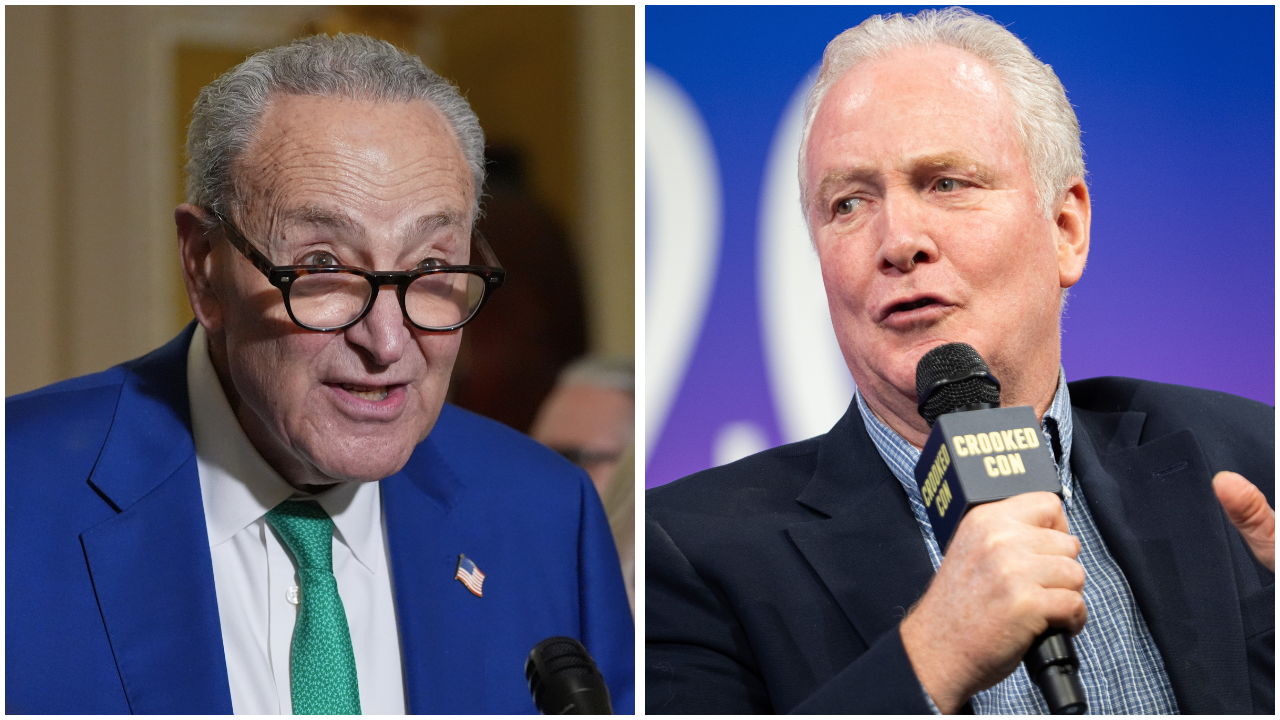
United States Senator Chris Van Hollen of Maryland has entered the race to succeed Chuck Schumer as the top Democrat in the Senate, signaling a consequential generational and ideological test for the party's upper-chamber caucus. The announcement, following reporting on the Maryland Democrat's leadership ambitions, sets up a potential leadership transition that goes far beyond a simple changing of the guard. It strikes at the core of how Senate Democrats organize their legislative strategy, manage ideological divisions between institutionalists and progressives, and position themselves for upcoming electoral cycles.
For decades, Senate leadership transitions have rarely been decided on the floor in open, ideological brawls. They are settled in quiet cloakroom conversations, built on years of fundraising, committee favors, and careful coalition management. Van Hollen’s bid challenges that traditional script by bringing a distinct policy profile and institutional background directly into the spotlight.
The Mechanics of a Senate Leadership Challenge
To understand what Van Hollen is actually attempting, you have to look at how the Senate Democratic Caucus selects its leader. Unlike the House of Representatives, where leadership races often spill into public view with whip counts published daily in the press, the Senate operates through a secret ballot held by the Democratic Caucus at the start of each new Congress—or whenever a vacancy occurs.
A candidate needs a simple majority of the caucus to win. That math sounds straightforward on paper, yet in practice, it requires threading an exceptionally narrow needle.
The Democratic Caucus is not a monolith. It stretches from centrist senators representing swing or Republican-leaning states to outspoken progressives from deep-blue strongholds. Chuck Schumer, who has led the caucus since succeeding Harry Reid in 2017, survived and maintained power largely because he mastered the art of transactional coalition-building. Schumer rarely got too far ahead of his most vulnerable members, acting as a procedural shield while funneling campaign resources through the Democratic Senatorial Campaign Committee (DSCC).
Van Hollen knows that machinery intimately. Before entering the Senate in 2017, he served in the House of Representatives, where he chaired the Democratic Congressional Campaign Committee (DCCC) during the 2008 and 2010 cycles and served as the top Democrat on the House Budget Committee. That background matters. In Capitol Hill politics, members do not hand the gavel to someone just because they give compelling floor speeches; they hand it to someone who has proven they can raise money, protect incumbents, and read legislative text before the opposition spots a trap.
Why Chris Van Hollen Is Making This Move
Leadership bids in the Senate never happen in a vacuum. They emerge when an incumbent leader is perceived as vulnerable, preparing to step aside, or out of step with the shifting center of gravity within the caucus.
Van Hollen has spent his Senate tenure positioning himself as a bridge between the party's progressive wing and its institutional establishment. Look at his legislative record and public posture over recent years. On domestic policy, he has consistently championed aggressive tax fairness proposals, robust federal investments, and voting rights legislation—positions that play well with the party's activist base. At the same time, his reputation as a methodical budget wonk and former party campaign chief reassures institutionalists who worry about electoral viability in battleground states.
Foreign policy has also become a defining line of demarcation for Van Hollen. Over the past few years, he emerged as one of the most vocal Senate Democrats demanding stricter conditions on U.S. military aid abroad and stronger adherence to international humanitarian law. While those stances put him at odds with some traditional foreign policy hawks in his own party, they aligned him closely with a younger, increasingly vocal cohort of Democratic lawmakers and voters who felt the party's old guard was too reflexive in its support for longstanding orthodoxies.
By stepping forward, Van Hollen is testing whether the caucus is ready to trade Schumer’s hyper-cautious, New York-centric tactical style for a leader willing to draw sharper ideological contrasts.
The Schumer Factor and Institutional Inertia
Any challenge to Chuck Schumer—or any campaign to replace him—runs straight into the reality of how much power the Senate Democratic Leader wields.
The leader controls the floor schedule, influences committee assignments, and serves as the primary conduit between Senate Democrats, the White House (when a Democrat holds the presidency), and major national donors. Over nearly a decade at the helm, Schumer accumulated immense political capital. Even when critics within the party grumbled about slow legislative pacing, missed messaging opportunities, or perceived concessions during high-stakes budget negotiations, few senators were willing to openly break ranks.
Why? Because in the Senate, seniority and institutional memory carry enormous weight.
Senators who have spent years climbing the committee ladder are deeply wary of leadership shakeups that might disrupt their own paths to chairmanships. Furthermore, the alternative to an established leader is always an unknown quantity under pressure. Governing with razor-thin margins—or navigating the minority—requires constant procedural trench warfare. Schumer’s defenders have long argued that his relentless focus on judicial confirmations and his ability to keep disparate factions unified during major reconciliation battles proved his effectiveness under difficult conditions.
Van Hollen’s pitch must convince his colleagues that institutional stability is no longer enough—and that sticking with the status quo carries its own electoral and legislative risks.
The Crowded Field and Hidden Fault Lines
A leadership race in the Senate rarely remains a two-person contest once the door opens. If Schumer’s grip loosens or if he signals an eventual exit, other ambitious senators will inevitably test the waters, each representing a different faction of the party.
- The Institutionalists: Senators who have spent years in the leadership pipeline—serving as whips, caucus chairs, or policy committee heads—often view the top job as the natural culmination of their service. They campaign on continuity, deep personal relationships with colleagues, and a steady hand on Senate rules.
- The Swing-State Pragmatists: Moderate Democrats from competitive states frequently push for a leader who will prioritize kitchen-table economic messaging and avoid floor votes that force them into tough positions back home.
- The Next-Generation Reformers: Younger senators, particularly those elected in recent cycles, have grown increasingly frustrated with Senate gridlock, the filibuster, and traditional seniority rules. They want a leader willing to modernize how the caucus communicates and fights.
Van Hollen’s challenge is navigating these competing camps without alienating any single bloc. If he leans too far toward progressive reformers, moderates will coalesce around a more centrist alternative. If he presents himself purely as an insider continuity candidate, he risks losing the momentum of a change election.
What History Tells Us About Senate Leadership Battles
To gauge Van Hollen’s odds, it helps to look at how past Senate Democratic leadership contests actually unfolded.
When Tom Daschle lost his re-election bid in 2004, Harry Reid consolidated support rapidly, locking down commitments before a serious rival could organize an insurgency. When Reid announced his retirement ahead of the 2016 cycle, Chuck Schumer executed a similar preemptive strike, securing the backing of key colleagues early enough to dissuade potential challengers from entering the race.
Open, contested races are far rarer—and far messier. In 1994, following George Mitchell’s retirement, Tom Daschle defeated Chris Dodd by a single vote in a secret ballot that exposed deep regional and stylistic divides within the caucus. That razor-thin margin underscored a fundamental truth about Senate leadership races: public endorsements mean very little once senators walk into a closed room and drop a slip of paper into a box.
Senators frequently tell multiple candidates what they want to hear. They pledge support to preserve committee leverage, avoid offending a colleague they have to work with for the next six years, and hedge their bets until the final count. For Van Hollen, converting polite encouragement into hard votes requires relentless one-on-one lobbying, clear commitments on committee assignments, and a convincing blueprint for winning back—or holding—the Senate majority.
The Policy and Messaging Stakes
Beyond internal power dynamics, the outcome of a leadership contest between Van Hollen and Schumer—or any eventual successor—will directly shape how Senate Democrats operate on the national stage.
Under Schumer, the caucus relied heavily on a disciplined, centralized messaging apparatus paired with strategic floor votes designed to put Republicans on the defensive ahead of elections. Critics inside the party, however, often complained that this approach felt overly scripted and reactive, leaving Democrats flat-footed when big cultural or economic debates erupted outside the Capitol.
Van Hollen’s approach to legislative politics tends to be more granular and policy-driven. During his time on the Senate Appropriations and Foreign Relations committees, he has demonstrated a willingness to use procedural leverage—such as placing holds on nominations or demanding specific reporting requirements—to force executive branch accountability, even when doing so creates friction with a Democratic administration.
That distinction is critical. A Van Hollen-led caucus would likely assert more institutional independence from the White House and place greater emphasis on detailed legislative oversight, budget discipline tied to progressive revenue measures, and human rights conditionality in foreign policy.
The Fundraising Reality Nobody Mentions
Publicly, Senate leadership races are framed around vision, legislative skill, and party unity. Privately, they are inseparable from money.
The Senate Democratic Leader is expected to be a relentless fundraising engine, raising tens of millions of dollars every cycle for the DSCC, affiliated super PACs, and individual incumbents facing tough re-election campaigns. Schumer’s dominance in New York’s financial and media ecosystems gave him a structural fundraising advantage that few senators could easily match.
For Van Hollen, competing on that terrain requires proving he can tap into both traditional donor networks and the small-dollar grassroots fundraising machinery that has transformed Democratic politics over the past decade. His past stewardship of the DCCC gives him credibility with major donors and party operatives, yet scaling that operation to meet the financial demands of modern Senate races remains one of the steepest hurdles in any leadership bid.
Where the Caucus Goes From Here
Van Hollen’s decision to step forward forces Senate Democrats to confront questions they have largely deferred. The caucus must decide whether its priority is preserving a tested leadership structure built on incrementalism and centralized control, or elevating a leader who reflects the party's evolving ideological center and is willing to challenge long-standing conventions.
In the weeks and months ahead, the real campaign will happen out of sight—in private lunches, late-night phone calls, and quiet negotiations over committee gavels and campaign cash. Public statements from senators will remain carefully hedged, offering praise for both men while revealing almost nothing about how the secret ballot will break. Ultimately, the outcome will depend on a cold calculation made by each individual senator: who gives them the best chance of keeping their seat and wielding real power in a deeply divided chamber.