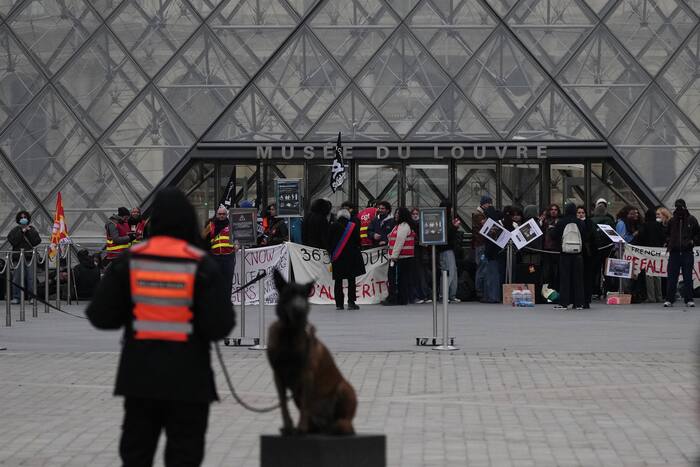
When major institutions like the Louvre and other prominent museums close their doors ahead of anticipated protest violence, the immediate reason is straightforward. Administrators and public authorities want to keep visitors, staff, and irreplaceable collections out of harm's way when street demonstrations threaten to turn volatile. Yet treating a Saturday shutdown as a simple precaution misses the deeper mechanics at play. Closing flagship cultural venues during civil unrest reshapes urban crowd dynamics, strains municipal budgets, and tests the boundary between public safety and civic life.
I have watched major cultural institutions react to street unrest for decades, from labor walkouts to political marches that spill off boulevards into adjacent plazas. Almost every time, the public hears a tidy explanation about safety and security. That explanation is true on its surface. Nobody wants tear gas drifting toward a glass pyramid or a crowd surge pinning visitors against iron gates. Still, veteran observers know that a shutdown is never an isolated event. It is a calculated risk trade-off made under intense pressure, often with incomplete information about how crowds will actually move once the barricades go up. Meanwhile, you can find similar stories here: Typhoon Shutdowns and Aviation Bottlenecks by the Numbers.
The Mechanics Behind a Preemptive Museum Shutdown
A decision to lock the doors of the Louvre or nearby cultural institutions on a Saturday rarely comes from a single museum director sitting in a quiet office. It emerges from a tense coordination loop involving municipal police, national security agencies, culture ministries, and venue security teams. When intelligence points toward large demonstrations, rival marches, or potential clashes near central transit hubs, risk assessments shift rapidly. Museums sit directly inside the gravitational pull of major city centers, making them vulnerable to perimeter spillover even when demonstrators have no stated quarrel with art history.
Physical layout matters just as much as crowd size. Large museums rely on predictable flows of thousands of people arriving along fixed walkways, metro exits, and courtyards. If street clashes erupt nearby, a steady stream of uninitiated tourists walking toward an entrance creates a dangerous bottleneck. Closing ahead of time keeps foot traffic away from flashpoints and frees local law enforcement from having to escort confused visitors out of active zones mid-afternoon. To explore the bigger picture, we recommend the detailed article by Lonely Planet.
Staffing adds another layer of friction. Museums depend on security personnel, gallery attendants, ticketing staff, and maintenance crews to keep rooms monitored and emergency exits clear. If transit lines are disrupted or neighborhood streets are blocked, staff members face difficult or unsafe commutes. A museum cannot safely open half a wing or run with skeleton coverage when high-value works are on display. Shutting down removes the temptation to cut corners on floor supervision.
What Crowd Economics and Urban Space Actually Do
Once a major cultural landmark closes on a busy weekend, the surrounding neighborhood changes character almost immediately. Tourists who planned their Saturday around a timed-entry slot suddenly have hours to fill in the same part of town. Many drift into nearby cafes, plazas, and shopping streets, sometimes stepping directly into areas where tensions are rising. A closed museum does not make people vanish from the district. It simply redirects them without a clear destination.
Demonstrators and counter-protesters read those shifts too. Blank facades, metal shutters, and empty courtyards send a visible signal that the center of gravity has moved into the streets. For peaceful marchers, a closed landmark can feel like another sign of a city locked down in anticipation of trouble. For agitators looking for high-visibility backdrops or confrontation with police cordons, a fortified public building can become a focal point even without a prior plan.
Consider a hypothetical example to see how those dynamics collide. Suppose a Saturday march is scheduled to pass within a few blocks of a major museum complex, and organizers expect a few thousand people. Authorities close the museum all day out of caution, only for the march to reroute early and clear out by mid-afternoon while thousands of visitors remain stranded outside with nowhere to go. Nothing happens inside the galleries, yet the city absorbs lost revenue, frustrated travelers, and denser pedestrian congestion elsewhere. That mismatch between threat modeling and actual street flow is a recurring hazard of preemptive closures.
The Hidden Ledger of Lost Access and Revenue
Ticket prices tell only a fraction of the financial story when top museums shut down for a day. A flagship institution can lose substantial gate revenue and on-site retail income in a single Saturday, especially during peak travel seasons when weekend demand runs high. Group tours, school visits, and special exhibitions get canceled or compressed into already crowded days, creating scheduling headaches that linger for weeks.
The wider hospitality economy feels the ripple next. Hotels, restaurants, guided tour operators, and transit services build weekend itineraries around anchor attractions. When a headline attraction goes dark on short notice, independent guides lose bookings, restaurants see shifts in midday foot traffic, and travelers scramble to salvage a short trip. Over a single weekend, that looks like a minor inconvenience in aggregate statistics. Across repeated weekends of unrest, it chips away at a city's reliability as a destination.
Cultural institutions are built to project permanence and openness, which makes locking their doors during public turmoil feel doubly jarring to anyone watching from the outside.
There is also a non-financial cost that rarely shows up on balance sheets. For many visitors, a trip to a world-famous museum is a once-in-a-lifetime expense saved for over years. Being turned away at the gate because of street violence they did not cause leaves a bitter impression that lingers long after the barricades come down. Even when travelers understand the safety rationale, the sense of disruption sticks.
Why Security and Openness Keep Colliding
Critics of preemptive closures often argue that institutions surrender public space too easily whenever trouble is rumored. They point out that keeping doors open with heightened screening, targeted wing closures, or flexible entry hours preserves normal life and denies disruption a symbolic victory. There is real weight to that argument. If cities lock down every time tensions flare, everyday civic routines start to look fragile.
Supporters of early closures counter that hindsight is cheap when nothing goes wrong. A single broken window, a panicked crowd surge, or an injured visitor inside a landmark can turn a manageable street protest into a national crisis. Museum leaders carry a legal and moral duty toward people in their care and the heritage held in trust. From their vantage point, erring on the side of caution is not cowardice. It is basic stewardship.
Neither side has a clean, cost-free answer because the variables are inherently messy. Protest movements do not publish reliable minute-by-minute scripts, and urban crowds rarely behave like neat simulations. A policy that looks overly cautious on a quiet Saturday can look prescient two hours later if violence breaks out down the block.
Practical Adjustments Cities and Institutions Can Make
When unrest threatens weekend operations, better communication is the lowest-cost lever available. Museums and city officials often announce closures with plenty of internal certainty but leave travelers hunting through scattered updates for hours. Clear, plain-language notices—explaining whether tickets will be automatically refunded or rescheduled, which transit stops are affected, and when updates will follow—reduce confusion on the street before crowds gather.
Flexible partial operations deserve more serious thought where layout allows. Not every building is a fortress, and not every gallery sits on a volatile perimeter. Where security teams and police agree it is safe, staggered hours, early afternoon cutoffs, or keeping select areas accessible can absorb part of the demand without leaving large crowds exposed to street clashes. When full closure is the only responsible call, pairing it with clear guidance for visitors helps keep people away from active zones.
City leaders also need to measure the cumulative strain of repeated closures rather than judging each Saturday in isolation. A single shutdown is a manageable shock. A pattern of weekend closures signals deeper civic stress that affects workers, residents, and visitors alike.
For travelers with a Saturday museum plan during a period of active protests, check official museum channels and local transit alerts the night before and again early that morning, build a flexible backup plan away from major demonstration routes, and keep a close eye on street conditions rather than relying on assumptions that the city will run on its usual timetable.