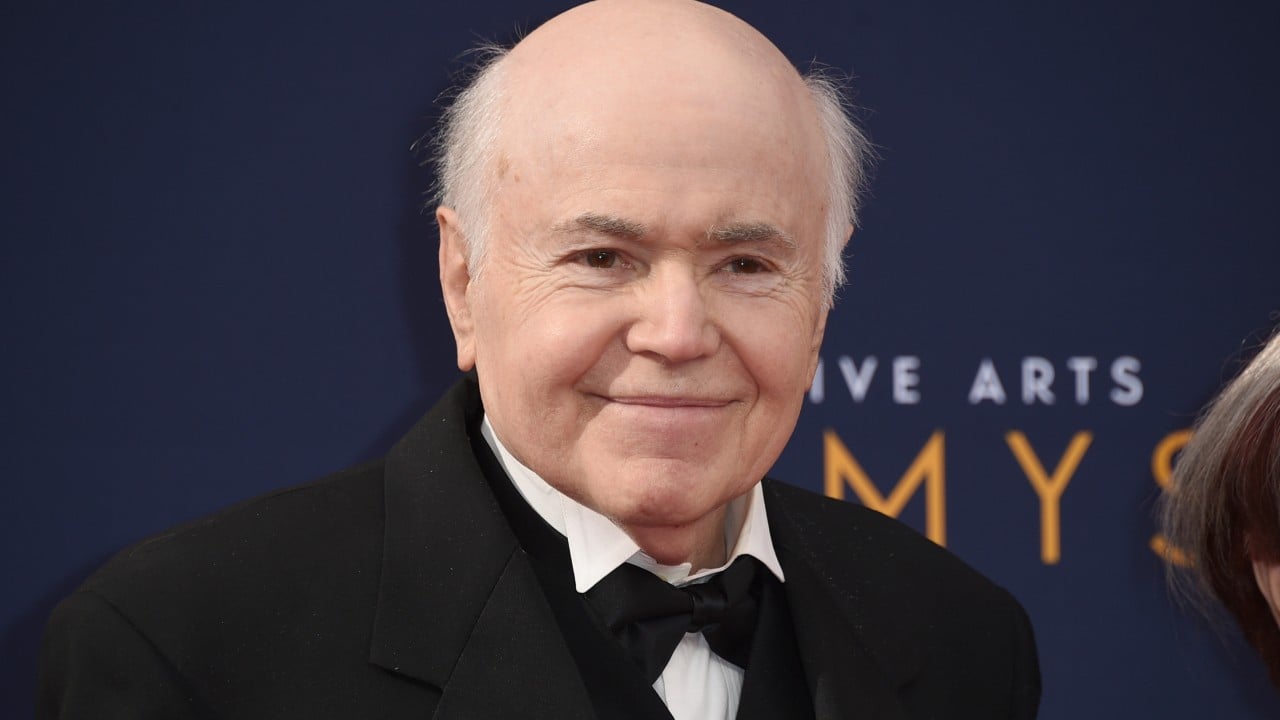
Walter Koenig, the actor who stepped onto the bridge of the USS Enterprise in 1967 as Ensign Pavel Chekov and turned a geopolitical publicity stunt into one of television's most enduring cultural fixtures, has died at 90. Born in Chicago on September 14, 1936, to Lithuanian-Jewish immigrants, Koenig spent nearly six decades navigating the unforgiving mechanics of Hollywood typecasting. While standard obituaries reduce his career to a mop-top wig and a thick Russian accent, the reality of his professional survival reveals far more about how television actually works than any studio press release ever admitted.
He was hired to appease Moscow. That was the official story, anyway, though the truth behind his casting is rooted in network demographics and teenage fan mail rather than international diplomacy. Meanwhile, you can explore related stories here: Chris Brown Sentencing Proves Celebrity Justice Is a Rigged Publicity Machine.
The Myth of the Pravda Letter
For decades, Star Trek creator Gene Roddenberry told audiences that Pavel Chekov was created after the Soviet newspaper Pravda published an editorial complaining that a Russian had been excluded from the crew of a ship representing a united Earth. It made for terrific convention fodder. It was also largely fiction. No such Pravda article has ever been found in the archives, and NBC executives in 1967 were decidedly uninterested in scoring ideological points with the Kremlin during the height of the Vietnam War and the Space Race.
The real catalyst sat in the NBC research department. Following the first season of Star Trek, network analysts noticed a glaring demographic hole. The show was performing well with adult men and science fiction enthusiasts, yet it was losing younger viewers—specifically teenage girls—to competing programs. At the exact same time, The Monkees were dominating television ratings and Billboard charts, driven largely by Davy Jones and his trademark British mop-top haircut. To see the bigger picture, check out the detailed article by Entertainment Weekly.
NBC wanted a Davy Jones on the bridge.
Roddenberry and producer Gene L. Coon conducted auditions specifically looking for a young actor who could project youthful energy, fit into a Beatles-inspired wig, and appeal to the teen magazine demographic. Koenig, then 30 years old and a veteran of stage work and guest spots on shows like Mr. Novak and Ben Casey, walked into the audition with a thick, exaggerated Russian dialect modeled after his father’s Lithuanian-Yiddish cadence. He got the part not because he looked like a Soviet cosmonaut, but because he photographed like a rock star.
The Wig That Launched a Thousand Fan Letters
During the early episodes of Season 2, Koenig’s hair was literally a piece of theatrical engineering. His natural hair was too short to match the Beatle-esque silhouette the producers demanded, forcing him to wear a hairpiece until his own hair grew out. The strategy worked immediately. Within weeks of his debut in the Season 2 premiere, "Amok Time," Koenig was generating more fan mail than almost any other cast member outside of William Shatner and Leonard Nimoy.
Yet behind the scenes, the economics of 1960s network television meant popularity did not translate into contract security. Koenig was never a series regular during the original run. He was hired on a per-episode basis, appearing in 36 of the remaining 50 episodes across Seasons 2 and 3. When budgets tightened in the third season, Chekov simply vanished from scripts without explanation, a stark reminder of the rigid caste system that governed television production before residual protections and ensemble parity existed.
The Shadow of the Enterprise Bridge
To understand the trajectory of Walter Koenig’s career after Star Trek was canceled in 1969, you have to understand the professional poison pill that cult television represented in the 1970s. Today, starring in a major sci-fi franchise opens doors to prestige dramas, voiceover empires, and studio tentpoles. In 1970, being forever associated with a canceled sci-fi series meant casting directors refused to let you read for a cop, a lawyer, or a suburban father.
Koenig spent the 1970s hustling on the margins of the industry. While Shatner landed T.J. Hooker and Nimoy transitioned into directing and hosting In Search Of, Koenig faced closed doors. He drove a beat-up car, took bit parts in low-budget horror films, and supplemented his income by writing scripts. Most television historians overlook the fact that Koenig was actually the first cast member of the original series to write an episode of Star Trek, penning "The Infinite Vulcan" for Star Trek: The Animated Series in 1973—a show he wasn't even hired to voice because Filmation claimed it could not afford his salary alongside the rest of the cast.
He refused to wait for Hollywood to hand him permission to work.
Reinvention Through Writing and Stage
Instead of retreating into bitterness on the early convention circuit, Koenig treated writing as his primary exit ramp from typecasting. He wrote episodes for Land of the Lost, What's Really Going On?, and Family, proving he understood narrative structure from the inside out. He returned to theater, performing in regional productions and off-Broadway plays where audiences had to engage with his range rather than his bridge station.
When Paramount finally greenlit Star Trek: The Motion Picture in 1979, Koenig’s leverage had shifted. The studio needed the original ensemble intact to validate the transition to the big screen. Across six feature films—from The Motion Picture through Star Trek Generations in 1994—Koenig gradually expanded Chekov from a wide-eyed ensign screaming about nuclear vessels into a seasoned Starfleet commander. Even when scripts gave him minimal screen time, such as in Star Trek V: The Final Frontier, Koenig used dry comedic timing and physical restraint to steal scenes from leads with ten times his dialogue.
Alfred Bester and the Art of Playing Against Type
If Koenig’s career had ended with Star Trek Generations, his legacy would have been secure as a beloved piece of pop culture nostalgia. Instead, at age 57, he delivered the finest acting of his life by systematically dismantling everything audiences thought they knew about him.
In 1994, creator J. Michael Straczynski cast Koenig as Alfred Bester in the syndicated science fiction series Babylon 5. Named after the legendary Golden Age sci-fi author, Bester was a high-ranking operative in the Psi Corps—a fascistic, state-sanctioned organization that policed telepaths with ruthless efficiency. Bester wore black leather gloves, spoke in calm, measured tones, and possessed zero warmth.
There was no Russian accent. There was no comedic relief. There was no wide-eyed innocence.
Why Bester Changed Koenig's Reputation
Playing Bester required Koenig to invert every physical habit he had developed over twenty-five years as Chekov. Where Chekov was reactive, loud, and emotionally transparent, Bester was calculating, quiet, and terrifyingly polite. Koenig played the character not as a mustache-twirling villain, but as a true believer who genuinely thought his authoritarian methods were saving his people from extinction.
Across twelve episodes spanning five seasons of Babylon 5, Koenig turned Bester into one of the most compelling antagonists in television science fiction. Critics who had spent decades dismissing him as a one-note supporting player suddenly took notice. The role demonstrated a fundamental truth about character actors: typecasting rarely reflects a lack of range; it reflects a lack of imagination on the part of producers. Given material with moral ambiguity and sharp dialogue, Koenig matched—and frequently outperformed—actors who had spent their lives in prestige television.
The Quiet Architecture of Convention Economics
Long before San Diego Comic-Con became a corporate marketing machine for billion-dollar studios, Walter Koenig and his Star Trek castmates invented the modern fan convention economy. In the early 1970s, appearing at a hotel ballroom in New York or Chicago for a few hundred dollars was viewed by mainstream Hollywood agents as career suicide—an admission that you could no longer get real acting work.
Koenig saw it differently. For an actor supporting a family without steady studio contracts, conventions offered direct financial independence. More importantly, they offered unfiltered feedback from the audience.
The Double-Edged Sword of Fandom
Koenig maintained a famously clear-eyed, unsentimental view of Star Trek fandom. In his 1997 autobiography, Warped Factors: A Neurotic's Guide to the Universe, he wrote with brutal honesty about the friction among the original cast, the financial disparities between the top-billed stars and the supporting players, and the strange psychological toll of signing the same publicity still ten thousand times.
- Financial survival: Convention appearances kept the lights on during lean years in the 1970s and funded his independent creative projects.
- Creative autonomy: Direct access to fans allowed Koenig to publish his own novels, comic books like Raver, and independent film projects without begging studio executives for development deals.
- Emotional distance: Unlike some peers who became consumed by their characters, Koenig never confused Pavel Chekov with Walter Koenig, maintaining a sharp boundary between his private life and his public persona.
That candor occasionally ruffled feathers among fans who preferred the sanitized, utopian version of Star Trek history. Koenig didn't care. He respected the audience enough to tell them the truth about how the sausage was made, recognizing that real affection for a piece of art survives honest scrutiny.
Activism Beyond the Soundstage
While Hollywood often treats celebrity activism as a public relations exercise, Koenig’s engagement with human rights was personal, sustained, and largely conducted away from entertainment press cameras. In 2007, the U.S. Campaign for Burma recruited him to travel to the Thai-Burmese border to document the humanitarian crisis facing refugees fleeing the military junta in Myanmar.
Koenig was 70 years old at the time. He didn't go for a photo op at a safe diplomatic compound. He trekked through jungle camps, interviewed displaced families, and used his global recognition as Pavel Chekov to force international media outlets to pay attention to a forgotten conflict. He understood precisely how celebrity currency worked—and spent his own to buy airtime for people who had none.
His personal life was marked by profound tragedy alongside enduring partnership. Married to actress Judy Levitt from 1965 until her death in 2022, Koenig weathered the devastating loss of their son, actor Andrew Koenig, who died by suicide in Vancouver in 2010 after a long battle with depression. In the years following Andrew’s death, Koenig and his wife became vocal advocates for mental health awareness and suicide prevention, speaking openly about the warning signs and systemic gaps in care with the same unadorned honesty that defined his writing.
What Walter Koenig Proved About Longevity
When Hollywood loses a member of the original Star Trek cast, the cultural reaction tends to wrap itself in nostalgic sentimentality. The tribute reels play the classic fanfare, show clips of young actors on brightly lit cardboard sets, and talk about bold frontiers.
That framing misses the grit required to actually live Walter Koenig’s life.
He was never the captain. He was never the logical alien first officer. He wasn't even guaranteed a paycheck from one week to the next when his signature role began. He started as a network demographic fix wearing a borrowed wig, navigated decades of industry indifference, absorbed unimaginable personal loss, and still managed to carve out a body of work—on stage, in prose, and on screen—that outlasted the studios and executives who once treated him as expendable.
Hollywood measures success by top billing and opening weekend grosses, metrics designed to flatter the powerful and erase everyone else. Walter Koenig stood at the back of the bridge for fifty-nine years, never once asking for permission to matter, and walked off the stage entirely on his own terms.


