The Weight of Silk
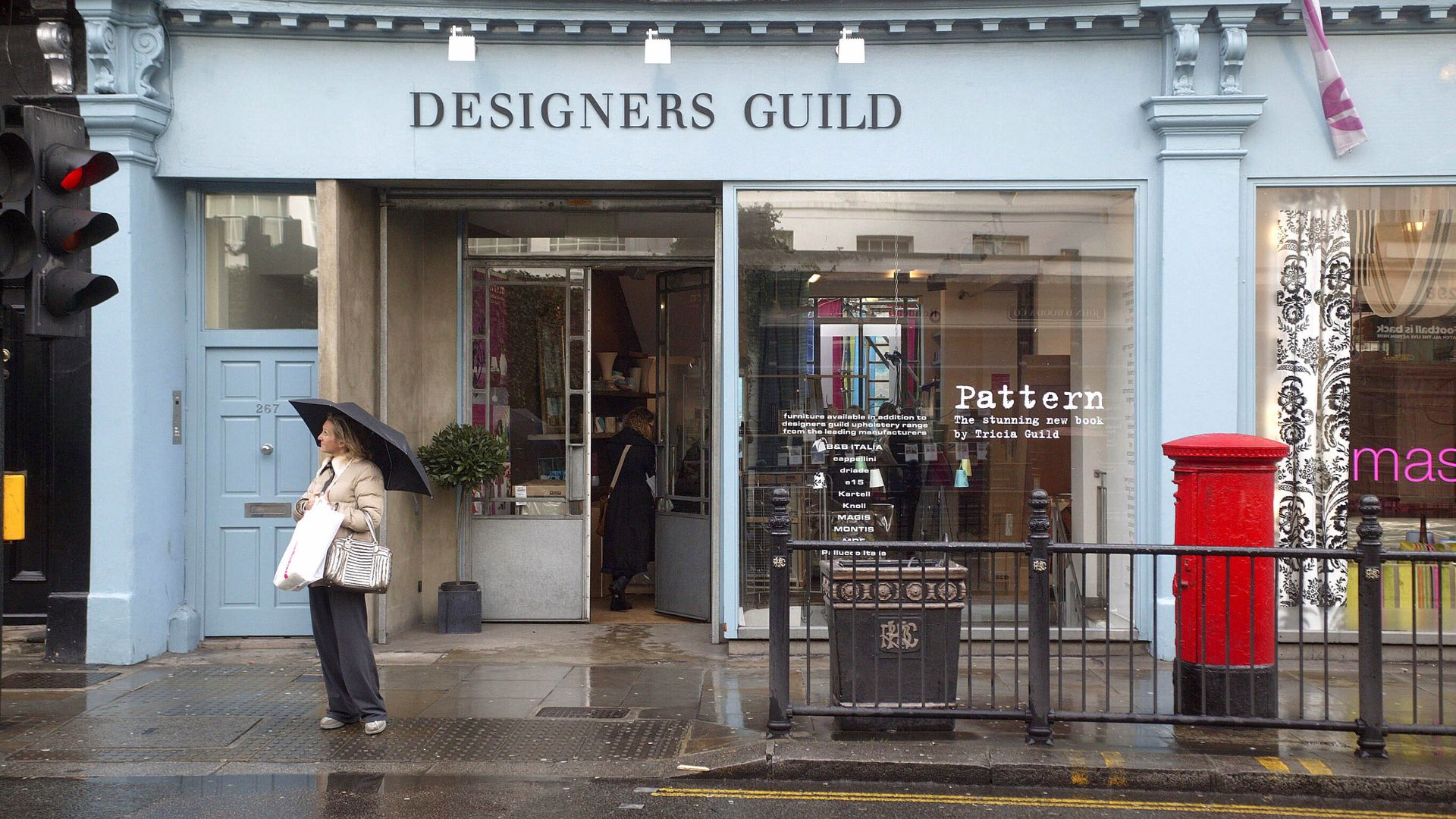
The heavy bolts of linen sat in the corner of the showroom, catching the late afternoon amber light the way an old painting catches history. They looked permanent. For over half a century, the name Designers Guild stood for a specific kind of British audacity—a riot of peonies, hand-painted citrus shades, and velvet that felt like an indulgence you earned after years of quiet striving.
Then the silence arrived.
Not all at once. It crept through the balance sheets first, a slow bleeding of margins, whispered about behind frosted glass doors in London. By the time the headlines broke regarding the looming collapse of the stalwart brand, the shock was not that a luxury icon could fall. The shock was that we believed beauty was immune to gravity.
Consider a hypothetical living room in Kensington. Sunlight filters through a heavy printed floral drape, casting warm indigos and crimsons across a walnut floor. To the person sitting there reading the morning paper, the room is an anchor. It represents safety, permanence, history. What they do not see is the invisible machinery keeping those threads suspended: the supply chains straining under doubled freight costs, the shifting post-pandemic spending habits of a wealthy clientele tightening their belts, the quiet terror of a chief financial officer watching accounts receivable crawl to a halt.
We measure corporate distress in percentages and court filings. We talk about administration, insolvency, restructuring. But those are just sterile words invented to keep the human cost at a comfortable distance. Behind every failing legacy brand is a room full of artisans whose hands know the precise pressure required to screen-print a damask, wondering if next month brings a pink slip or a miracle.
The Architecture of Excess
Tricia Guild launched her empire on a simple, radical premise: that color is an emotional necessity, not an interior design afterthought. She threw out the dreary creams and beige safety blankets of late-seventies British interiors and replaced them with turquoise, magenta, and olive.
It worked. For decades, the formula was invincible. Department stores from Harrods to Milan cleared floor space for her saturated visions.
But scale is a hungry beast.
To grow, a luxury design house must expand its footprint. It signs long-term commercial leases. It commissions massive seasonal collections years in advance. It relies on a delicate ecosystem of independent high-end retailers, boutique interior designers, and affluent consumers who buy not out of utility, but out of aspiration.
When the macroeconomic climate turns sour, aspiration is the first thing people cancel.
Imagine a boutique design studio in Leeds. For twenty years, their bread and butter has been specifying luxury British textiles for clients renovating country homes. Last Tuesday, their phone didn't ring once. Not because people stopped wanting beautiful homes, but because the cost of borrowing skyrocketed, inflation gnawed at household budgets, and the wealthy became hyper-conscious of appearing extravagant. When those boutique orders dry up, the shockwave travels straight up the supply chain, slamming directly into the warehouses of heritage brands.
Margins in high-end design are notoriously deceptive. People look at a velvet cushion retailing for two hundred pounds and assume outrageous profits. They do not see the cost of European linen mills facing skyrocketing natural gas prices. They do not calculate the expense of maintaining vast archives of historical patterns, or the payroll of master colorists who spend weeks getting a single shade of chartreuse right.
When revenue dips even ten percent in a high-overhead, low-volume business, the foundation shakes.
The Anatomy of a Collapse
We have seen this script before. A storied name stumbles. Creditors circle. The word administration enters the vocabulary.
It is easy to blame modern minimalism, or cheap fast-furniture giants churning out polyester knockoffs for a fraction of the cost. Those forces matter, yes. They erode the baseline. They train a generation of consumers to view home decor as disposable, interchangeable, and essentially weightless.
Yet the deeper fracture is internal. It is the agonizing difficulty of translating a founder's idiosyncratic, artistic vision into a modern corporate structure capable of weathering global economic shocks. Art does not always balance its checkbook. Passion projects do not automatically hedge against currency fluctuations.
When a brand like Designers Guild faces the brink, we are witnessing the collision of two incompatible worlds: the timeless, unhurried timeline of artisanal craft, and the brutal, instantaneous demands of modern finance.
Walk through a depleted stockroom. The bolts of fabric are still gorgeous. The designs still hold that trademark vibrancy, that unmistakable signature of a house that taught Britain how to dream in color. The problem is never the product. The problem is the bridge between the beauty we desire and the cold mechanics required to keep it alive.
The Unfinished Room
What happens when a legacy fades?
The physical objects remain, of course. Vintage cushions will trade on secondary markets. Old pattern books will become collector's items, scavenged by young designers looking for inspiration in thrift shops and archive sales. The aesthetic survives, detached from the corporation that bore its name.
Yet something irreplaceable vanishes when institutions built on decades of human dedication dissolve. You cannot easily replace the institutional memory of a dyer who has mixed colors for thirty years by hand. You cannot download the accumulated taste of a staff that understands why a specific shade of saffron works in a north-facing room while another falls flat.
We treat corporate failures as tidy business news. We read the metrics, nod at the inevitability of market corrections, and swipe to the next story.
Look closer.
Listen to the quiet hum of looms slowing down. Notice the empty space on the showroom floor where the new collection was supposed to debut.
The color is fading. Not because the world ran out of imagination, but because we forgot that beauty, however effortless it looks draped over an armchair, requires a desperate, invisible defense to stay in the room.
The light shifts across the empty showroom floor. The dust motes dance in the amber rays.
Nothing gold can stay, unless we decide it is worth the cost of keeping the lights on.