On the morning of August 14, 2018, Genoa was wrapped in the heavy, suffocating air of an impending late-summer storm. It was the eve of Ferragosto, the most sacred of Italian summer holidays. Families had packed their cars with suitcases, beach towels, and coolers, embarking on the long-anticipated drive toward the coast. Up on the Morandi Bridge, a sweeping concrete viaduct that soared fifty meters above the city’s industrial belly, thirty-five vehicles crawled through the pelting rain.
Then, the sky fell.
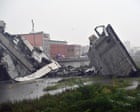
With a sound like tearing metal and thunder, a 200-meter span of the highway vanished. Asphalt, steel, and concrete plunged into the riverbed and railway tracks below, taking forty-three lives with them.
For years, the tragedy of the Morandi Bridge was treated as a shocking twist of nature—a "freak occurrence" blamed on torrential rains and original design flaws. But behind the twisted rebar lay a far colder, more calculated reality. It was a tragedy written in ledgers, delayed maintenance schedules, and the quiet trade-offs of corporate boards.
Now, inside a hushed Genoa courtroom packed with four hundred relatives, lawyers, and journalists, a judge has finally read the cost of those calculations aloud. Giovanni Castellucci, the former chief executive of Italy’s largest toll road operator, Autostrade per l’Italia (ASPI), has been sentenced to twelve years in prison for his role in the disaster.
Thirty-one other defendants, spanning former executives, engineers, and safety officials, were also handed prison terms. The verdict represents a monumental reckoning for a privatized system that, for decades, allegedly treated public safety as a line item to be optimized.
The Weight of What Was Ignored
To understand how a massive concrete structure simply dissolves in a rainstorm, one must understand how ASPI operated under Castellucci’s tenure.
When Italy privatized its motorway network in the 1990s, the keys to some of Europe’s most complex mountainous toll roads were handed to private investors, dominated by the wealthy Benetton family’s holding company, Atlantia. On paper, the arrangement was simple: the private operator collects toll money from millions of drivers, and in exchange, they keep the roads and bridges safe.
But prosecutors built a devastating case showing that the priorities of the boardroom were wildly misaligned with the concrete realities of the road. They argued that vital safety maintenance was repeatedly delayed and postponed to maximize profit margins and shareholder dividends.
Consider the bridge's design. Built in 1967, the Morandi Bridge was an engineering marvel of its time, featuring concrete-encased stay cables. But concrete is porous. Over decades, salty sea air from the Genoa gulf and corrosive industrial fumes seeped into the structure, slowly eating away at the steel tendons inside.
Imagine a thick rope holding up a heavy swing. Over the years, individual fibers inside the rope begin to snap, invisible from the outside. If you never unravel the casing to check, you assume the rope is strong—until the day the swing collapses under a child's weight.
The court heard that warnings about the bridge's structural degradation, specifically regarding pylon number nine, had been circulating internally for years. In fact, the other two pylons had undergone extensive reinforcing maintenance as far back as 1993. But the third pylon—the one that ultimately failed—was left untouched, its critical maintenance pushed further and further down the road.
The defense argued that no maintenance program could have saved a bridge plagued by an inherent, original design defect. They painted Castellucci as a chief executive who relied in good faith on the technical opinions of the country's top engineers. His lawyers decried the verdict, calling it a hunt for a corporate "scapegoat".
But the court did not agree. The verdict sent a clear signal: you cannot collect billions in toll revenue while delegating the moral and legal responsibility for human life to a chain of sub-contractors and ignored reports.
The Human Cost of Neglect
While the trial pitted high-priced corporate defense teams against state prosecutors, the true center of gravity in the courtroom belonged to the victims' families.
Among them was Egle Possetti. On that rainy August morning, she did not just lose a bridge; she lost her sister, her brother-in-law, her niece, her nephew, and even the family’s small dog. They were simply driving to their holiday, trusting that the road beneath them was solid.
For Possetti and hundreds of others, the past eight years have been an agonizing marathon through Italy's notoriously slow legal system. They sat through nearly 280 hearings, listening to technical arguments about concrete corrosion, shear stress, and corporate governance.
When the verdict was read, the courtroom fell into a heavy, breathless silence. Some relatives wept openly, embracing one another in a mixture of relief and exhaustion. Others stood quietly, realizing that no prison sentence could ever fill the empty seats at their dinner tables.
For Castellucci, the 12-year sentence is a compounding of an already grim legal reality. He is currently serving a separate six-year prison sentence for a 2013 accident where a tourist coach plunged off an ASPI-managed viaduct near Naples, killing 40 people. His career, once defined by the peak of corporate power and influence, is now bookended by two of the worst transport disasters in modern Italian history.
Rebuilding More Than Concrete
In the wake of the disaster, the old Morandi Bridge was entirely demolished. In its place rose the Genoa San Giorgio Bridge, designed and donated to his hometown by the world-renowned architect Renzo Piano. Built in a record fifteen months, it features steel elements shaped like the hull of a ship, a nod to Genoa's maritime history, and is constantly monitored by robots and sensors.
But while the physical scar across Genoa's skyline has been healed, the systemic scars remain.
Shortly before the verdicts were announced, ASPI's current chief executive published an open letter apologizing to the families and the nation for the suffering caused. The company itself, along with its engineering subsidiary, had previously escaped the criminal trial by agreeing to a 30-million-euro plea deal, leaving the focus of the prosecution on individual executives.
To the families, the corporate apology arrived far too late. They know that under Italy's three-tier judicial system, this first-instance verdict will likely face years of appeals before the prison doors close definitively on those convicted.
The tragedy of Genoa is not just a story of structural engineering. It is a cautionary tale of what happens when the infrastructure that holds society together is treated as a financial asset to be milked rather than a public trust to be guarded. Every time we drive over a bridge, we are placing our lives in the hands of people we will never meet, trusting that they valued our arrival more than their next quarterly return.
As dusk fell over Genoa on the day of the verdict, forty-three cast-iron lamps on the new San Giorgio Bridge flickered to life, casting a quiet, permanent glow over the valley below—a silent, luminous ledger of the lives that concrete could not save.