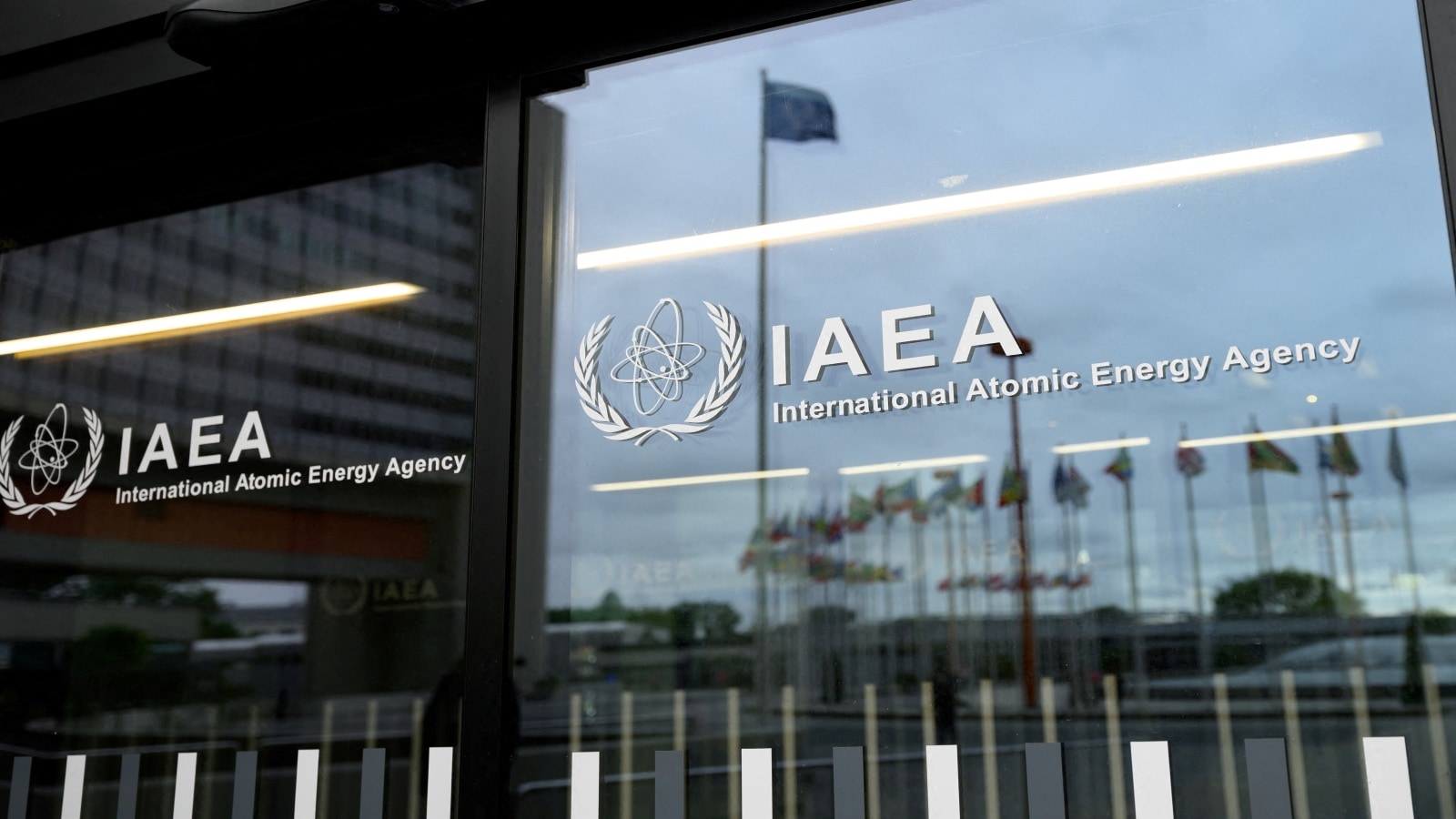
Dust does not care about geopolitics. It settles on the hood of a rusted Toyota Hilux with the same indifferent weight as it falls upon a classified concrete dome in the Syrian desert.
For years, the structure sat in the Al-Kibar region like an open secret whispered across intelligence agency desks in Washington, Tel Aviv, and Vienna. To the casual observer driving through the stark, undulating landscape of Deir ez-Zor, it looked like a half-finished grain silo or an abandoned industrial depot. But buildings have intent. They bear the architecture of their purpose. And this particular building was designed to hide.
When Israeli warplanes tore through the night sky in September 2007 during Operation Orchard, they did not just flatten a structure. They erased a question mark that had haunted the international community. Yet, the debris left behind did not end the story. It merely buried the evidence beneath layers of rubble and years of diplomatic wrangling.
To understand what happened next, you have to look past the satellite imagery and the sanitized briefings of the International Atomic Energy Agency. You have to look at the math of survival.
Imagine standing in a control room where the air smells faintly of ozone and stale coffee. The monitors hum with low-frequency static. A technician—let us call him Tariq, a fictional name for a very real archetype of the engineers caught in the machinery of state ambition—watches dials fluctuate. He is not thinking about nuclear deterrence treaties or United Nations Security Council resolutions. He is thinking about fuel rods, cooling circuits, and the precise moment water turns to steam under immense pressure.
Tariq knows what graphite looks like when it has been machined to aerospace tolerances. He knows that heavy water is not just a scientific curiosity, but a heavy, viscous key capable of unlocking a very specific kind of power.
That power is the crux of the matter.
For over a decade, international inspectors have pieced together the puzzle of Al-Kibar. Recently, declarations from the highest offices of the IAEA confirmed what many had long suspected in the shadows: the destroyed Syrian reactor could indeed have been weaponized. It was not merely a civilian energy experiment. It was a machine built with a singular, unexpressed trajectory.
Nuclear fission is remarkably democratic in its physics. The atom does not care if the heat it generates powers a hospital in Damascus or fuels the core of an implosion device. The physics remain stubbornly indifferent to human morality. What separates a peaceful reactor from a military asset is not the uranium inside it; it is the infrastructure surrounding it. It is the reprocessing capability. It is the absence of commercial power grids that makes no economic sense, unless your primary product is not electricity, but plutonium.
This is where the narrative of modern proliferation becomes terrifyingly mundane. It does not begin with dramatic countdowns or villains in underground lairs. It begins with procurement officers buying standard industrial piping through shell companies. It begins with engineers drafting blueprints in windowless rooms, calculating neutron fluxes while the afternoon heat bakes the roof above them.
The IAEA inspectors who eventually sifted through the soil years later found traces of uranium particles that did not belong there. Those microscopic specks were forensic ghosts. They told a story of a clandestine partnership, of foreign technicians who packed their bags in the middle of the night, and of a government that chose to gamble its sovereign survival on a secret that could not be kept.
Consider the cost of that gamble.
When a nation invests its scarce resources in a covert nuclear program, every dollar spent on shielded concrete and graphite reflectors is a dollar stolen from a classroom, a hospital bed, or a clean water system. The irony of the atomic age is that the pursuit of ultimate security almost invariably guarantees immediate vulnerability. By building Al-Kibar in secret, Syria invited the very preemption it feared.
The jets came. The dome crumbled. The secret was blown into the desert wind.
And yet, the broader architecture of global non-proliferation remains fragile. The systems designed to catch these projects rely on voluntary declarations, satellite surveillance, and the meticulous diplomacy of inspectors who must navigate minefields of national sovereignty. When a state decides to cheat, it relies on the sheer size of the world to hide its intentions.
We live in an era where the tools of destruction are becoming increasingly decentralized, yet the stakes remain as ancient as human tribalism. The concrete at Al-Kibar has long since grown cold under the Syrian sun. The twisted rebar has been salvaged or covered over by the relentless advance of the desert. But the lesson etched into that crater remains stark and unyielding.
Power wants to be used. Secrets want to be told. And somewhere in the dark, beneath another dome of reinforced concrete, the machinery of the next quiet crisis is already humming to life.