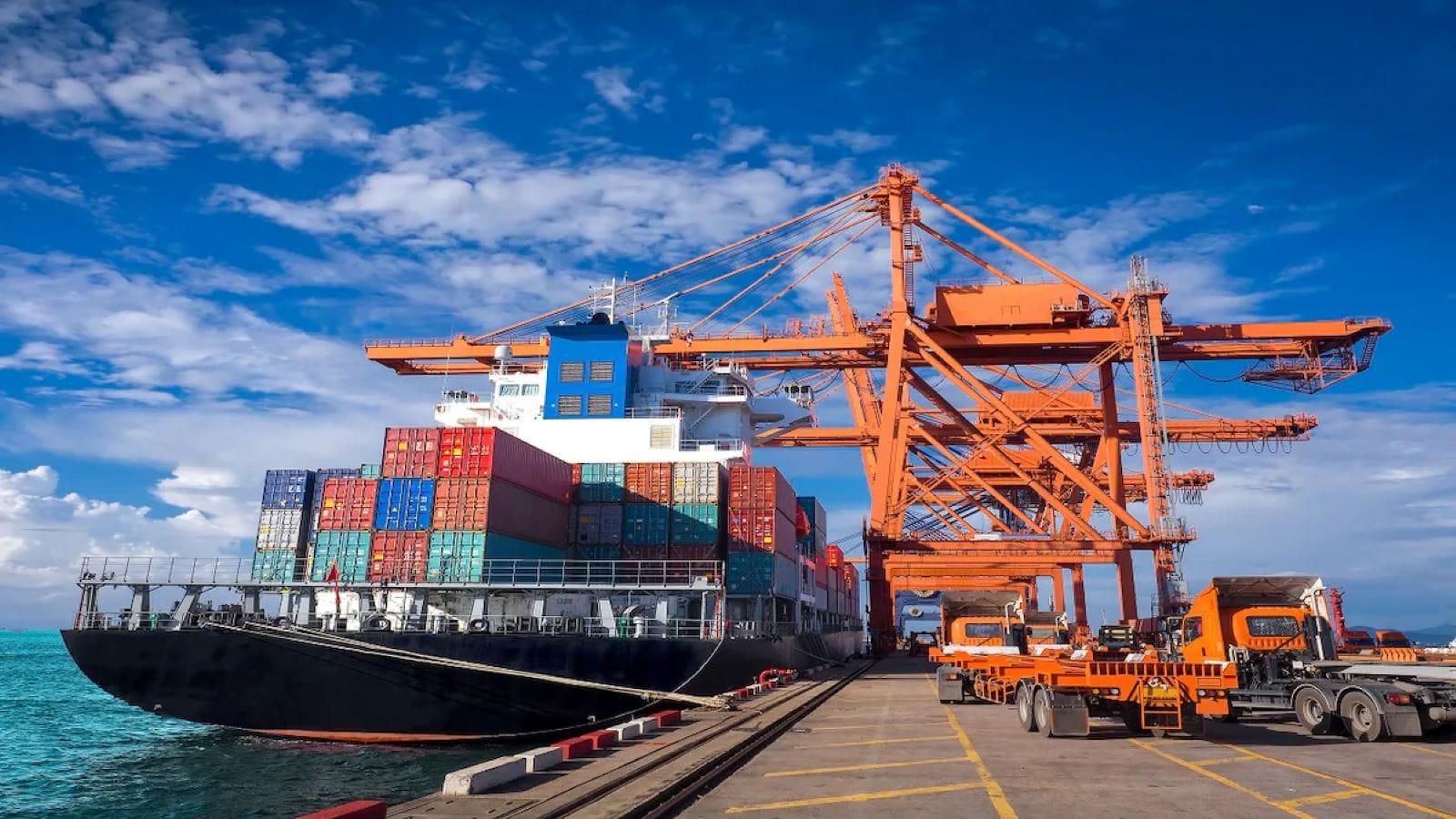
The shipping container sits baking in the Savannah humidity, its corrugated steel sides radiating a dull, heavy heat. Inside, fifty thousand pounds of precision-engineered aluminum framing await a journey that should have ended three weeks ago. Instead, those brackets are frozen in regulatory limbo, caught in a high-stakes trade dispute that feels light-years away from the dusty corner of Georgia where a hundred-person construction crew stands idle.
For the developer drinking lukewarm coffee from a styrofoam cup fifty feet away, the math is brutal. Every day that container stays sealed, the financial bleeding worsens. Interest on the construction loan accumulates by the hour. The subcontractors—drywallers, electricians, masons—must be paid their retainers or they walk to the next project down the highway. The blueprint taped to the trailer wall calls for completion by autumn, but autumn is evaporating.
We talk about tariffs and trade wars as abstract theater. We watch politicians gesture at podiums, arguing over percentages and supply chain sovereignty. But the shockwaves hit the concrete. They hit the person holding the clipboard, trying to explain to an investor why a thirty-story apartment complex or a suburban manufacturing plant is six million dollars over budget before the roof is even on.
Consider Marcus, a fictional project manager whose daily reality mirrors that of countless developers trying to break ground across the United States. Marcus is not a geopolitical strategist. He is a builder. He knows the tensile strength of steel, the curing time of high-performance concrete, and the local zoning board's peculiar aversion to certain roof pitches. Yet, over the past few years, Marcus has had to become an amateur customs broker, a supply chain detective, and a prophet of economic uncertainty.
When the trade barriers went up, Marcus watched the price of imported structural components spike overnight. He faced an impossible choice. He could buy domestic, assuming he could find a factory with an open production slot in a market overwhelmed by sudden demand. Or he could stick with his original overseas suppliers and absorb tariffs that sliced his profit margin into dust.
To understand why building in America has become an exercise in extreme psychological endurance, you have to look past the financial spreadsheets. You have to look at the anatomy of a modern construction delay.
A commercial building is an orchestra of logistics. A delay in electrical conduit stops the drywallers. A delay in specialized glass leaves the interior exposed to winter rains, ruining the subflooring. When international trade policies shift unpredictably, they do not merely add a line item cost; they throw the entire sequence out of rhythm. Developers find themselves redesigning structural systems midway through construction because the raw materials specified in January are either prohibitively expensive or legally barred by October.
(Note: The following historical analogy illustrates how structural supply shifts alter localized economies.)
Think back to the mid-century industrial expansions, when domestic supply chains were tightly coiled within national borders. If a factory needed steel, it came from Pittsburgh or Gary, delivered via rail within days. The friction was low, even if the options were limited. Today’s developer operates in a hyper-connected web where a single policy announcement in a capital thousands of miles away can render a continent's worth of inventory commercially radioactive.
The political justification for these trade friction points is often framed as a matter of national resilience. The goal is to rebuild domestic manufacturing capacity, to ensure that the critical infrastructure of tomorrow is forged on home soil. No one argues against the nobility of that objective. A country that cannot build its own foundations is vulnerable.
Yet, the transition period is where dreams go to die. You cannot simply flip a switch and summon a half-century-old industrial ecosystem back from the dead. Building domestic manufacturing takes years of permitting, billions in capital, and a skilled labor force that is currently facing a generational shortage. While those factories are being planned and poured, the current generation of developers is trapped in the gap. They are paying yesterday's tax structures with tomorrow's inflated capital costs, all while trying to satisfy the housing and infrastructure demands of a growing population.
The human cost trickles down past the developer and the investor. It reaches the young family looking for a starter home in a market starved for inventory. It reaches the small business owner hoping to expand their storefront before lease rates climb again. When building becomes prohibitively expensive, construction slows. When construction slows, supply plummets. And when supply plummets, affordability vanishes.
The developer standing in the Savannah sun is not complaining about politics for the sake of argument. He is watching the viability of his life’s work dissolve in a customs queue. He knows that every dollar lost to administrative friction and trade penalties is a dollar that cannot be spent on better design, safer materials, or fair wages for the crew.
The trade war is not happening out there, in the abstract ether of global economics. It is happening right here, in the mud, the dust, and the silence of halted machines. Until the bridge between national ambition and on-the-ground reality is built, every foundation laid in America will carry an invisible, staggering weight.
The crane operator climbs back into his cab, shifts the lever, and the hook swings empty against a pale, indifferent sky.