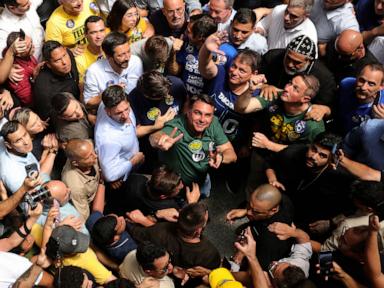
Riots burn cars. Speeches do not put out fires.
Whenever violent unrest erupts in France and a president steps up to condemn those who "sought to bring down the Republic," the press corps treats the speech as a decisive act of statecraft. It is not. It is theater. Comforting theater for people who want to believe that a sternly worded address from the Élysée Palace restores order, deters the next round of arson, and diagnoses what is actually breaking inside the country.
Look at the lazy consensus behind headlines about presidents condemning insurrectionary violence. The standard story goes like this: a spark ignites, mobs take to the streets, property is smashed, public institutions are challenged, and the head of state draws a moral and constitutional line in the sand. Good versus chaos. Order versus anarchy. Republic versus mob.
That framing is too neat. Too lazy. And politically convenient for whoever sits in the executive chair.
Street violence is loud, photogenic, and easy to denounce. Nobody in polite society defends burning a town hall or throwing paving stones at riot police. Condemning it costs nothing and risks nothing. Yet treating violent rioting as an existential plot to "bring down the Republic" confuses symptoms with disease—and lets the deeper institutional rot keep spreading while everyone stares at the smoke.
The Wrong Question Everyone Keeps Asking
When violence flares up, the reflex question from commentators and politicians alike is: How do we stop these rioters from destroying the Republic?
That is the wrong question. It assumes the Republic is a sturdy building being attacked from the outside by wreckers, rather than a structure whose foundations have been stressed for decades by centralization, economic stagnation, civic alienation, and a widening gap between Paris and everywhere else.
People who actually set out to overthrow a modern democratic state rarely rely on spontaneous street brawls and viral clips alone. Overthrowing a state requires capturing institutions, courts, security forces, media narratives, or constitutional levers. Street riots, by contrast, are usually expressions of rage, frustration, opportunism, and breakdown—often concentrated in specific urban zones or triggered by flashpoint grievances that have been festering long before the first Molotov cocktail is thrown.
Call a chaotic riot a coordinated bid to topple the Republic and you inflate the status of the rioters while shrinking the responsibility of the state. Suddenly, the story is no longer about policing failures, housing bottlenecks, judicial backlogs, school performance, or political legitimacy. It becomes a melodrama of existential survival.
Melodrama sells newspapers. It does not fix governance.
What People Actually Ask After the Smoke Clears
Once the cameras move on, the same predictable questions show up in search bars and panel discussions. Most of them start from shaky premises.
Are violent riots a direct threat to democracy itself?
Only if democracy is already brittle enough to snap from street disorder. Democracies rarely die because a crowd burned trash bins and shattered storefronts. They weaken when citizens stop believing elections change anything, when rule-making feels remote and technocratic, when trust in public institutions erodes year after year, and when leaders respond to chronic dysfunction with slogans instead of results. Riots are ugly, dangerous, and illegal. Calling them a mortal blow to democracy overstates the threat in the streets while underestimating the quiet erosion inside the halls of power.
Does strong presidential condemnation deter future riots?
Rarely on its own. Deterrence comes from credible enforcement, swift and predictable consequences, competent local policing, and visible follow-through—not from soaring rhetoric about republican values. After years of repeated unrest cycles in French politics and society, speeches condemning "insurrection" or "bringing down the Republic" have lost much of their shock value. When every flare-up gets the same high-minded warning and the same uneven follow-through, the rhetoric starts sounding like background noise.
Why do riots keep returning even after crackdowns and pledges of reform?
Because crackdowns manage the street; they do not repair the pipeline that feeds it. If young men in under-invested suburbs feel locked out of decent jobs, if neighborhoods experience recurring friction with authorities, if local mayors feel abandoned by central ministries, and if national politics feels like a revolving door of unpopular compromises, the pressure builds back up. Arresting hundreds of people after a night of violence clears the boulevard by morning. It does not change the arithmetic of resentment.
Lessons From Watching Institutions Misread Pressure
I have spent years watching political leaders, policy teams, and institutions misread public anger because they mistook the loudest signal for the truest one. I have seen organizations and governments pour immense energy into crisis PR, tough-sounding statements, and surface-level optics while ignoring structural bottlenecks that everyone on the ground already knew were failing.
When leaders treat every crisis as an attack from outside, they become defensive rather than diagnostic. Tough language feels decisive in the moment. It gives supporters something to cheer and gives the executive branch the posture of strength.
Yet posture is not capacity. A sharp distinction exists in political theory—one that classic thinkers from Niccolò Machiavelli to modern comparative political scientists like Juan Linz and Samuel Huntington have stressed in different ways—between authority, legitimacy, and coercive capacity. A government can command impressive security forces and still suffer from a legitimacy deficit. It can invoke high constitutional principles while struggling with everyday administrative competence.
In France's Fifth Republic, that tension is built right into the architecture. The system concentrates enormous symbolic and executive authority in the presidency. When things go well, that design looks decisive and majestic. When discontent boils over into the streets, the same concentration of authority turns the president into a lightning rod for every grievance in the country—from inflation and pensions to policing and cultural identity.
Condemning those who "sought to bring down the Republic" leans on the majesty of the office. It reminds the public what the Republic represents. What it often skips is the harder mirror: how ordinary citizens experience the Republic on a Tuesday morning when they are dealing with bureaucratic friction, rising costs, uneven public services, or a sense that nobody in power listens until something breaks.
The Nuance the Standard Narrative Misses
To see why the standard coverage falls short, you have to separate three things that pundits routinely lump into one bucket:
- Criminal violence and public disorder. Assaults on police, arson, looting, and destruction of public property are crimes. Full stop. They harm bystanders, ruin small businesses, terrorize residents, and strain first responders. Calling them out is basic civic hygiene.
- Political extremism and opportunism. Hardline actors on both ends of the spectrum—and agitators looking to exploit chaos—often try to ride a wave of anger to advance their own narratives or test state resolve. Pretending political opportunism does not exist would be naive.
- Structural alienation and institutional fatigue. Large numbers of people who never throw a single stone still feel alienated from mainstream politics. Turnout patterns, protest movements across multiple demographics, and polling on institutional trust show a persistent fracture between governing elites and large segments of the electorate.
When a headline frames a riot solely around people trying to "bring down the Republic," it collapses all three layers into a single villainous plot. That makes the story simpler to write and easier to digest. It also blinds people to the fact that a state can successfully put down a riot on Friday night and still be losing legitimacy on Monday morning.
A Thought Experiment on Institutional Fragility
Imagine a scenario where a European government faces three consecutive winters of street disorder sparked by different triggers: fuel costs one year, policing controversies the next, pension or labor disputes the next. Each time, the president delivers a forceful address denouncing those who want to subvert the Republic, deploys heavy security forces, and announces a committee or consultation that fades from the headlines within weeks. On paper, the constitutional order holds. No palace is stormed. No coup occurs. Yet year after year, trust in parliament, courts, police, and the presidency ticks downward, while extremist parties gain ground at the ballot box.
In that scenario, who actually did more damage to the long-term health of the Republic? The rioters who burned cars for three nights, or a political class that treated recurring symptoms as existential attacks while leaving the underlying drivers untouched?
Both can be destructive. Only one is in a position to fix the system.
Where My Contrarian Take Has Blind Spots
Any contrarian argument that pushes back against strong state rhetoric risks overcorrecting in the other direction. It is fair to point out the limits of my own critique.
First, downplaying the danger of violent disorder can easily sound cavalier to people living on the block where buildings are burning or shops are being looted. For a local shopkeeper, a firefighter, or a family caught near a clash, abstract talk about "institutional legitimacy" does not replace immediate physical safety and order. The state has a non-negotiable duty to protect life and property first.
Second, dismissing talk of threats to the Republic can underestimate how cumulative shocks compound over time. Even if a single riot does not topple a constitutional system, repeated episodes of severe unrest—paired with polarization, information warfare, and political gridlock—can harden divisions and push voters toward radical solutions that reshape the system from within.
Third, governing in a country with deep social and political cleavages really is hard. Presidents do not control every economic variable, every municipal dynamic, or every cultural fault line. Criticizing executive rhetoric is easy from the sidelines; managing crises in real time involves messy trade-offs that critics rarely have to own.
Acknowledging those downsides does not invalidate the critique. It sharpens it. Order matters. So does honest diagnosis.
What Actually Works Instead of Performative Toughness
If you want less violent rioting and a healthier republic, stop mistaking dramatic speeches for a strategy. Actionable change looks far less glamorous than a prime-time address.
- Measure follow-through, not decibels. Track concrete outcomes after unrest: arrest-to-prosecution timelines, restitution for damaged small businesses, local policing reforms, and municipal investment delivery. Rhetoric is cheap; execution is scarce.
- Separate street enforcement from political posturing. Let law enforcement and the justice system handle public order firmly, transparently, and proportionally, without turning every police operation into a grand ideological crusade. Calm, predictable enforcement beats theatrical escalation.
- Fix high-friction everyday institutions. Citizens judge the state by what works in daily life—courts, schools, healthcare access, transit, housing, and local administration. Shoring up basic competence lowers the temperature faster than any lecture on civic values.
- Stop inflating every flare-up into an existential crisis. Not every bout of unrest is a plot to overthrow the state. Calling every crisis an existential threat breeds panic, deepens polarization, and gives extremists the exact drama they thrive on.
Speeches can set a tone. Institutions carry the weight. Until leaders fix what is straining the Republic from the inside, no amount of condemnation from the podium will stop the next spark from catching.