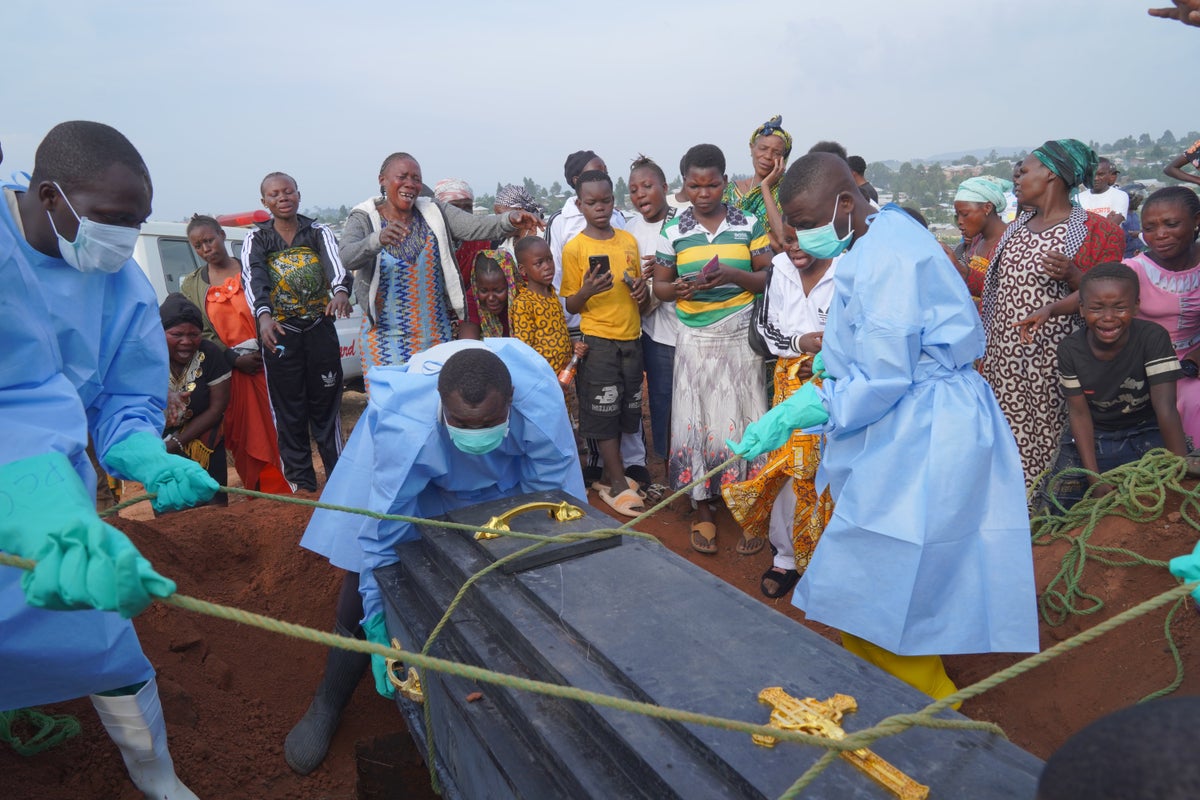
The latest numbers are in, and they are grim. With over 2,300 deaths and nearly 5,000 cases, the current Ebola outbreak in the Democratic Republic of the Congo has officially become the deadliest in the nation's history. It is a staggering human toll. You might hear headlines describing it as a "fast-moving" crisis, but those two words fail to capture the reality on the ground.
This isn't just about a virus moving quickly. It’s about a health system operating in the dark while fighting against deep-seated mistrust, active conflict, and a lack of basic resources.
The Reality Behind the Numbers
We are looking at the 17th Ebola outbreak in the Congo. It has already eclipsed the 2018–2020 crisis, which claimed 2,299 lives. When I look at these figures, I don't just see data points. I see a pattern of recurring challenges that we seem to struggle to fix.
The current outbreak is driven by the Bundibugyo virus. Unlike the Zaire strain that we’ve dealt with previously, this one doesn't have a widely available, approved vaccine or a standard treatment protocol. That lack of tools is a massive hurdle. When you’re dealing with a pathogen that’s already moving faster than your surveillance teams, you’re basically fighting a forest fire with a garden hose.
Most new cases are popping up in people who were never on the contact-tracing lists. That means the virus is spreading silently in communities before responders even know it’s there.
Why Containment Keeps Failing
If you’ve followed health crises, you know the formula for control: identify, isolate, treat, vaccinate. In eastern Congo, that formula often hits a brick wall.
- Mistrust of Authority: For many, the government and international aid agencies are not seen as saviors. They are seen as outsiders who show up only when there’s a medical emergency, ignoring the daily violence and poverty that people face. When you live in a region that’s been traumatized for decades, why would you trust a stranger in a hazmat suit telling you how to bury your family?
- The Security Nightmare: You can’t trace contacts if you’re terrified of getting ambushed. Rebel groups operate in the same areas where the virus is spreading. Health workers have been attacked, and facilities have been destroyed. It’s hard to stay focused on patient care when you’re worried about your own survival.
- The Funding Gap: It’s honestly frustrating to see how often international support arrives late or underfunded. Aid cuts have hampered surveillance efforts. When you stop funding the people on the ground—the ones doing the actual contact tracing—you are essentially leaving the door wide open for the virus to move to the next province.
- Misinformation: When someone tells their neighbors that Ebola is a hoax or a government-orchestrated scheme, that rumor spreads faster than the virus itself. It leads to people avoiding hospitals, which keeps the virus circulating in the community instead of being contained in a treatment center.
Moving Beyond the Hype
We talk a lot about "scaling up" response activities, but that often sounds like a buzzword. What does it actually mean? It means getting the community on board.
During previous outbreaks, studies showed that local activists—people who actually live there—were often the first to mount a real response. They understand the cultural norms around burials and daily life better than any international organization. Yet, they are frequently excluded from the decision-making process.
If we want to stop this, we need to stop treating the community as a subject to be managed and start treating them as partners. Real, grassroots community-based surveillance works. When local networks are empowered to spot signs of illness early, they act faster than any centralized team could.
What Needs to Change Right Now
We aren't going to solve this by throwing more money at the problem if the money doesn't get to the people who need it.
- Prioritize Local Health Workers: Pay them on time. It sounds basic, but strikes by unpaid staff during an outbreak are a death sentence for containment efforts.
- Bridge the Trust Gap: Stop relying on armored vehicles and heavy security. It makes responders look like an occupying force. Invest in local leaders who can explain the science in a way that respects the culture.
- Invest in Infrastructure: Remote areas with bad roads are essentially dead zones for medical care. If a truck can’t get a patient to a treatment center, that patient stays home, and the entire family becomes a new chain of transmission.
This isn't just a Congolese problem. It’s a systemic failure of how we handle global health security. We have the technology to track, treat, and stop these diseases, but we lack the political and social will to make those tools work in the most volatile parts of the world. Until we address the root causes—the conflict, the neglect, and the deep-seated distrust—we will just be waiting for the next "worst" outbreak.
The real work starts when the cameras leave. We need to be supporting local health systems long before the next case of Ebola is ever identified.