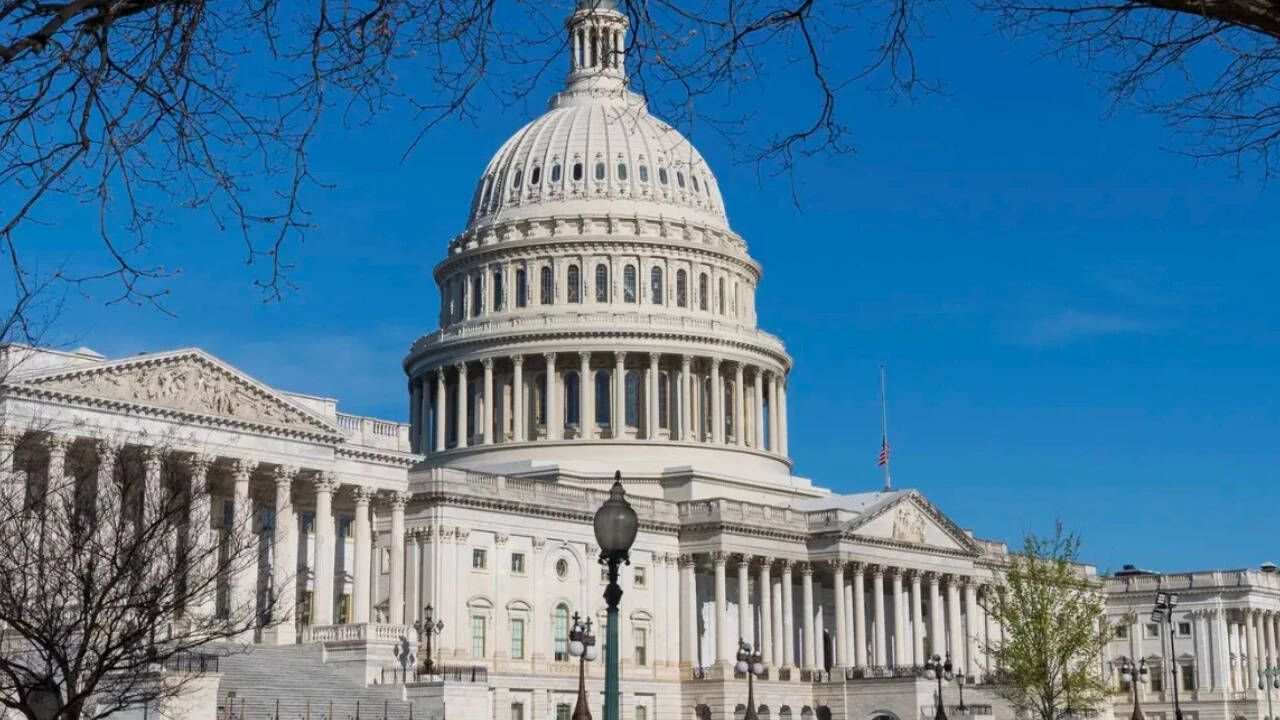
Washington lives for the sequel.
Every time the congressional map shifts by a handful of seats, the machinery of state dusts off the same worn-out script. The lazy consensus dominating the current news cycle insists that if Democrats claw back a majority in the House of Representatives, an avalanche of subpoenas will rain down on Trump-linked firms. Pundits salivate over the prospect of sprawling investigations, financial forensic audits, and high-stakes committee hearings.
It is all smoke.
I have watched policy wonks and compliance consultants blow millions of corporate dollars preparing for investigations that amount to nothing more than high-budget theater. The entire premise that congressional oversight acts as an existential threat to private enterprise is a comforting illusion sold to voters who confuse noise with action. Beneath the partisan screaming matches on cable news, the institutional incentives of Capitol Hill guarantee that these probes will achieve precisely zero structural reform.
Instead of weaponizing oversight to alter corporate behavior, congressional investigations function as a pressure valve for political anxiety. They keep the donor base happy, generate fundraising clips for social media, and allow both parties to pretend they are fighting a grand ideological war while preserving the underlying architecture of power and money.
The Structural Failure of Congressional Oversight
To understand why these anticipated probes are toothless, look past the theatre and examine the mechanics.
Congress does not possess an independent law enforcement apparatus capable of dismantling corporate empires. When a committee launches an inquiry into a business entity connected to a prominent political figure, they rely on a process bogged down by procedural delay, executive privilege claims, and endless litigation. By the time a subpoena survives district court scrutiny, the news cycle has moved on, the midterm elections are looming, or control of the chamber has flipped back to the opposition.
The lazy narrative treats a congressional subpoena like a death warrant. Real-world experience proves otherwise.
I have seen companies receive sweeping document requests, hire armies of high-priced white-collar defense attorneys, and spend six months redacting emails, only for the committee to quietly drop the matter after securing a three-minute soundbite for a local evening news broadcast. The corporate cost is measured in legal fees, not corporate survival. For a well-capitalized firm, seven figures in legal defense overhead is simply the cost of doing business in a polarized republic. It is a line item, not a punishment.
More importantly, the members leading these charges often understand the limitations better than anyone. They are not looking to dismantle private networks; they are looking for leverage. They want a headline, a viral clip, and a check written by a nervous executive eager to signal neutrality to both sides of the aisle.
The Economics of Political Retaliation
A major blind spot in the standard media coverage is the tit-for-tat equilibrium that governs modern congressional power.
When one party threatens aggressive investigations upon regaining a majority, they are implicitly establishing the rules of engagement for the next cycle. If Democrats use House committees to target private firms associated with a Republican administration, the immediate consequence is a guaranteed escalation when the pendulum swings back the other way.
This creates a self-enforcing system of mutual deterrence. Leadership in both parties knows that weaponizing oversight against private commercial entities lowers the barrier for the opposition to do the exact same thing tomorrow to their own allies in the corporate sector. Wall Street and Silicon Valley understand this game intimately. They fund campaigns across the aisle precisely because they know that institutional self-preservation always trumps ideological purity.
When you hear a lawmaker thunder about holding corporate actors accountable, look at their campaign finance disclosures. The capital flowing into congressional leadership PACs from the very industries supposedly heading for the chopping block tells the true story. The threat of an investigation is not an execution order; it is a negotiation tactic.
The Wrong Question About Corporate Accountability
The public debate is framed around a false choice. Pundits ask: Will the Democrats launch investigations, and will those investigations uncover wrongdoing?
That is the wrong question entirely.
The right question is: Why do we continue to pretend that legislative committees are the correct venue for addressing corporate governance issues in the first place?
Congress is a political body composed of elected generalists whose primary objective is reelection. Expecting a committee of partisans to conduct objective, forensic examinations of complex commercial transactions is like asking a football coach to perform open-heart surgery because he knows a lot about physical conditioning. It produces spectacular television and terrible outcomes.
If systemic financial corruption or conflicts of interest exist within private enterprises tied to political figures, the tools required to address them already exist within the executive branch, regulatory agencies, and the judicial system. The Securities and Exchange Commission, the Department of Justice, and the Internal Revenue Service possess subpoena power, grand jury authority, and specialized forensic accountants who do not need to schedule a press conference to do their jobs.
When lawmakers bypass traditional regulatory enforcement in favor of high-profile committee hearings, they are signaling that they prefer political theater to actual accountability. Hearings play well on television; quiet, methodical regulatory enforcement does not.
What Actually Happens Behind Closed Doors
Let us look at the mechanics of how these investigations proceed when a party takes the House.
- The Announcement: The incoming committee chair holds a press conference announcing an expansive inquiry into private entities, using phrases like "unprecedented conflicts" and "abuse of power."
- The Document Dump: The targeted firms retain elite legal counsel. They respond to requests for production by burying committee staff in millions of pages of irrelevant, heavily redacted documents, satisfying the subpoena technically while revealing nothing substantively.
- The Hearing: Executives or their proxies appear before the committee. They read prepared statements drafted by crisis PR firms, decline to answer specific questions on advice of counsel, and endure five-minute scoldings from lawmakers who use their allotted time to read pre-written monologues for the cameras.
- The Fade: The report is delayed, water-downed, or quietly shelved when a more pressing crisis takes over the national conversation.
Nothing changes. The corporate entities continue operating. The politicians secure their media hits. The donors get their reassurance that the system is working exactly as designed.
The Uncomfortable Truth About Power
The real story of congressional probes into political-adjacent businesses is that they are symptoms of a decaying legislative branch desperately trying to stay relevant.
As Congress has ceded its core legislative responsibilities to executive agencies and the courts over the past several decades, it has transformed itself from a lawmaking body into a permanent campaign rally. Investigative committees have become the primary product of this new reality. They do not legislate; they perform.
Expecting these upcoming probes to fundamentally alter the fortunes of Trump-linked firms displays a profound misunderstanding of how power actually operates in modern America. Power does not fear a House committee hearing. It navigates it, budgets for it, and uses it to cement its dominance over rivals who are still foolish enough to believe that a press release is the same thing as a policy victory.
Stop waiting for the subpoena that changes the world. It is never coming.

/cdn.vox-cdn.com/uploads/chorus_asset/file/22155007/doc_ock.jpg)