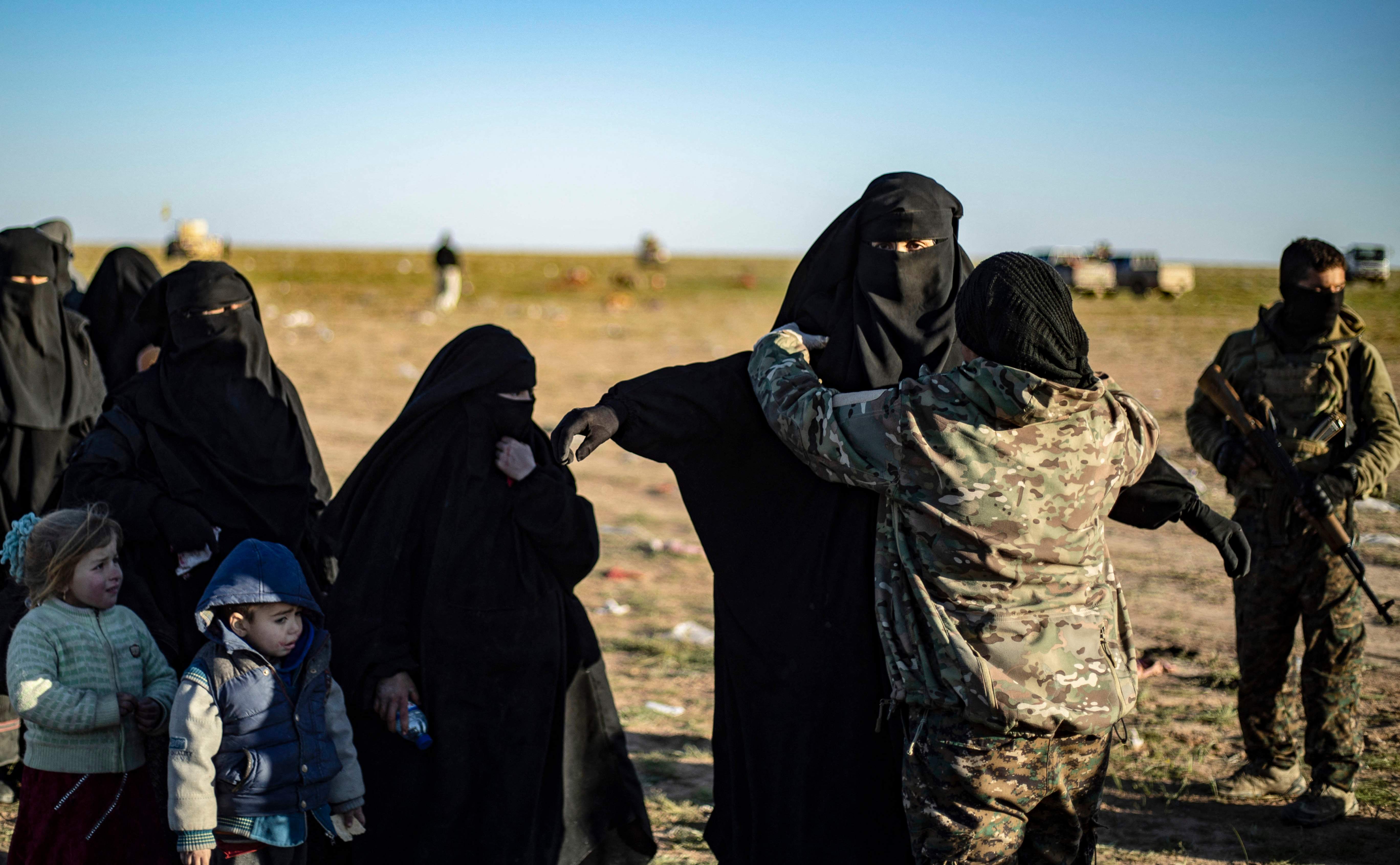
Everyone is celebrating the verdict. A Canadian jury just found another woman guilty of participating in a terrorist group after she traveled to Syria to join the Islamic State. The headlines write themselves. She "answered ISIS’s call." Justice served. Case closed.
Except it isn't. If you look at the mechanics of modern counterterrorism, treating these trials as grand victories is a massive strategic distraction. The mainstream press loves a neat moral arc where the bad guy goes to a foreign war zone, comes back, gets cuffed on the tarmac, and disappears into a federal penitentiary. It satisfies the public's appetite for retribution. It also completely misses the operational reality of how violent extremism actually mutates, survives, and spreads inside Western borders.
I have spent years watching national security agencies burn billions of dollars on reactive theater while ignoring the actual pipelines of radicalization. When we applaud a single domestic conviction as proof that the system works, we are congratulating ourselves for putting a bandage on a severed artery. The public thinks a guilty verdict neutralizes a threat. In reality, high-profile prosecutions of repatriated women often expose the severe limitations of our legal frameworks, create domestic martyrdom narratives, and divert critical intelligence resources away from the networks that recruited them in the first place.
The Myth of the Clean Conviction
The dominant media narrative relies on a simple binary. Either these women are brainwashed victims of human trafficking who deserve immediate rehabilitation, or they are hardened ideological operatives who must be locked away forever. Both takes are lazy.
Let’s look at the actual legal mechanics of prosecuting returning foreign fighters—specifically women—under Canadian Criminal Code terrorism provisions (Sections 83.18 through 83.22). Prosecutors face an evidentiary nightmare. There are no tidy police reports from Raqqa or Baghuz. Chain of custody doesn't exist in a collapsed caliphate. To secure a conviction for "participating in the activity of a terrorist group," the Crown has to piece together encrypted messaging logs, social media posts from a decade ago, and battlefield intelligence gathered by foreign militaries that rarely want their sources exposed in open court.
When the state actually pulls off a conviction, it isn't proof of a repeatable, scalable legal strategy. It is a statistical anomaly.
Think about the sheer man-hours required to build a single admissible case from rubble in the Levant. You need intelligence analysts, forensic linguists, constitutional lawyers fighting disclosure battles under Section 38 of the Canada Evidence Act, and millions in taxpayer funding. Meanwhile, dozens of other returnees walk free on peace bonds—Section 810.011 recognizances—because the evidentiary threshold for a criminal conviction is impossible to meet without compromising Five Eyes intelligence sources.
Calling a rare jury conviction a triumph of national security is like celebrating the fact that you caught one mosquito while leaving the window wide open.
Why Domestic Prisons Are Recruiting Grounds
Here is the uncomfortable truth nobody in the justice department wants to broadcast: putting a committed extremist in a standard federal prison does not pause their ideology. It accelerates it.
We have decades of empirical data on this. Look at the work of criminologists and counter-extremism researchers like Peter Neumann at King’s College London, who has extensively documented how European and North American prisons function as incubators for radicalization. When you take an individual who survived the collapse of the physical caliphate—someone who carries immense street credibility within extremist circles—and drop them into a general or even semi-segregated prison population, you are handing them a captive audience.
Inside a facility, the grievance narrative writes itself:
- The Western state is framed as an oppressor persecuting Muslim women.
- Every procedural restriction becomes proof of systemic hostility.
- Vulnerable, isolated inmates looking for protection or identity find a structured, disciplined mentor.
A prison sentence has an expiration date. Under Canadian sentencing guidelines, even a severe terrorism conviction rarely translates to natural life without parole. Eventually, the cell door opens. If the correctional system lacks specialized, ideologically fluent disengagement programs—and most Western facilities are severely understaffed in this exact specialty—you aren't releasing a rehabilitated citizen. You are releasing a networked, battle-hardened organizer who just spent five to ten years studying the state's legal and surveillance playbooks from the inside.
The Gender Blind Spot in Counterterrorism
The media coverage surrounding this verdict obsessively repeats the phrase "answered ISIS's call." That framing quietly reinforces one of the most dangerous misconceptions in modern security: that women in the Islamic State were merely passive brides, cooks, and cheerleaders.
Anyone who has actually analyzed the internal bureaucracy of ISIS knows better. Researchers at the International Centre for the Study of Radicalisation (ICSR) and the Combating Terrorism Center at West Point have mapped the exact operational roles women held. They weren't just domestic support. They staffed the al-Khansaa Brigade, acting as religious morality police who enforced brutal punishments on other women. They ran sophisticated online recruitment rings, raised tens of thousands of dollars through cryptocurrency and hawala networks, and raised a generation of children explicitly trained for future insurgency.
Yet, when these cases hit Western courtrooms, the prosecution and the press still struggle to articulate what "participation" looks like when the defendant didn't carry an AK-47 on the front lines.
- The Legal Friction: Criminal law is built to prosecute discrete, violent acts—a bombing, a shooting, a specific conspiracy. It is clumsy when applied to ideological logistics, propaganda distribution, and household management inside a totalitarian terror state.
- The Public Perception Trap: Because the defense can easily pivot to narratives of coercion, abusive husbands, and motherhood, juries are forced to adjudicate complex psychological dynamics rather than clear-cut operational threats.
- The Intelligence Loss: By forcing these women into adversarial courtroom battles, the state guarantees they will never cooperate. A defendant facing a decade in prison has zero incentive to hand over the names of active recruiters still operating in Toronto, Montreal, or Calgary.
What Everyone Gets Wrong About Repatriation and Prosecution
If you listen to the loudest voices in politics and media, you hear two equally flawed arguments. Let's dismantle the exact questions the public keeps asking.
Should Canada simply revoke their citizenship and leave them in Syria?
This is the populist favorite, and it is operationally suicidal. Leaving tens of thousands of foreign nationals rotting in squalid, under-guarded detention camps like Al-Hol and Al-Roj in northeast Syria is not a security strategy; it is a ticking time bomb. The Syrian Democratic Forces (SDF) are stretched thin, constantly threatened by Turkish military operations and ISIS sleeper cells. Every month, detainees escape or are smuggled out. When a Canadian citizen escapes a Syrian camp, they don't vanish into thin air—they go underground, link up with reconstituted terror networks, and become completely invisible to Western intelligence. Repatriation brings them under direct physical and electronic surveillance. Leaving them there forfeits all control.
Does a guilty verdict deter future recruits?
Zero evidence supports this. Deterrence theory assumes a rational actor weighing the cost of incarceration against the benefit of a crime. Someone who is willing to fly across the world to live under aerial bombardment in an apocalyptic death cult does not care about a ten-year sentence in a Canadian prison. In fact, the spectacle of a Western trial often validates their worldview, proving to prospective recruits that the secular state fears their ideology.
Are peace bonds a sign of a weak justice system?
Actually, in many cases, a strict peace bond is a far superior tactical tool than a botched or overly narrow criminal trial. Under a terrorism peace bond, a judge can impose immediate, invasive conditions without needing proof beyond a reasonable doubt of a past crime in a foreign war zone. We are talking GPS ankle monitors, total bans on internet-enabled devices, strict curfews, mandatory psychological counseling, and non-association orders. If they violate a single condition—say, logging onto Telegram—they go straight to jail for breach of recognizance, an open-and-shut domestic charge that takes days to prosecute, not years.
The Real Threat Isn't Coming Off an Airplane
While journalists camp outside courthouses waiting for a verdict on events that happened in 2014 and 2015, the actual threat environment has completely shifted.
The physical caliphate is dead. Today's extremist ecosystems don't require a plane ticket to Istanbul and a smuggler across the Turkish border. They operate entirely in decentralized, encrypted digital spaces—gaming platforms, ephemeral messaging apps, and fringe social networks. Radicalization timelines have compressed from years to weeks. We are seeing teenagers with zero physical ties to overseas terror groups plotting mass-casualty attacks from their bedrooms, radicalized by algorithmic rabbit holes and peer-to-peer propaganda.
Imagine a scenario where a national security apparatus spends $15 million and assigns forty top investigators to secure a single conviction for a woman whose active operational involvement ended seven years ago in a Syrian desert camp. Meanwhile, three local 17-year-olds are sharing bomb-making schematics on an encrypted server two suburbs away, completely undetected because the surveillance teams are tied up in courtroom disclosure prep.
That isn't a hypothetical edge case. That is the exact resource-allocation crisis currently crippling Western intelligence agencies.
The Downside of the Intelligence-First Approach
To be completely transparent, prioritizing quiet surveillance, peace bonds, and intelligence extraction over public trials carries a massive political cost. It looks weak.
When the public sees a known ISIS member walking down a Canadian street wearing an ankle monitor instead of sitting behind bars, the outrage is immediate and visceral. Victims of ISIS atrocities—particularly the Yazidi community, who suffered a systematic genocide at the hands of these exact networks—deserve to see their perpetrators held accountable in a court of law. Relying purely on administrative controls and quiet rehabilitation feels like an insult to the people who survived torture and enslavement.
Furthermore, peace bonds are temporary. They expire after one to five years. If an individual remains deeply committed to violent extremism and simply plays along with court-ordered therapy until the GPS monitor comes off, the state eventually loses its legal tether. You cannot surveil someone forever; human surveillance teams cost millions per target per year. At some point, the criminal justice system has to draw a hard moral line.
Stop Confusing Courtroom Theater With National Security
The media wants you to read this conviction as the final chapter of a dark story. You shouldn't.
A jury verdict does not erase an ideology, it does not dismantle the online networks that still radicalize thousands of young people every year, and it does not fix the glaring holes in how we monitor and disengage extremists once they enter our correctional system. If governments want to actually neutralize the threat of returning foreign fighters and domestic extremists, they need to stop optimizing for headlines and start optimizing for long-term risk management.
That means building specialized, high-security disengagement units inside prisons so returnees cannot radicalize the general population. It means expanding the evidentiary admissibility of battlefield intelligence without burning allies' sources. And above all, it means recognizing that the real fight isn't happening in a courtroom over what someone did a decade ago in Syria—it is happening right now, on the devices in the pockets of people who have never left home.
Celebrate the verdict if you want the emotional satisfaction of a headline, just don't mistake it for safety.