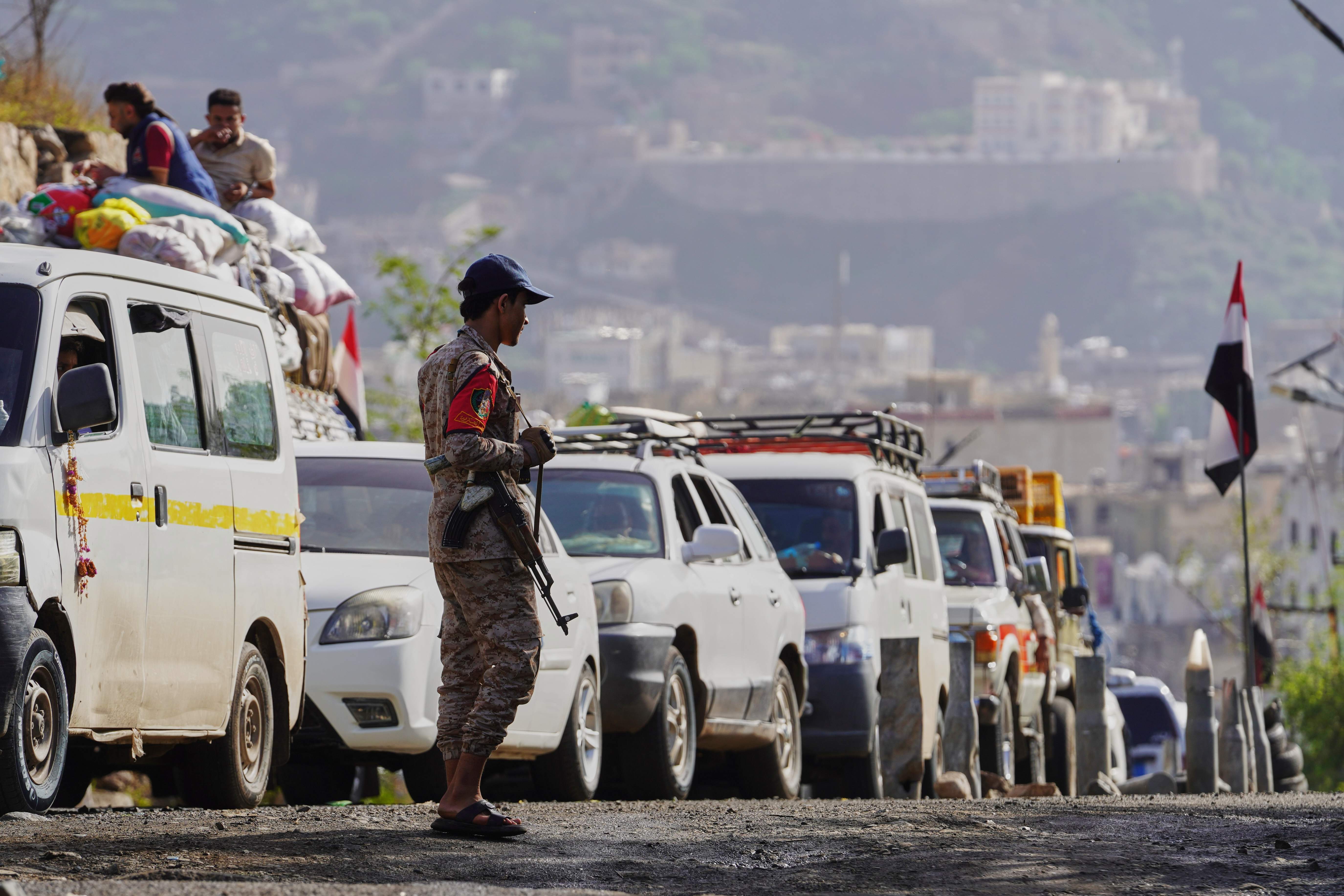
Two hundred and fifty thousand people on the move. A press release from Geneva. A solemn quote from a UN spokesperson. And another round of predictable headlines treating a fresh wave of displacement in Yemen like a sudden weather event.
Here is the lazy consensus every wire story repeats on loop: fighting escalates, hundreds of thousands of civilians flee, humanitarian agencies sound the alarm, and donors are urged to cough up more emergency relief. That script is tidy. It fits into a 600-word dispatch. It also misdiagnoses almost everything that actually happens when front lines shift across Yemen.
Counting people who pack a bag and cross a district line tells you movement occurred. It does not tell you who controls the checkpoints, whose water trucks get delayed for three weeks, which currency buys a sack of flour that morning, or why families who fled once already are moving for the fourth time in a decade. When reporters treat a cumulative displacement headcount as the whole story, they mistake a symptom for the operating system.
The Headcount Trap in Humanitarian Reporting
A spike in displaced persons sounds urgent because large round numbers trigger sympathy. In crisis reporting, a figure like 250,000 acts as a moral anchor. Everything around it—tents, food rations, cholera clinics, shelter kits—gets hung on that hook.
The problem starts with how displacement is measured and interpreted. In conflict zones with fractured administration and shifting front lines, displacement figures are estimates built from partner reports, rapid assessments, and local tracking networks rather than a clean census. More importantly, "displaced" in Yemen rarely means a neat one-way trip from a war zone to a safe camp. Many households cycle through secondary and tertiary displacement. They stay with relatives in a neighboring governorate until rent spikes or fighting creeps closer, then move again into informal settlements on marginal land.
I have watched relief budgets and media narratives get warped by this exact headcount reflex across complex emergencies. When an agency publishes a dramatic new displacement total, donors often chase the fresh spike while underfunding protracted support, host-community strain, and basic municipal infrastructure. You end up throwing temporary tarps at a structural breakdown. A family living in a makeshift shelter for seven years is not in an "acute" emergency in the way a newly arrived family is—yet both get lumped into the same headline tally.
Displacement vs. Deprivation
To see where the standard coverage goes wrong, separate physical displacement from acute deprivation.
- Physical displacement is a geographic event: a household leaves its habitual residence due to violence, threat, or collapse of livelihoods.
- Acute deprivation is a political and economic condition: lack of clean water, functional hospitals, affordable food, safe transit, and cash or earning power.
A family can stay put in a besieged or economically strangled town and suffer worse conditions than a family that moves to a slightly better-supplied market town. Conversely, families who flee into overcrowded peri-urban areas often lose their agricultural or local wage income overnight, turning independent households into aid dependents. Headlines that treat every displaced person as identical—and every non-displaced person as fine—flatten a brutal reality into a single number.
What the Standard Narrative Gets Wrong About Front Lines
Conventional coverage usually frames escalation in Yemen as a straightforward chain reaction: clashes flare up, civilians run away, and aid workers step in to catch them. Anyone who has spent real time studying Yemen's conflict dynamics or working inside humanitarian logistics knows the chain has far more friction than that.
First, escalation rarely happens in a vacuum. Front-line shifts in Yemen are tied to wider regional calculations, maritime pressure in the Red Sea and Gulf of Aden, local tribal alignments, and control over customs revenues and transit corridors. When fighting intensifies in one corridor, supply chains in another tighten or reroute. Fuel prices jump. Transport costs climb. Even communities miles from the gunfire feel the shock through higher food and water prices.
Second, aid access is negotiated, contested, and routinely constrained. Declaring that 250,000 people have been displaced does not mean aid convoys can reach all of them. Authorities and armed actors on different sides of the conflict regulate movement, impose administrative hurdles, or restrict certain types of assistance. Scholars and practitioners who study Yemen—such as researchers affiliated with the Sana'a Center for Strategic Studies, the International Crisis Group, and analysts tracking food security through the Famine Early Warning Systems Network (FEWS NET)—have repeatedly shown how economic fragmentation, dual monetary realities, and restrictions on goods and cash shape survival just as much as bullets do.
Third, host communities carry a quiet weight that rarely makes the lead paragraph. Most displaced Yemenis do not live in tidy, well-equipped mega-camps run by international agencies. Many live in host communities, rented rooms, unfinished buildings, or scattered sites where stretched water systems, strained schools, and rising competition for casual labor test local patience. Ignoring host communities makes the crisis look like "us versus them"—a neat divide between displaced victims and static locals—when in reality both groups are navigating the same shrinking economic pie.
You Are Asking the Wrong Question
When a headline announces that more than 250,000 people have been displaced in Yemen, the usual "People Also Ask" reflex goes straight to predictable questions: How much more money do aid agencies need? or Where are the biggest camps located?
Those questions are not useless, but they start too late in the sequence.
Asking "How much emergency relief is needed?" assumes money alone unlocks delivery and fixes the root driver. In an environment marked by prolonged conflict, fragmented governance, and severe macroeconomic stress, throwing uncoordinated short-term relief at a chronic political-economic crisis treats a broken leg with a band-aid. Cash and emergency supplies keep people alive today, which matters enormously, yet aid cannot substitute for functioning state institutions, stable trade, or a political settlement.
The sharper question is: What broke down to force these people to move, and what incentives keep the conflict—and the displacement—churning?
A Quick Thought Experiment on Aid vs. Economy
Imagine a scenario where a donor doubles emergency food distributions in a high-displacement district overnight, while commercial imports remain bogged down by high shipping and transit costs and local public-sector salaries stay unpaid. For a few weeks, caloric gaps narrow. Then the free distributions run out, local traders cannot compete with unpredictable aid flows, jobs remain scarce, and families still cannot afford medicine, cooking fuel, or school fees.
Aid is essential lifeline support, not a substitute for an economy or peace. Treating humanitarian response as a cure for war is one of the most expensive illusions in modern crisis management.
Where This Contrarian View Can Bite You
Taking a hard line against headcount-driven coverage has its own risks, and pretending otherwise would be dishonest.
- Downplaying urgency: If you spend all your time critiquing the numbers or the aid model, a reader can walk away thinking the situation is "just more of the same" and therefore less urgent. For a family sleeping under plastic sheeting without clean water today, this escalation is not abstract—it is immediate.
- Over-indexing on macro politics: Focusing heavily on regional geopolitics, shipping lanes, or elite bargaining can make ordinary people look like pawns rather than active agents making tough survival choices every day.
- Underestimating frontline staff: Pointing out systemic flaws in humanitarian reporting or aid architecture should never erase the grit of local Yemeni doctors, engineers, teachers, and aid workers keeping basic services alive under impossible conditions.
Nuance requires holding both truths at once: the human suffering is real and urgent, and the standard media-and-aid script is still missing half the picture.
What Actually Works Instead
If you want to understand—or respond to—a displacement surge in Yemen without falling for surface-level noise, change what you track and how you act.
- Track market prices and water access alongside displacement counts. Watch staple food costs, fuel availability, water trucking rates, and clinic closures in receiving areas. Those indicators tell you whether displaced families are surviving or sliding into acute destitution.
- Follow secondary movement, not just initial flight. Pay attention to where people go after their first stop. Repeat displacement signals that their initial refuge ran out of money, safety, or basic services.
- Prioritize flexible cash and local market support where feasible. Where markets function, putting purchasing power directly into households—while supporting local water, health, and sanitation systems—often gives families dignity and flexibility that rigid one-size-fits-all parcels cannot match.
- Separate humanitarian lifelines from political accountability. Fund life-saving relief without pretending relief is diplomacy. Real de-escalation requires pressure on the political and military actors driving the violence and blocking trade and movement.
Stop treating a fresh displacement number as the whole story. Start asking who gained leverage when the shooting started, who absorbed the shock when prices jumped, and what happens the week the cameras move on.