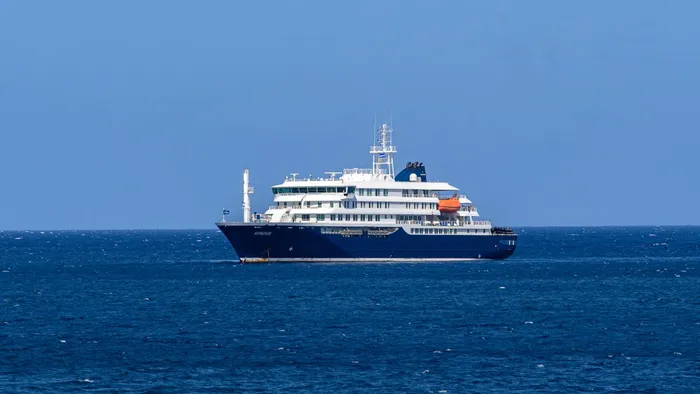
The recent emergency evacuation of a luxury cruise liner following a fatal viral outbreak has pulled back the curtain on a terrifying reality for the maritime industry. While initial reports focused on the immediate chaos of the disembarkation, the underlying story is a failure of modern cruise ship infrastructure to handle pathogens that bypass standard sanitation protocols. Public health officials are now grappling with the appearance of Hantavirus—a pathogen traditionally associated with land-based rodent exposure—in the tightly controlled environment of a multi-billion dollar vessel.
This isn't just about a single ship or a stroke of bad luck. It is about a systemic vulnerability in how we move thousands of people across oceans in floating cities.
The Breach of the Floating Fortress
Cruise ships are designed as closed-loop environments. They generate their own power, desalinate their own water, and manage their own waste. This isolation is supposed to be a defense mechanism, but when a highly lethal virus enters the loop, the very systems designed for comfort become delivery vectors. Unlike the common norovirus outbreaks that cause gastrointestinal distress but are rarely fatal, the presence of Hantavirus represents a shift from "nuisance illness" to "critical biohazard."
Hantavirus is typically transmitted through the aerosolization of dried droppings or urine from infected rodents. In a residential setting, this happens in dusty attics or sheds. On a cruise ship, the vector is the ventilation system. Once the virus enters the HVAC ducting, the recirculated air becomes a silent carrier. The victims in this latest incident weren't just in one corner of the ship; they were spread across different decks, suggesting a centralized point of contamination within the ship's internal bowels.
The industry likes to talk about its medical centers and advanced filtration, but those systems are often built to combat bacteria and larger particulates. A virus is a different beast entirely. It ignores the gold-leaf trimmings and the buffet sneeze guards. It thrives in the unseen spaces between the bulkheads.
How the Virus Got Onboard
The most pressing question for investigators is how a virus usually confined to rural landmasses found its way into a sterile maritime environment. There are three primary theories currently being vetted by epidemiologists and port authorities.
The Provisioning Pipeline
Modern cruise ships are logistical miracles, taking on tons of fresh produce and dry goods at every port of call. If a pallet of grain or boxed goods was stored in a contaminated warehouse on land before being loaded into the ship’s dry stores, the virus could have been "imported" directly into the heart of the galley. Once the boxes are opened and moved through the ship, the dust is disturbed. This creates the perfect conditions for respiratory infection among the crew, who then unknowingly pass the contamination into public areas.
The Port Infrastructure Gap
Ships spend a significant amount of time docked in ports that are often located in industrial zones. These zones are high-traffic areas for local wildlife. If a ship’s mooring lines aren't properly fitted with rat guards, or if the gangway is left unsecured during late-night loading operations, the entry of a single infected rodent is all it takes. Once inside the maze of wiring and plumbing, a rodent can move between decks with total impunity.
The Renovation Risk
There is a growing concern regarding "dry dock" periods. When ships undergo massive refits, they are often stripped down to the steel in shipyards that are far from sterile. If the internal insulation or ductwork is exposed to the elements during these weeks of construction, the ship may leave the yard with a hidden biological stowaway already embedded in its skeleton.
The Human Cost of Protocol Failure
The evacuation of thousands of passengers is a logistical nightmare, but it is also an admission of defeat. When a ship captain gives the order to abandon the cruise and return to port for a full medical offload, the "containment" phase has already failed.
The mortality rate of certain Hantavirus strains, specifically Hantavirus Pulmonary Syndrome (HPS), can be as high as 38 percent. This is a staggering figure compared to the seasonal flu or even the early days of recent global respiratory panics. For a passenger who paid five figures for a suite, the realization that the air they are breathing might be lethal is a psychological trauma that the industry is not prepared to manage.
We are seeing a breakdown in the "Sanitation Theater" that has dominated cruising since 2020. Hand sanitizer stations and surface wiping do nothing against a virus that lives in the air and targets the lungs. The industry has focused on visible cleanliness while ignoring the invisible integrity of the air we breathe.
Economics of a Biohazard
The financial fallout from this evacuation extends far beyond the immediate refunds and medical bills. The cruise line in question is facing a massive devaluation as investors realize that the current fleet may require billions in retrofitting to meet new, more stringent air quality standards.
Insurance premiums for the maritime sector were already rising. Now, underwriters are looking at "Pathogen Exclusion" clauses with renewed interest. If a ship can be sidelined and evacuated due to a land-based virus, the risk profile of the entire industry shifts. We are no longer looking at the risk of a "stomach bug" delaying a trip; we are looking at the risk of a vessel being declared a total loss due to biological contamination.
The Cost of Remediation
- Chemical Gassing: The ship must be sealed and pumped with chlorine dioxide or hydrogen peroxide vapor to kill any lingering viral particles.
- Duct Replacement: In extreme cases, the entire ventilation system may need to be ripped out and replaced if the contamination is deep-seated.
- Reputational Damage: A ship that becomes known as a "death ship" rarely recovers its bookings, often requiring a total rebrand or sale to a secondary market.
The Regulation Deadlock
Government agencies and maritime authorities are currently in a standoff over who bears the responsibility for these outbreaks. The International Maritime Organization (IMO) sets broad standards, but the actual enforcement happens at the flag state level—often in countries like Panama or the Bahamas, where resources for deep-dive biological inspections are limited.
This creates a "race to the bottom" in terms of safety. Ship owners choose the path of least resistance, following the minimum requirements needed to stay legal while ignoring the maximum precautions needed to stay safe. This latest tragedy shows that the minimum is no longer enough. The virus doesn't care about the flag on the back of the boat or the legal loopholes used to avoid strict American or European health inspections.
The Engineering Solution We Are Ignoring
If the industry truly wanted to solve this, the technology already exists. High-efficiency particulate air (HEPA) filtration combined with UV-C light sterilization in the main air handlers could effectively neutralize most airborne threats. However, these systems are expensive to install and even more expensive to run, as they create "drag" on the fans, increasing fuel consumption.
For decades, the industry has prioritized fuel efficiency and cabin count over atmospheric safety. The evacuation we just witnessed is the direct result of that choice. Every square inch of the ship is monetized, leaving no room for the bulky, high-grade filtration systems that could have prevented this disaster.
The Reality of the "Safe" Vacation
Travelers need to understand that a cruise ship is not a floating sanctuary. It is an industrial machine that happens to have a casino and a pool. When you step onto that gangway, you are entering a high-density living experiment where the air is shared with 5,000 strangers and the ventilation system might be thirty years old.
The current evacuation isn't an isolated incident; it's a warning shot. The maritime world has been lucky for a long time, coasting on the fact that most shipboard illnesses are mild. That era of luck has ended. As humans push further into remote areas and global trade moves more goods than ever before, the crossover of "wild" viruses into our luxury spaces is inevitable.
The next time you book a cabin, look past the brochure. Ask about the air change rates. Ask about the rodent mitigation strategies in the provisioning centers. If the cruise line can't answer, they are part of the problem.
Demanding total transparency is the only way to force an industry that loves its secrets to finally clean up its act before the next ship is forced to flee to port under a yellow flag. Stop accepting the "unforeseen circumstance" excuse from companies that make billions by cutting corners on the very air you breathe.