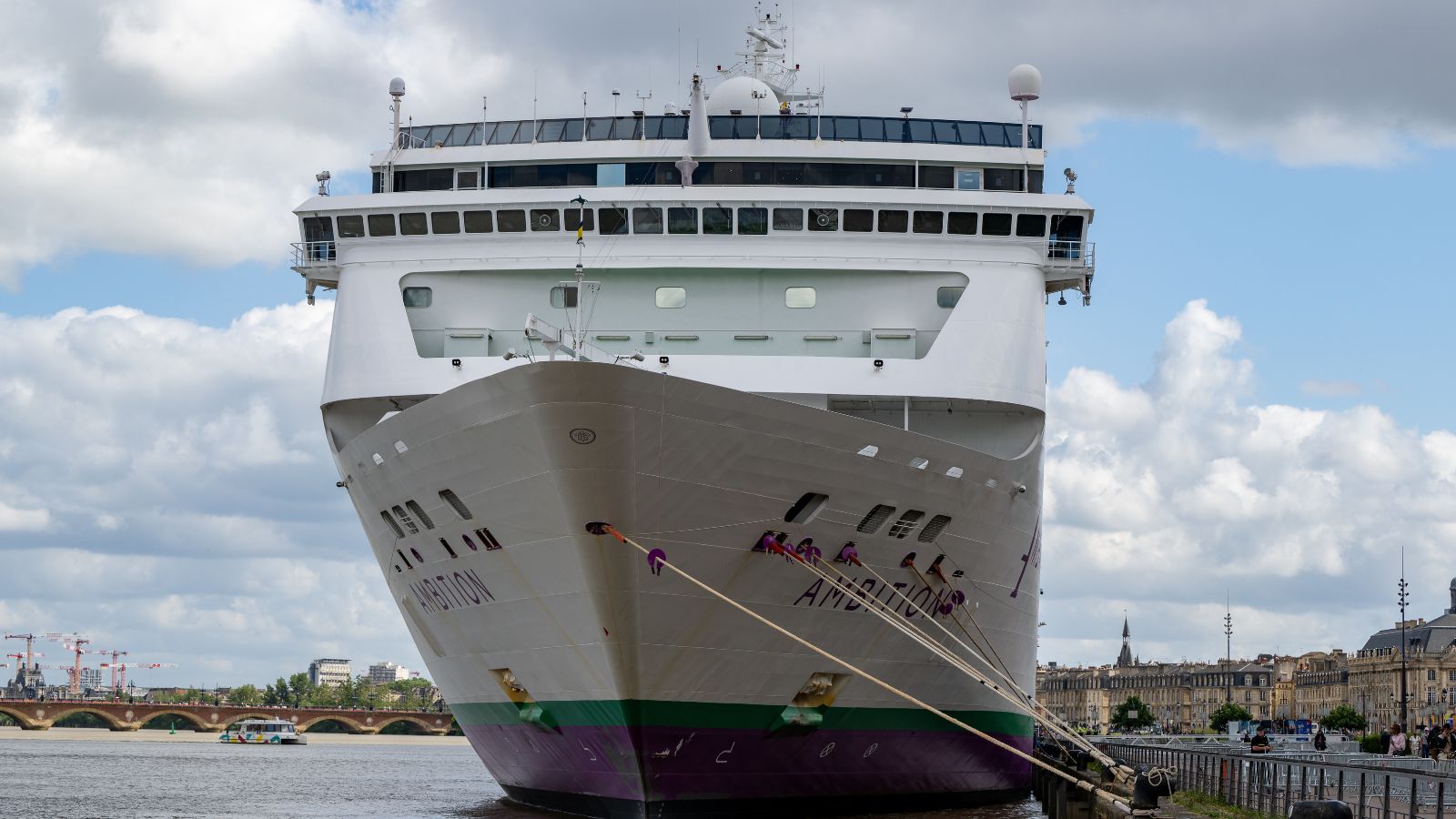
You are trapped on a floating luxury hotel, looking out at the beautiful port of Bordeaux, but you can't step foot on land. For over 1,700 passengers and crew aboard the British cruise ship Ambition, this nightmare became a reality when French health authorities slapped a sudden lockdown order on the vessel. A nasty stomach bug was ripping through the decks.
The immediate reaction from local governments often looks like complete panic. It's easy to see why. Just weeks ago, European health officials were on high alert over a deadly hantavirus outbreak on a separate Dutch vessel, the MV Hondius, which sadly resulted in three deaths. When the Ambition rolled into port with dozens of puking passengers and news of a 92-year-old man dying on board, French officials basically hit the big red emergency button.
But here is what really happened, why the reaction was so severe, and what you actually need to know about navigating the realities of cruise ship illnesses.
Inside the Bordeaux Port Lockdown
The Ambition, operated by Ambassador Cruise Line, was midway through a 14-night voyage through Western France and Spain, having picked up travellers in Belfast and Liverpool. By the time it docked in Bordeaux, the stomach bug had firmly taken hold.
Étienne Guyot, the prefect of the Nouvelle-Aquitaine region, suspended disembarkation completely. Passengers were stuck. Imagine sitting in your cabin, listening to announcements, while medical teams from Bordeaux University Hospital board the ship in full protective gear to take samples.
Honestly, the atmosphere could have devolved into pure chaos, but seasoned cruisers are a different breed. While health officials scrambled, 52-year-old passenger Seos Guilidhe from Belfast told reporters he was literally just playing bingo to pass the time, noting that it didn't feel anywhere near as bad as the dark days of Covid lockdowns.
The tension broke late Wednesday when laboratory results came back. It wasn't a exotic, lethal threat. It was classic norovirus.
French authorities immediately eased restrictions, allowing asymptomatic passengers to finally disembark and stretch their legs on shore excursions. However, the rules remained strict for the sick. If you had symptoms, you stayed in your cabin.
The Numbers On Board
- Total people isolated by the initial order: 1,701
- Total active cases at peak: 60 passengers and 4 crew members
- The tragic twist: A 92-year-old British passenger did die on Sunday, which originally fueled the quarantine panic. Health authorities later confirmed he suffered a heart attack entirely unrelated to the gastrointestinal outbreak.
Why Health Officials Aren't Taking Chances Anymore
You might think locking down an entire ship over a stomach bug is a massive overreaction. It isn't. The extreme caution stems from a massive case of collective anxiety among European maritime authorities due to the recent hantavirus scare.
Let's clear something up right now. Norovirus and hantavirus are completely different beasts.
Hantavirus is incredibly rare, spreads through contact with infected rodents, and carries a high mortality rate. The outbreak on the MV Hondius legitimately terrified port authorities across the continent. Norovirus, on the other hand, is just viral gastroenteritis. It makes you thoroughly miserable for about 48 hours with vomiting and diarrhea, but it rarely results in severe outcomes unless dehydration sets in.
French officials openly admitted there was no reason to link the two, but they had to be certain before letting 1,200 tourists wander through the streets of Bordeaux.
Compounding the issue, the cruise industry has had a rough couple of weeks. Just days before the Ambition incident, the Caribbean Princess docked in Florida after a massive norovirus outbreak sickened over 140 passengers. Bahamian officials had previously blocked that ship from docking in Nassau altogether. Port cities are getting incredibly protective of their local populations, and they're willing to ruin your vacation itinerary to keep bugs out.
The Cruise Ship Paradox
There is a common misconception that cruise ships are floating petri dishes specifically engineered to breed viruses. The data tells a different story.
According to the U.S. Centers for Disease Control and Prevention (CDC), cruise ships account for barely 1% of all reported norovirus outbreaks. You are statistically much more likely to catch this virus at a corporate buffet, a university dorm, or your local nursing home.
But cruise ships get the headlines because of the environment. You have thousands of people eating from the same stations, touching the same handrails, and using the same elevators. When a bug gets on board, it moves fast. Ambassador Cruise Line noted that cases on the Ambition spiked right after new passengers boarded in Liverpool. All it takes is one person failing to wash their hands after using the restroom to compromise an entire deck.
What happens next for the Ambition? The ship stayed in Bordeaux to allow the crew to catch up on a brutal sanitation schedule. The cruise line also threw out the original playbook, altering the itinerary to avoid rough weather in the Bay of Biscay. Nobody wants to deal with seasickness while recovering from a stomach virus.
How to Protect Yourself on Your Next Voyage
If you have a cruise booked, don't panic and cancel your trip. Dozens of ships sail every single week without a single incident. But you do need to be smart. Relying on the cruise line to keep you safe is a rookie mistake.
First, abandon the myth of hand sanitizer. Alcohol-based gels are great for many bacteria, but they do not effectively kill norovirus. The virus has a tough outer shell that laughs at your tiny bottle of gel. The only real defense is vigorous hand washing with warm water and soap for at least 20 seconds. Wash your hands before every single meal, and especially after touching casino chips, arcade games, or stair railings.
Second, avoid the self-service buffet lines during the first few days of a cruise. This is when viruses spread undetected. Opt for the main dining room where staff serve the food, or stick to stations where crew members plate the food for you.
Finally, if you start feeling sick, don't hide it. Passengers often conceal their symptoms because they are terrified of being quarantined in their room and missing out on the trip. This is incredibly selfish and dangerous. Onboard medical teams usually provide consultations for gastrointestinal symptoms completely free of charge to encourage early reporting. Report it, get the medication to stop the vomiting, and let the crew sanitize your room properly.
Pack some basic rehydration salts in your luggage just in case, wash your hands like your vacation depends on it, and keep an eye on local port regulations before you sail.