Cold rain hits the windowpane of a flat in east London. Inside, a kettle boils, the low whistle cutting through the grey morning silence. For Olena, a thirty-four-year-old software tester who fled Kharkiv three years ago with two suitcases and a feverish toddler, the morning news is never background noise. It is a weather report for the lives of everyone she loves.
She watches the screen as men in tailored suits discuss borders drawn thousands of miles away. They talk in weeks. They talk in handshakes. They talk as if a war that has hollowed out cities and filled fresh graveyards across the Donbas can be folded up like a camp bed before the next news cycle turns.
Listen.
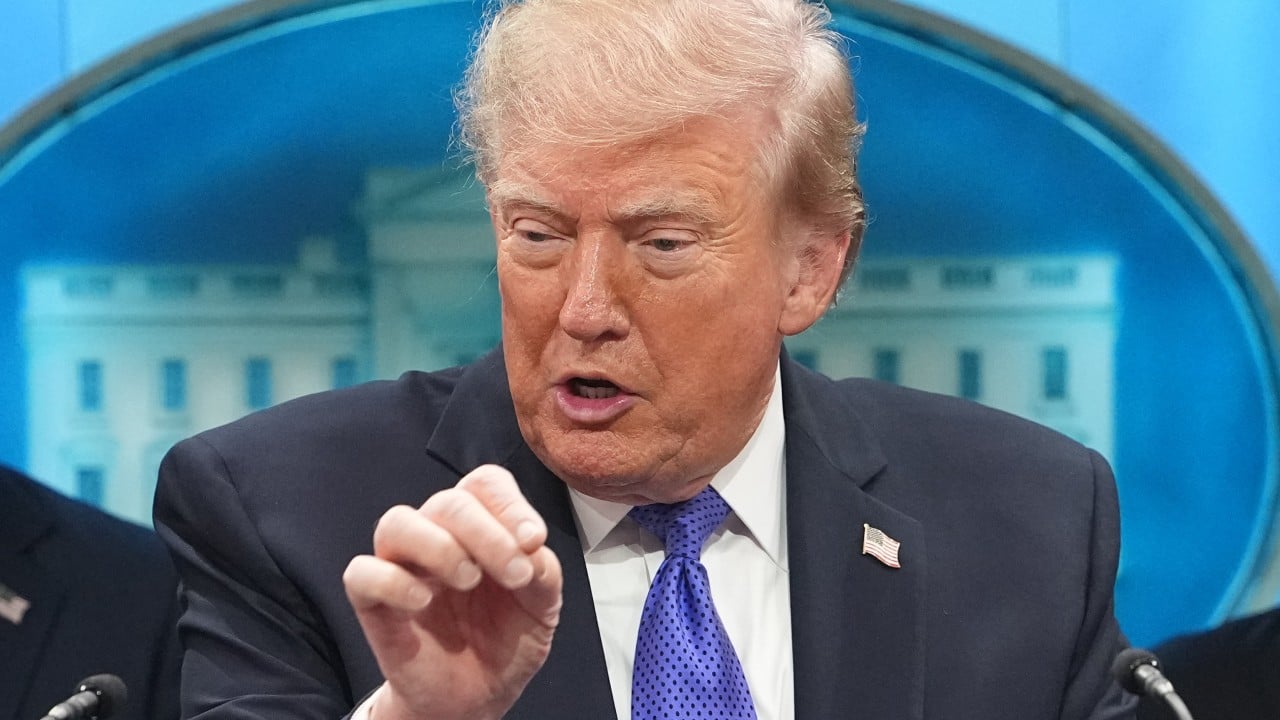
Across the Atlantic, Donald Trump has demanded an end to the conflict in Ukraine within a matter of weeks, leaning on the familiar rhetoric of personal rapport with Vladimir Putin—a leader he has repeatedly described in warm terms, even as Russian missiles continue to tear through Ukrainian power grids and apartment blocks. Meanwhile, in Westminster, UK Health Secretary Wes Streeting stepped up to the microphones and delivered a pointed, carefully calibrated rebuke. Without needing to shout, Streeting reminded the room—and the allies watching—what happens when Western leaders mistake a dictator’s smile for good faith, and what the true price of a rushed surrender actually looks like.
The Architecture of a Veiled Warning
Diplomacy rarely screams. When a senior British cabinet minister speaks about international security, every syllable is weighed on a jeweler’s scale. Wes Streeting’s remarks were not an accidental slip of the tongue during a routine media round; they were a deliberate flare fired into a darkening sky.
By contrasting the urgency of a forced, rapid settlement with the brutal reality of Putin’s ongoing campaign, Streeting touched the rawest nerve in modern geopolitics. The UK’s political consensus on Ukraine has remained remarkably sturdy since February 2022, stretching from Downing Street across the dispatch box. Yet the pressure coming from Washington threatens to fracture that united front. When Trump insists he could end the war in twenty-four hours—or within a handful of weeks—he is selling a seductive fantasy to voters tired of foreign entanglements and rising living costs.
Streeting’s pushback exposes the rot beneath that promise. Calling someone a "friend" while their forces level Mariupol, deport thousands of children, and torture prisoners of war is not statecraft. It is amnesia. And in international relations, amnesia is fatal.
To understand why a British minister felt compelled to intervene, you have to look at the mechanics of leverage. In any negotiation, the person most desperate to leave the room loses. If the world’s largest military superpower announces beforehand that it wants out immediately, the aggressor does not suddenly discover a conscience. The aggressor simply waits for the clock to run down, pockets the territory already stolen, and prepares for the next advance.
What "Weeks" Actually Means on the Ground
Let us step away from the broadcast studios in London and the rallies in Pennsylvania for a moment. Imagine a hypothetical scenario—one playing out in variations across dozens of European households right now—to strip away the abstraction of diplomatic language.
Picture a town in eastern Ukraine, roughly forty kilometers from the current front line. Call it Novohrad. Before the full-scale invasion, it was a place of brick bakeries, tram lines, and summer evening walks along the river. Today, the windows are taped in crosses to stop glass from shattering during air raids.
If an external power forces a ceasefire in three weeks, freezing the lines exactly where the tanks sit this Tuesday, what happens to Novohrad?
First, the artillery stops. People emerge from basements. The immediate relief is intoxicating, a sudden silence so loud it makes your ears ring. For forty-eight hours, television pundits in Western capitals declare victory. The headlines celebrate peace.
Then the second week begins.
In the territories locked behind the new demarcation line, the knock on the door comes at three in the morning. Without international monitors, without justice, and without sovereignty, occupation is not peace; it is simply war conducted behind closed curtains. Local teachers who refuse to teach a rewritten history disappear. Business owners have their deeds signed over at gunpoint. Young men are conscripted into the very army that destroyed their homes, ready to be thrown into the next offensive five years down the road.
This is not speculation. It is the exact pattern recorded in Crimea after 2014 and in the occupied parts of Luhansk and Donetsk over the last decade. We have seen this movie before, and we know how the reel ends.
The Munich Echo We Pretend Not to Hear
I remember standing in the Imperial War Museum in London years ago, looking at a faded piece of paper behind thick glass. It was the Munich Agreement of 1938. Next to it played grainy footage of Neville Chamberlain stepping off an airplane, waving that slip of paper in the autumn breeze, promising "peace for our time."
People cheered him in the streets. They wanted to believe him so badly that they suspended their own judgment. Who wouldn't want to believe that a reasonable conversation with a violent man could spare millions of families from grief?
History is rarely subtle when it repeats itself, yet each generation convinces itself that this time the rules have changed. Think of a ceasefire with an unrepentant aggressor like putting a fresh coat of white paint over structural damp in an old Victorian house. For a month, the wall looks pristine. You invite guests over and admire your handiwork. Beneath the surface, however, the moisture is still creeping through the brickwork, rotting the joists, waiting for the first hard winter to bring the ceiling down.
Streeting’s intervention matters because he is refusing to admire the paint. By highlighting the barbarity of Putin’s regime right alongside the demand for a quick fix, the Health Secretary—speaking with the clear backing of the broader British government—is forcing a moral reckoning. You cannot separate the terms of peace from the character of the person signing the treaty.
Why British Politicians Are Speaking Out Now
Some observers might wonder why the UK’s Health Secretary, rather than the Foreign Secretary or the Prime Minister, delivered such a sharp critique. In British politics, this is a classic maneuver.
When Downing Street wants to send an unmistakable signal without triggering an immediate diplomatic crisis with an incoming or influential American leader, a senior cabinet figure carries the message. It gives the Prime Minister a thin layer of plausible deniability while ensuring the warning lands squarely on the front pages.
And the stakes for Britain could not be higher. Security in Europe is indivisible. If Russia learns that brute force, nuclear blackmail, and sheer stubbornness will eventually be rewarded by Western impatience, the border of NATO becomes the next testing ground. Estonia, Latvia, Lithuania, and Poland are not distant abstractions to London; they are treaty allies whose security directly underpins British stability, trade, and defense spending.
Consider the sheer economics of a bad deal. Britain is already grappling with stretched public finances, an NHS in desperate need of reform, and sluggish growth. A frozen conflict that leaves Putin victorious does not allow the UK to cut defense spending and redirect billions into hospitals and schools. On the contrary, it forces Britain and every European neighbor onto a permanent, ruinously expensive war footing to deter the next invasion. A cheap peace today is the most expensive war tomorrow.
The Human Toll of Diplomatic Flattery
There is something uniquely corrosive about describing a man indicted by the International Criminal Court as a "friend." Words shape reality. When powerful figures casually erase the distinction between democratic allies and authoritarian invaders, they normalize cruelty.
I spoke recently with a volunteer paramedic who has driven ambulances from Kent to Lviv six times since the war began. His hands are permanently stained with grease and cold mud, his voice raspy from too many cigarettes smoked at border crossings. When I asked him what he thought about talk of a two-week peace plan, he didn't get angry. He just looked tired.
"They think we are fighting over dirt," he told me, staring into his mug of tea. "They look at a map and see a grey strip of land and think, Just give him twenty percent and go home. They don't understand that the twenty percent has grandmothers in it. It has libraries, and churches, and people who put out Ukrainian flags when we liberated Kherson because they believed we wouldn't leave them behind again."
That is the invisible core missing from every transactional pitch for a fast deal. Diplomacy reduced to a real estate swap forgets that nations are made of breathing human beings, not square footage.
When Wes Streeting pushed back against the narrative of an easy, chummy resolution with Moscow, he was speaking up for that uncomfortable truth. He acknowledged what many people in Britain feel instinctively, even when political pundits try to muddy the waters: strength means standing by your word when it becomes inconvenient, not folding your cards the moment the game gets long.
The Choice Between Comfort and Courage
It is completely understandable to feel exhausted by this war. The headlines have run for years. Energy bills spiked, inflation bit into family budgets, and the images from the front have grown numbing in their repetition. Wishing for the fighting to stop is human.
Yet wishing is not a strategy.
If Ukraine is forced into a humiliated, dismembered settlement to satisfy a political timetable in Washington, the shockwaves will not stay neatly contained inside Eastern Europe. Every authoritarian regime on earth—from Beijing to Tehran to Pyongyang—is watching closely. They are taking notes on how long Western democracies can hold their nerve before fatigue sets in and principles are auctioned off for a quiet life.
Back in that flat in east London, the kettle has long gone cold. Olena packs her son’s school bag, checking that his reading book and apple are tucked inside. Before she opens the front door to walk him to the bus stop, she glances once more at her phone.
Her brother is still in a trench outside Pokrovsk. He does not have the luxury of tired cynicism, and he does not have the luxury of believing promises made by men who call his attackers friends. He only has the hope that the people standing behind him will not let go of the rope before the pulling is done.