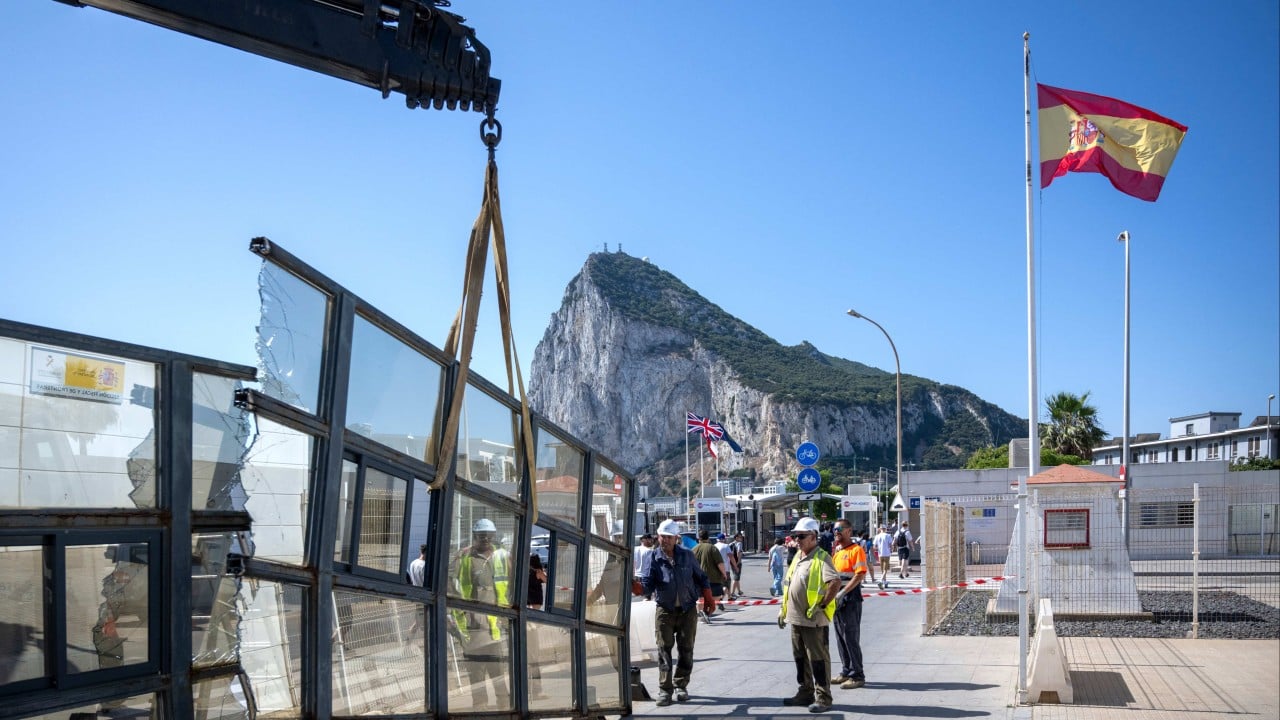
Diplomats in London, Madrid, and Brussels are currently patting themselves on the back. They want you to believe they have pulled off a geopolitical miracle. The narrative is everywhere: a historic UK-EU treaty has supposedly "saved" Gibraltar by dismantling its physical border with Spain, keeping the Rock connected to the Schengen zone, and securing a future of frictionless prosperity.
It is a beautiful story. It is also a total fantasy. Recently making news in this space: The Night the Sirens Didn't Stop in Manama.
What the mainstream media paints as a triumph of modern diplomacy is, in reality, a masterclass in sovereign surrender and economic self-sabotage. By celebrating the removal of the physical gates at La Línea, observers are missing the massive, bureaucratic cage being constructed around Gibraltar. This treaty does not solve the border problem. It merely moves the border, privatizes the friction, and hands Madrid the ultimate remote control over Gibraltar’s economic survival.
The Sovereignty Shell Game
Let us dismantle the biggest lie first: the idea that Gibraltar has preserved its British sovereignty while entering the Schengen Area. More details into this topic are explored by Associated Press.
Under the proposed framework, Schengen border checks will not disappear. They are simply shifting to Gibraltar’s airport and port. The consensus view claims this is a harmless compromise because Frontex—the European Border and Coast Guard Agency—will manage these entry points for an initial transition period.
This is a deliberate distraction. Frontex is not an independent, neutral peacekeeper. It is an EU agency that operates under EU law. More importantly, Spain, as the neighboring Schengen member state, remains the legally responsible party for securing this external border.
In practice, this means Spanish officials will have the final say on who enters Gibraltar. Whether they sit in a booth at the airport or monitor a database feed from Madrid, Spain is gaining direct veto power over every tourist, investor, and high-net-worth individual attempting to land on the Rock.
For three centuries, Gibraltar’s entire identity—and its economic model—has relied on being a secure, self-governing British outpost right on Spain’s doorstep. The moment Gibraltar hands Spain control over its guest list, its political autonomy becomes an illusion.
The Death of the Mediterranean Tax Haven
For decades, Gibraltar has run circles around Spain economically by operating as a low-tax, highly agile financial hub. With a corporate tax rate of just 12.5% and no VAT, Gibraltar lured online gaming giants, shipping companies, and wealth management firms, driving its GDP per capita to some of the highest levels globally.
Spain has long despised this setup, labeling Gibraltar an unfair tax haven that drains revenue from the surrounding Andalusian region.
The treaty is Spain’s Trojan horse to kill this competitive advantage.
To secure this "borderless" status, Gibraltar has already had to make massive concessions on tax cooperation. Under the guise of creating a "level playing field," Madrid is forcing Gibraltar to align closely with EU standards. This means:
- Loss of Regulatory Agility: Gibraltar can no longer rapidly adapt its financial regulations to attract new industries without Brussels or Madrid raising a red flag.
- Tax Information Sharing: Increased transparency requirements that strip away the privacy advantages that wealthy clients expect.
- Import Tariffs: To keep the land border open for goods, Gibraltar will likely have to implement a mechanism equivalent to the EU’s Common External Tariff, effectively importing EU inflation and killing its duty-free appeal.
If Gibraltar looks like the EU, taxes like the EU, and regulates like the EU, why would any global business choose to navigate the complexities of a tiny, British-flagged enclave over established European hubs? The treaty does not protect Gibraltar’s economy; it homogenizes it.
The Digital Panopticon Replaces the Gate
Proponents of the treaty argue that removing physical passport checks is a massive win for the 15,000 Spanish workers who cross into Gibraltar daily. They claim it guarantees fluid trade.
They are ignoring the rise of the digital border.
The physical booths are not being destroyed to make life easier; they are being replaced by the Schengen Information System (SIS II), the Entry/Exit System (EES), and the European Travel Information and Authorisation System (ETIAS).
Instead of a Spanish guard looking at a passport, travelers will be subjected to biometric tracking, automated database screening, and pre-travel authorization protocols. Because Gibraltar is not an official EU member, its residents and visitors will be subject to the strict 90-day Schengen limit.
This is not freedom of movement. It is high-tech surveillance.
Furthermore, digital systems are notoriously fragile and easily weaponized. If diplomatic relations between London and Madrid sour—as they inevitably do every few years—Spain will not need to deploy riot police to block the border. They can simply slow down database processing times, cite "system upgrades," or flag incoming flights with security alerts.
The friction has not been eliminated. It has been digitized and centralized in Madrid.
The Delusion of Mutual Prosperity
The UK government has repeatedly used the phrase "shared prosperity" to justify these concessions. The theory is that a thriving Gibraltar boosts the impoverished Campo de Gibraltar region in Spain, creating a win-win scenario.
This completely misunderstands the regional dynamics.
Spain’s interest in Gibraltar is not purely economic; it is deeply nationalistic. For Madrid, the sovereignty claim over "El Peñón" is a constitutional priority. Every Spanish government, whether left-wing or right-wing, is incentivized to use any leverage available to squeeze Gibraltar back into Spain’s orbit.
By signing this treaty, the UK is voluntarily giving up its leverage. Once the border checks are integrated into Spain's national infrastructure, reversing the arrangement becomes practically impossible. Gibraltar becomes completely dependent on Madrid’s goodwill to keep its economy functioning.
I have watched governments make these kinds of compromises before, trading long-term strategic sovereignty for short-term logistical convenience. It always ends the same way. The smaller party gets slowly digested by the larger neighbor.
The Uncomfortable Truth
The honest alternative is one that politicians are too cowardly to discuss: Gibraltar should have embraced its status as a hard border.
Yes, a hard border causes queue times and logistical headaches. But it also forces a nation to diversify, innovate, and look globally rather than relying on its immediate neighbor. By forcing physical friction, Gibraltar would have retained absolute control over its laws, its taxes, and its sovereignty. It could have pivoted fully to a high-value, digital-first economy, operating as a true offshore powerhouse completely independent of EU regulatory overreach.
Instead, Gibraltar has chosen a slow, comfortable decline inside a golden cage designed by Brussels and unlocked by Madrid.
The treaty is not a historic victory. It is the beginning of the end for Gibraltar as we know it.