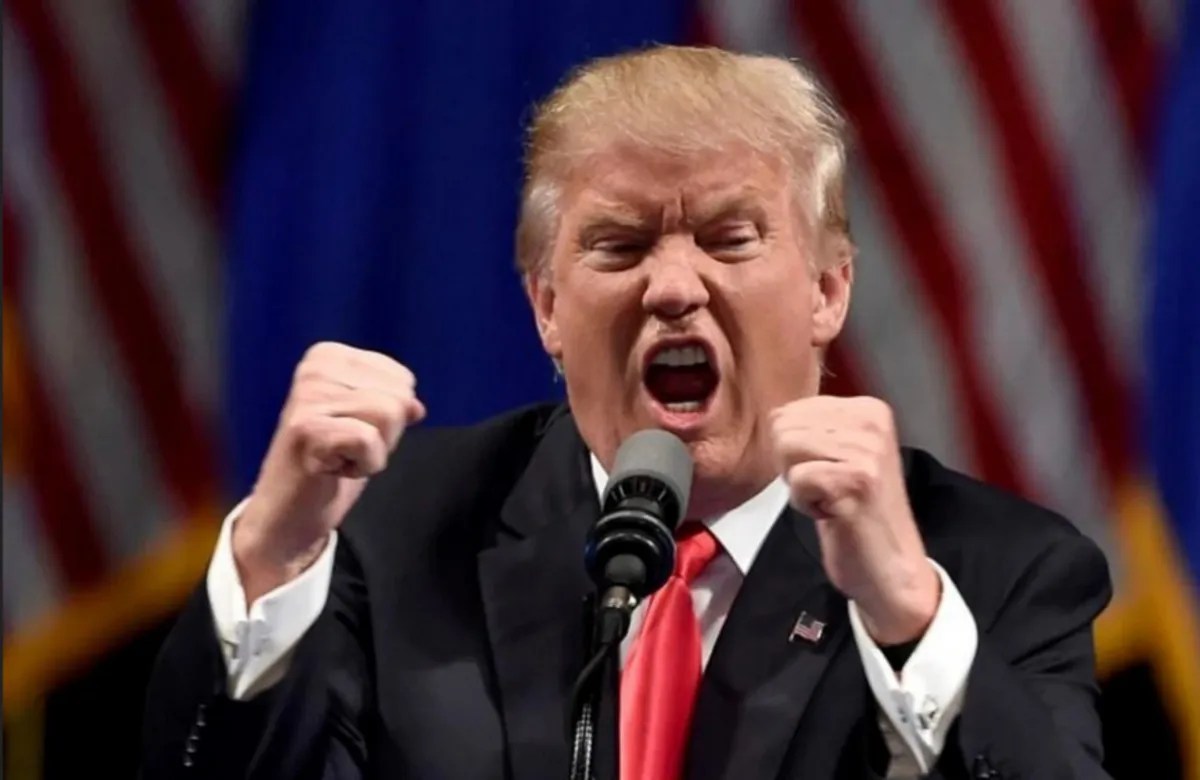
The lazy consensus across global newsrooms is currently fixated on a singular, fragile premise. They tell you that a single drop of American blood spilled by an Iranian missile will instantly detonate the Middle East ceasefire. They paint a picture of Donald Trump as a volatile reactor, waiting to unleash total war the moment a casualty report hits his desk.
This analysis is not just superficial. It completely misunderstands the mechanics of modern geopolitical leverage and the specific transactional nature of the current administration.
The media wants a narrative of red lines and automatic triggers. Reality operates on a completely different ledger. A US soldier dying in an Iranian strike is not the end of negotiations. It is the grim, hyper-inflationary currency that accelerates them.
The Flawed Premise of the Red Line Trigger
Mainstream pundits love the "red line" concept because it simplifies complex geopolitics into a video game mechanic. Damage happens, a trigger pulls, war starts.
They point to historical precedents like the 2020 killing of Qasem Soleimani after rocket attacks killed an American contractor in Iraq. But looking at 2020 to predict the current administration's strategy ignores a fundamental shift in economic and political realities.
In foreign policy, a casualty is a tragedy, but to a transactional administration, it is also an asset of immense, terrible leverage. If Iran kills an American soldier, the immediate response will not be an irrational, full-scale invasion that destabilizes global oil markets and tanks the S&P 500. The response will be a crushing, asymmetric escalation designed to force a highly unfavorable settlement on Tehran.
The assumption that casualties equal an automatic exit from a ceasefire ignores the ultimate goal: a comprehensive, enforceable regional architecture that protects trade routes and isolates adversaries. You do not abandon the poker table when the stakes get high. You raise.
The Cost of the Total War Illusion
Let us look at what actually happens when a superpower goes to war in the modern era. I have watched defense analysts blow through billions in projected costs by assuming conventional military superiority equals quick containment. It never does.
If the United States pivots to an all-out kinetic conflict with Iran over a single, tragic flashpoint, the global economy suffers immediate structural damage.
- The Strait of Hormuz Lockdown: Over 20% of the world's petroleum passes through this choke point. A shooting war pushes oil past $150 a barrel within 48 hours.
- The Supply Chain Shock: Shipping insurance rates would skyrocket, effectively cutting off major maritime trade routes and reigniting global inflation.
- The Domestic Political Cost: No administration wins an election on a new, open-ended Middle Eastern war.
A transactional leader knows these numbers better than anyone. The current administration's primary mandate is domestic economic dominance. You do not sacrifice the American economy to satisfy a legacy military doctrine of automatic retaliation. Instead, you use the political capital generated by that tragedy to squeeze the adversary until they sign a worse deal than the one they initially rejected.
Dismantling the De-escalation Myth
People frequently ask whether a softer approach or strict adherence to existing diplomatic frameworks could avoid this friction entirely. The premise of the question is broken.
True stability in the region does not come from a mutual desire for peace. It comes from an alignment of economic necessity.
Iran is operating under severe economic constraints. Their domestic currency is in a tailspin, and inflation is rampant. Their proxy network—spanning Lebanon, Syria, and Yemen—is increasingly expensive to maintain. They are not looking for a catastrophic war with a superpower; they are looking for sanctions relief and survival.
Therefore, when an escalation occurs, the most potent weapon is not a B-2 bomber strike on Tehran. It is the absolute weaponization of the global financial system.
An American casualty gives the administration the absolute moral and political authority to enforce secondary sanctions globally. It forces nations like China and India to choose between buying Iranian crude or retaining access to the US dollar clearing system. That is how you win a modern conflict, not by scattering dirt in the desert with multi-million dollar cruise missiles.
The Brutal Reality of Transactional Diplomacy
This approach has a glaring downside that establishment diplomats refuse to articulate. The downside to treating geopolitics as a series of high-stakes business transactions is that it requires a level of cynicism that makes conventional moralists uncomfortable.
It means accepting that low-level conflict will happen. It means acknowledging that ceasefires are not sacred texts; they are dynamic, shifting pricing mechanisms.
When a competitor's headline screams that a ceasefire is dead because of a potential casualty, they are selling fear. They are selling the old playbook. The new playbook dictates that everything, including military retaliation, is a prelude to a renegotiation.
The heavy hitters in macro-strategy understand this implicitly. Look at how major maritime shipping firms or sovereign wealth funds hedge their risks. They do not liquidate assets the moment a drone strike occurs. They watch the policy response. They watch the sanctions registry. They know that theater is for the public, while the real movement happens on the balance sheet.
Stop reading the breathless updates about red lines that never hold. The next time a crisis flashes on the screen and the commentators declare the peace process dead, look at the underlying financial flows. Look at the energy markets. The ceasefire isn't over when blood is spilled. It just gets more expensive for the side that drew it.