The Men in White Suits
The rain in eastern Congo does not gently fall. It hits the corrugated iron roofs with the force of thrown gravel, drowning out the sound of voices inside the small mud-brick homes.
In a village just outside Beni, a mother named Amina sat in the dim light of a single paraffin lamp, watching her young son sweat through a thin cotton blanket. His skin was burning. His joints throbbed with a pain so intense he wept whenever anyone touched his legs. Amina knew the symptoms because everyone in the North Kivu region had heard the warnings whispered across market stalls and shouted through loudspeakers mounted on pickup trucks.
Ebola had returned.
Yet when a white four-wheel-drive vehicle sloshed through the mud outside her doorway, Amina did not run out to hail it. She bolted the wooden door. She pulled her feverish child closer to her chest and prayed they would drive past.
To an outside observer reading a casualty report in a distant capital, this reaction seems impossible to comprehend. When a lethal virus is sweeping through a population, reaching a medical facility ought to be the only priority. Why stay home? Why hide?
When the official death toll quietly crossed the threshold of 1,000 souls during the West African outbreak, the official bulletins pointed toward a single, complex cause. It was not merely a shortage of experimental treatments or a lack of isolation beds. It was a total breakdown of human trust.
When Help Looks Like a Threat
Put yourself in the doorway of a home where generations have lived, grieved, and healed together.
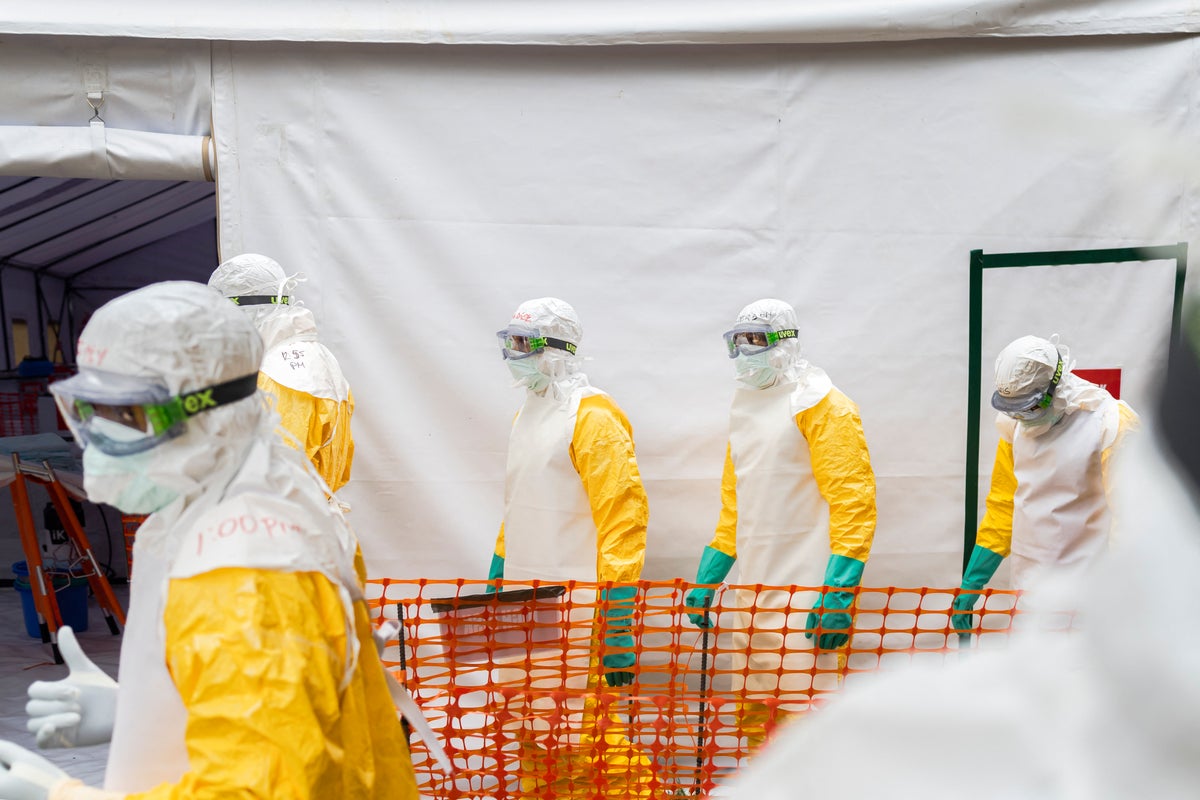
Suddenly, strangers arrive. They do not look like doctors in white coats from a television drama. They arrive clad head to toe in yellow or white impermeable hazmat suits. Rubber boots. Double-layered gloves. Fogged plastic visors covering their eyes. They breathe heavily through respirators. They speak through megaphones, their voices muffled and unnatural.
To a family in shock, these workers do not resemble healers. They resemble figures from a nightmare.
When these teams take a sick relative away, that person vanishes behind tarpaulin walls. If the patient dies inside the isolation center, the family is told they cannot touch the body. They cannot perform traditional burial rites, which often involve washing and honoring the deceased. Instead, strangers in plastic wrap handle the corpse, deposit it into a heavy body bag, and place it in an unmarked grave.
Rumors spread faster than the virus itself. People begin to whisper that the clinics are where people go to die, not to recover. Whispers transform into convictions: The doctors are harvesting organs. The sprayers are spreading the disease, not killing it.
Panic is a natural response to the unknown. When armed escorts accompany health teams into villages to protect them from angry crowds, the tension deepens. The clinic becomes a fortress. The hospital becomes a prison.
Panic. Isolation. Silence.
The Arithmetic of Fear
Numbers tell part of the story, but they flatten the human reality.
When public health organizations track an outbreak, they look at transmission chains. One infected individual, left untreated in a household, spreads the virus through direct contact with body fluids to caregivers, spouses, and children.
[Infected Individual] ──(Unprotected Care)──> [Family Members]
         │
         └──(Traditional Funeral)──────────> [Extended Community]
[Image of Ebola virus transmission cycle]
When fear keeps twenty sick individuals hidden inside their homes, those twenty people become forty within a week. The arithmetic of an epidemic is ruthless. The threshold of 1,000 recorded deaths was not just a grim statistic; it was proof that the virus was moving through the shadows, hidden away from the very medicine capable of halting it.
Yet the clinical reality was clear. Patients who reached treatment units early in the course of their infection had a drastically higher chance of survival. Intravenous fluids, electrolyte balancing, and supportive care could pull a body back from the brink. The barrier was not a lack of medical knowledge.
The barrier was the distance between a patient's front door and the clinic gate. A distance measured not in kilometers, but in suspicion.
Rebuilding the Human Connection
A turning point in any health crisis rarely happens because of a sharper medical tool or a stronger mandate. It happens when someone stops talking through a megaphone and sits down on a wooden bench to listen.
In several districts, community leaders, local pastors, and respected women's groups began taking over the outreach efforts. Instead of rushing into homes with bleach sprayers, response teams began meeting with village elders under mango trees. They asked a simple question: "What are you afraid of?"
The answers were direct and rational:
- "We cannot see our mothers while they are behind those plastic sheets."
- "We do not know if our brothers are being buried with dignity."
- "You arrive like an invading force, and our children are terrified."
Once those fears were named, everything changed.
Clinics adjusted their design. They replaced opaque plastic walls with transparent mesh so family members could stand outside, look their loved ones in the eye, and speak to them without hazard suits blocking their faces. Burial teams invited family members to stand at a safe distance, put on protective equipment if they wished, and participate in prayers while ensuring the burial remained safe.
Local healthcare workers—nurses and midwives who lived in the neighborhood and spoke the regional dialect—were brought to the frontline of communication. When a neighbor sees a familiar face behind the protective mask, fear recedes.
The Path Out of the Dark
Amina did not open her door because of a flyer dropped from an airplane.
She opened it because a local nurse named Therese, whom Amina had known for ten years, walked up the muddy path alone, without a hazmat suit, holding her hands open. Therese sat on the porch. She did not argue. She explained what would happen inside the ward. She promised that Amina could stand outside the clear window every morning and talk to her son.
Amina carried her boy to the vehicle herself.
Three weeks later, her son walked back through that same front door, frail but alive, holding a signed certificate proving he was clear of the virus.
Epidemics are fought in laboratories and isolation wards, but they are won in the human mind. When public health strategy forgets the emotional realities of grief, tradition, and fear, even the most advanced medical care falls short. True progress begins the moment we realize that human trust is not an afterthought of medicine. It is the foundation upon which all healing rests.