Gene Shalit, the iconic, pun-loving film critic who spent nearly four decades as the artistic compass of NBC’s Today show, died on June 12, 2026, at the age of 100. His passing, confirmed by his family through NBC News, marks more than the end of a remarkable centenarian life. It closes the book on an era when a single television personality could shape the viewing habits of tens of millions of Americans with a wink, a bow tie, and a delightfully terrible joke.
Shalit was the last of the network broadcast titans who democratized arts criticism. From January 1973 until his retirement in November 2010, his "Critic's Corner" segment was an essential morning ritual for an audience that grew to trust his trademark blend of ebullient wordplay and accessible analysis. While print purists and academic cinephiles often turned up their noses at his populist approach, Shalit understood something his contemporaries routinely missed. Television required showmanship, and reviewing a movie should be just as engaging as watching one. Meanwhile, you can explore related stories here: Why Dave Bautista as Kratos Makes Total Sense for God of War.
The Architecture of a Pop Icon
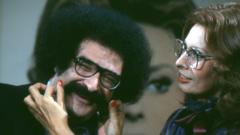
Long before corporate focus groups engineered on-air personalities, Gene Shalit built an unmistakable visual brand by simply leaning into his own eccentricities. The towering, frizzy hair that seemed to defy gravity, the oversized glasses, and the massive handlebar mustache made him instantly recognizable. He looked less like a stern cultural arbiter and more like a lost Marx brother.
This cartoonish exterior was a deliberate and effective shield. It allowed Shalit to deliver sharp, concise evaluations without ever alienating the casual moviegoer. Consider his most famous verbal gymnastics, which Hollywood studios regularly converted into high-profile marketing copy. He called the 2005 remake of King Kong a "brilliantological humongousness of marvelosity." When Ishtar stumbled into theaters in 1987, he dismissed it with a brutal, efficient pun, declaring it "tar-ible." To see the full picture, check out the excellent report by Vanity Fair.
These were not accidents of live television. They were highly calibrated pieces of micro-journalism designed for a medium that moved at blinding speed. While Roger Ebert and Gene Siskel were transforming film criticism into a gladiatorial sport of thumbs-up or thumbs-down on public television, Shalit was operating on a much larger stage. He was talking to working-class families eating breakfast before school and work, translating the often-insular world of Hollywood into something digestible and fun.
The Industrialization of the Blurb
The modern entertainment landscape is obsessed with data aggregation, relying on decimal points and percentage scores to determine whether a piece of art is worth a consumer's time. Shalit operated under an entirely different economic model. His reviews were built around the power of the singular, memorable quote.
This approach created a complicated relationship with the film industry. Studios loved him because his enthusiastic wordplay was tailor-made for newspaper advertisements and television promos. When he said that The Silence of the Lambs "makes a terrific yarn," or that The Mummy was "filled with wonders for every family—for kiddies and for daddies and, of course, for mummies," he was handing marketing departments free gold.
Critics from elite metropolitan publications frequently accused Shalit of being too soft, a mere "blurb-meister" who went easy on big-budget studio projects to maintain his unprecedented access to A-list celebrities. That critique, however, fundamentally misunderstands his mandate. Shalit did not view himself as a gatekeeper of high art. He saw his role as an entertainer and an investigator of general appeal. His long-time producer on Today, Guy Ludwig, noted that Shalit approached every screening with "absolute glee," preserving a childlike wonder that decades in the screening room could not dim.
The Friction of Changing Times
Maintaining a populist voice for forty years means inevitably running into the shifting gears of cultural standards. Shalit’s career was not without its blind spots and controversies, the most notable occurring in 2005 during his review of Ang Lee's Brokeback Mountain.
Shalit faced intense backlash from audiences and advocacy groups like GLAAD when he characterized Jake Gyllenhaal’s character, Jack Twist, as a "sexual predator" who tracked down Heath Ledger’s character. The review struck a harsh, discordant note for a critic known for his warmth and inclusivity. Recognizing that his analysis had crossed a line from cinematic critique into harmful stereotype, Shalit issued a public apology, acknowledging the error in his judgment.
The incident highlighted the fragile tightrope that legacy broadcasters had to walk as the monoculture began to splinter. The broad, generalized strokes that worked perfectly in the 1970s and 1980s required a nuance that the old-school network format did not always easily accommodate.
The Dissolution of the Morning Ritual
To understand the magnitude of Shalit's departure, one must look at the current state of media consumption. When Shalit retired in 2010 with his characteristic brevity—stating simply, "It's enough already"—the media landscape was already fracturing. Today, it is entirely broken into specialized silos.
+------------------------------------+------------------------------------+
| The Shalit Era (1970s - 2000s)     | The Modern Era (2020s)             |
+------------------------------------+------------------------------------+
| Broadcast Monoculture              | Algorithmic Personalization        |
| Broad, Accessible Wordplay        | Niche, Aggregated Review Scores    |
| Trusted Institutional Anchors      | Decentralized Social Influencers   |
| High-Impact Studio Blurbs          | Content Warnings & Metric Tracking |
+------------------------------------+------------------------------------+
The concept of a singular arts editor guiding the taste of a nation has been replaced by algorithms, review aggregators, and decentralized social media influencers. No single critic today commands the real estate that Shalit held during his peak on Today, where he shared the desk with broadcasting legends ranging from Barbara Walters and Katie Couric to Matt Lauer.
When Shalit passed away in New York at the age of 100, surrounded by a legacy that includes his prominent children—such as artist and businesswoman Willa Shalit and physician Peter Shalit—he took with him the last remnants of that shared cultural experience. His lifetime spanned the birth of talking pictures, the golden age of network television, and the dawn of the internet. Through it all, his goal remained remarkably consistent. He wanted to make the arts less intimidating for the average person.
The mustache and the bow ties were the armor of a man who refused to let Hollywood take itself too seriously. In an industry currently obsessed with metrics, target demographics, and cynical brand management, the genuine, punning joy of Gene Shalit feels less like a historical footnote and more like a lost ideal.