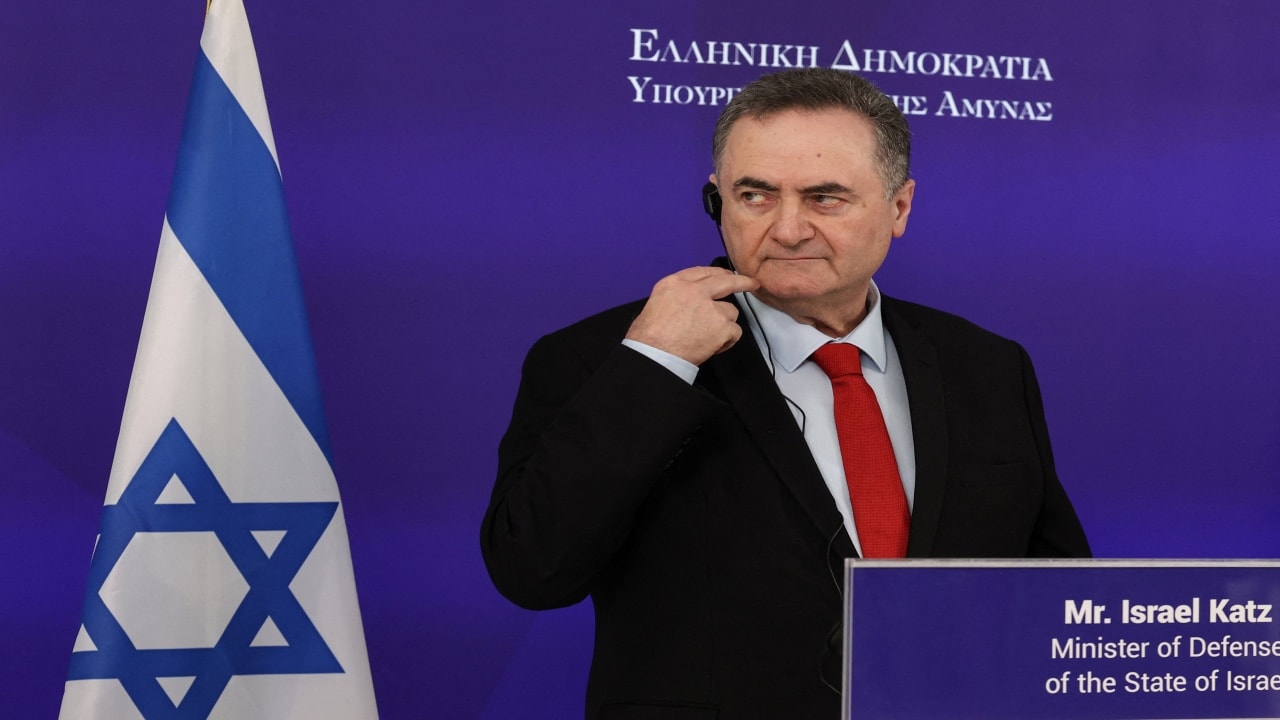
Israel just took out the man responsible for keeping the Iranian regime's secrets. On Monday, Defence Minister Israel Katz confirmed that a precision strike in Tehran killed Majid Khademi, the head of the Islamic Revolutionary Guard Corps (IRGC) Intelligence Organization. This wasn't some random battlefield commander. Khademi was the architect of Iran's internal security and the guy tasked with stopping exactly what happened to him: foreign penetration.
It's a massive blow to Tehran's ego and its operational security. Katz didn't mince words during his briefing with IDF Chief of Staff Lt. Gen. Eyal Zamir. He basically said that Iran's leaders are now living in a state of constant paranoia, and honestly, he's right. When you can't even protect your own spy chief in your own capital, you're in deep trouble.
The Hunt for the IRGC Leadership
Katz’s "one by one" strategy is clearly in full swing. This isn't just about Khademi. It's a systematic dismantling of the IRGC's top tier. In just the last few months, we've seen the elimination of the IRGC Navy commander and Khademi’s predecessor, Mohammad Kazemi. It feels like a revolving door of leadership where nobody wants the job because it's essentially a death sentence.
The strike on Khademi signals that Israel's intelligence reach inside Iran is terrifyingly deep. You don't hit a guy like this without having eyes and ears inside the most restricted rooms in Tehran. This wasn't just a missile launch; it was a statement that nowhere is safe.
Who Was Majid Khademi
To understand why this matters, you have to look at Khademi’s resume. He wasn't a "boots on the ground" soldier. He was a career insider who spent nearly 50 years in the shadows. He ran the Defense Ministry’s intelligence protection before moving up to lead the IRGC’s internal surveillance.
His job was twofold:
- Crushing internal dissent and making sure the Iranian people stayed in line.
- Vetting every single person in the IRGC to prevent Israeli or American infiltration.
The irony is thick here. The man paid to find the moles was neutralized by the very people those moles were supposedly reporting to. It proves that the IRGC's internal "protection" is basically a sieve.
Breaking the Economic Backbone
Katz also pointed out that Israel isn't just hunting people. They're going after the money and the hardware. The recent strikes have hammered Iran's steel and petrochemical industries. The idea is simple: if you can't pay your soldiers and you can't build your missiles, your "regional influence" evaporates pretty quickly.
By hitting the Intelligence Chief and industrial hubs simultaneously, Israel is forcing Tehran to choose between defending its leaders or its economy. So far, it's losing both. The IRGC has already promised "Crushing Revenge," but we've heard that script before. Every time they puff their chests, another senior official ends up in a funeral procession.
The Trump Deadline Factor
Timing is everything in the Middle East. This escalation is happening right as Donald Trump’s Tuesday deadline looms. He’s already threatened to bomb Iran’s vital infrastructure if a deal isn't reached to stop their regional aggression and nuclear ambitions.
While Steve Witkoff and Jared Kushner are reportedly working the phones for a ceasefire, Israel is busy creating "facts on the ground." It’s a classic squeeze play. One side offers a diplomatic exit, while the other shows you exactly what happens if you don't take it.
What This Means for the Region
If you're an IRGC official right now, you're looking over your shoulder. The psychological impact of Khademi's death is probably more significant than the tactical loss. It creates a vacuum. When a leader is killed, the first thing the survivors do is look for the traitor in their midst. That leads to purges, infighting, and a total breakdown in trust.
- Intelligence Blindness: With Khademi gone, the IRGC has to rebuild its internal security protocols from scratch.
- Paranoia as Policy: Every commander will be too busy hiding to actually coordinate attacks.
- Economic Collapse: The focus on infrastructure strikes means the average Iranian is going to feel the heat, potentially leading to more domestic unrest.
Don't Expect a De-escalation
If you think this strike will make Iran back down, you haven't been paying attention. The IRGC's Intelligence Organization is already calling this a "terrorist attack" by the "American-Zionist enemy." They're backed into a corner, and a cornered regime is usually at its most dangerous.
But Israel doesn't seem to care about the "cycle of violence" rhetoric anymore. Katz’s message was blunt: "The Revolutionary Guards shoot at civilians and we eliminate the heads of terrorists." There's no room for nuance there. It’s a war of attrition where Israel has better intel, better tech, and a much longer reach.
Expect more of this. The list of high-value targets isn't getting any shorter, and as long as the IRGC continues its operations, the "one by one" policy will continue to claim the people running the show in Tehran. Keep an eye on the petrochemical sector and the naval commanders next—those are the levers Katz mentioned, and he hasn't missed a target yet.