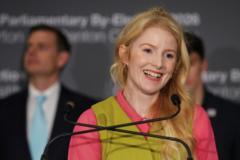
The political geography of Greater Manchester shifted permanently in the early hours of Friday morning. In a result that has sent a cold shiver through the corridors of Number 10, the Green Party’s Hannah Spencer secured a historic victory in the Gorton and Denton by-election. This was no narrow escape or fluke of turnout. Spencer, a local plumber and councillor, did not just win; she dismantled a century-old Labour stronghold, taking 40.7% of the vote and pushing Keir Starmer’s candidate into a humiliating third place. For a seat that was Labour's seventh safest in the 2024 general election, the 25.4% collapse in their vote share represents a structural fracture in the party's core coalition.
The Great Unbundling
What we witnessed in Gorton and Denton was the precise, surgical unbundling of the Labour vote. Traditionally, the Labour Party relies on a broad tent of progressive urbanites, working-class traditionalists, and minority communities. In this by-election, that tent folded.
The constituency is a tale of two distinct electorates. On one side, the Manchester wards of Gorton, Levenshulme, and Longsight are young, diverse, and increasingly disillusioned. On the other, the Tameside town of Denton is older and whiter, where economic grievances run deep. The Green Party successfully targeted the former, while Reform UK, led by candidate Matt Goodwin, aggressively courted the latter.
By the time the ballot boxes were emptied at the Manchester Central convention complex, the numbers told a story of total reallocation. The Greens tripled their 2024 share to 40.7%. Reform UK doubled theirs to 28.7%. Labour was left with the scraps—a mere 25.4% in a seat they had held since 1931.
Results of the Gorton and Denton By-Election 2026
| Candidate | Party | Votes | Share | Change |
|---|---|---|---|---|
| Hannah Spencer | Green Party | 14,980 | 40.7% | +27.5% |
| Matt Goodwin | Reform UK | 10,578 | 28.7% | +14.6% |
| Angeliki Stogia | Labour Party | 9,364 | 25.4% | -25.4% |
| Charlotte Cadden | Conservative | 706 | 1.9% | -6.0% |
| Others | Various | 1,080 | 3.3% | - |
The Burnham Factor and the Central Office Blunder
Every investigative post-mortem of this defeat leads back to one decision: the blocking of Andy Burnham. The Mayor of Greater Manchester, often called the "King of the North," had made it clear he was ready to return to Westminster. To the local electorate, he was the natural successor. To Keir Starmer’s inner circle, he was a clear and present threat to the leadership.
The National Executive Committee (NEC) voted 8-1 to block Burnham’s candidacy in January. It was a move designed to preserve stability in London, but it guaranteed chaos in Manchester. By selecting local councillor Angeliki Stogia instead, Labour presented a candidate who struggled to step out from under the shadow of the man the voters actually wanted. Spencer herself admitted after the count that had Burnham been on the ballot, her path to victory would have been significantly steeper.
A Plumber Against the Machine
Hannah Spencer’s campaign should be studied by every aspiring insurgent. While Labour and Reform traded increasingly bitter blows over national identity and "sectarian politics," Spencer leaned into her identity as "Hannah the plumber." She ignored the abstract debates of the Westminster bubble and focused on the granular reality of being "bled dry" by the cost of living.
Her victory speech was devoid of the usual environmental platitudes. Instead, she spoke about wealth distribution and the feeling that ordinary people are working solely to enrich a billionaire class. This populist pivot allowed the Greens to transcend their "middle-class activist" stereotype and win over lifelong Labour voters who felt the government had moved too far to the right on economics and too far from their values on international issues like Gaza.
The Reform Surge and the Sectarian Shadow
The second-place finish for Reform UK’s Matt Goodwin is equally significant. Despite being a "Marmite" figure, Goodwin’s 28.7% share shows that the Reform message has a high floor in Northern working-class towns. However, the campaign was marred by accusations of "dirty tricks." Reform was hauled before the High Court just days before the vote over campaign letters that failed to include the required political imprints.
Nigel Farage has already dismissed the result as a "victory for sectarian voting," pointing to the Greens' targeted campaigning in Urdu and their focus on the Muslim vote in Gorton. This narrative, while convenient for a losing side, ignores the fact that the Green surge was evident across the entire constituency. The Greens didn't just win "the Muslim vote"; they won the disillusioned vote.
The Polling Station Crisis
Perhaps the most troubling aspect of the night was the report from Democracy Volunteers. The election observer group witnessed "family voting"—where individuals are influenced or overseen by family members while casting their ballots—in 68% of the polling stations they monitored. This practice was made illegal by the Ballot Secrecy Act 2023.
While these allegations have led to calls for a formal investigation, they are unlikely to change the result. They do, however, highlight the intense, almost claustrophobic pressure under which this election was fought. In some wards, voting wasn't just a civic duty; it was a communal battleground.
The Vanishing Tories
It is almost possible to forget the Conservative Party even stood. Charlotte Cadden’s 706 votes (1.9%) represent the worst by-election performance in the party's history. For a party that governed the country less than two years ago, this is not just a defeat; it is an erasure from the political map of the North.
The Liberal Democrats fared little better, also losing their deposit. The collapse of the traditional "big two" (or three) has left a vacuum that is being filled by parties that were, until recently, considered fringe. As political scientist Robert Ford noted, this was the day "Labour's electoral Tinkerbell died." The magic of the safe seat has vanished.
The implications for Keir Starmer are terminal for his current strategy. He has spent his premiership trying to win back Reform-leaning voters by moving to the right, only to find his left flank completely exposed to a Green Party that has figured out how to talk to the working class. If the Greens can win in Gorton, they can win anywhere in the urban North. The old certainties of British politics did not just fail on Thursday night; they were buried under 14,980 Green ballots. Labour must now decide if they want to fight for their soul or continue to watch it being picked apart by the insurgents they ignored.