A heavy manila envelope sits on a kitchen table under the harsh glare of a single overhead bulb. Inside is a notice from the United States Department of the Treasury. It does not ask for money. It demands it. For millions of Americans, this piece of paper represents the moment a bureaucratic gear shifts, turning a manageable financial burden into an inescapable trap.
When a student loan defaults, it undergoes a transformation. It ceases to be an educational account managed by a familiar servicing company. It becomes a federal debt, cast into a mechanism designed to claw back funds by any means necessary. Tax refunds vanish. Social Security checks shrink. Wages are seized before they ever hit a bank account.
This is the reality of the Treasury offset program, a system intended as a last resort for government recovery. Yet behind the cold machinery of federal collections lies a disturbing question that has caught the attention of Washington’s highest watchdog.
The government is transferring these loans into the shadows. Now, investigators want to know why.
The Mechanism of Disappearance
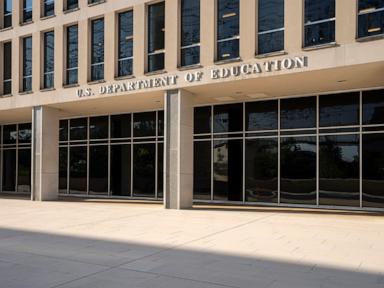
Senator Elizabeth Warren recently confirmed that the Government Accountability Office—the independent congressional investigator often called the congressional watchdog—has launched an investigation into how the Department of Education transfers defaulted student loans to the Treasury Department.
The investigation strikes at the heart of a system that impacts roughly several million borrowers who have fallen behind on their payments. To understand why this matters, look at how the machinery operates.
Consider a hypothetical borrower named Sarah. Sarah went to college to become a teacher, took out federal loans, faced a medical emergency, and fell into default. For a long time, her loan lived within the Department of Education's ecosystem. There were avenues for relief, however flawed: income-driven repayment plans, rehabilitation programs, and temporary pauses.
But when a loan is referred to the Treasury Department for collection, the rules change entirely.
The Treasury does not negotiate flexible payment schedules based on a borrower's monthly budget. It deploys the Treasury Offset Program. This system scans federal databases for any payments owed to the borrower. If Sarah expects a tax refund to pay for car repairs, that refund disappears. If she relies on a child tax credit, it can be intercepted. The human cost is immediate, visceral, and often devastating.
The GAO investigation focuses on whether the Department of Education is transferring these loans too quickly, without adequate notice, or based on flawed data. The watchdog is asking whether the government is breaking its own rules to penalize its most vulnerable citizens.
The Paper Trail to Nowhere
Federal student debt is not a monolithic block of money. It is an intricate, shifting sea of data managed by private contractors who are paid hundreds of millions of dollars to keep the books straight. History shows they frequently fail.
For years, loan servicers have faced scrutiny for lost paperwork, miscalculated payments, and misleading advice. When these private companies make an error, the borrower pays the price. If a servicer fails to process a repayment application, the loan can slip into default. Once that default is logged in the system, an automated algorithm triggers the transfer to the Treasury.
It is a one-way trapdoor.
The core of the GAO inquiry is to pull back the curtain on this automated handoff. Investigators are examining the criteria used to determine when a loan is deemed uncollectible by the Department of Education and ripe for Treasury intervention. There are growing concerns that borrowers are being pushed into the Treasury’s collection maw without ever receiving the warnings required by federal law.
Imagine trying to fight a machine that does not acknowledge your paperwork. Borrowers frequently report spending hours on hold, bounced between the Department of Education and the Treasury Department. Each agency points the finger at the other. Education says the loan is no longer in their hands; Treasury says they only collect what Education tells them to collect.
The borrower is left stranded in a bureaucratic no-man's-land, watching their financial stability erode.
The Invisible Numbers
The scale of this issue is immense, yet it remains largely invisible to those who do not live it.
Before the pandemic-era pause on student loan collections, the Treasury Department intercepted billions of dollars annually from tax refunds and social security benefits. A significant portion of this money came from low-income earners, older Americans, and people of color, who statistically face higher rates of student loan default due to systemic economic disparities.
When the government seizes a tax refund from a family living paycheck to paycheck, it does not just reduce a debt balance. It prevents a rent payment. It stops a grocery run. It forces a choice between medication and electricity.
The GAO's decision to investigate indicates that these transfers are not merely routine administrative tasks. They represent a systemic vulnerability. The investigation will scrutinize the lack of transparency in how accounts are selected for transfer, how disputes are handled, and whether the Treasury's aggressive collection tactics align with the broader mission of the Higher Education Act, which was designed to lift citizens up, not drag them down.
A System Without a Conscience
The fundamental flaw in the current student loan ecosystem is the assumption that data is absolute. A line on a spreadsheet says a borrower owes money, and therefore, the machinery must grind forward.
But data is entered by human hands, processed by imperfect software, and managed by corporations driven by profit margins. When a system lacks human oversight, cruelty becomes automated.
Senator Warren’s push for this investigation underlines a growing frustration with the lack of accountability within federal student aid management. The demand for answers from the GAO is an attempt to inject transparency into a process that has operated in the dark for decades.
The investigation will take months. Investigators will sift through internal memos, track data transmissions between agencies, and interview officials who manage the financial pipes of the nation. They will look for the fractures where borrowers fall through the cracks.
But while the bureaucrats analyze the data, the kitchen tables across the country remain cluttered with notices. The fear does not pause for an investigation.
The manila envelope remains open. The numbers on the page do not change. Somewhere, a borrower looks at their bank account and realizes the refund they were counting on to survive the month has vanished into the federal treasury, swallowed by a machine that forgot the human being behind the account number.