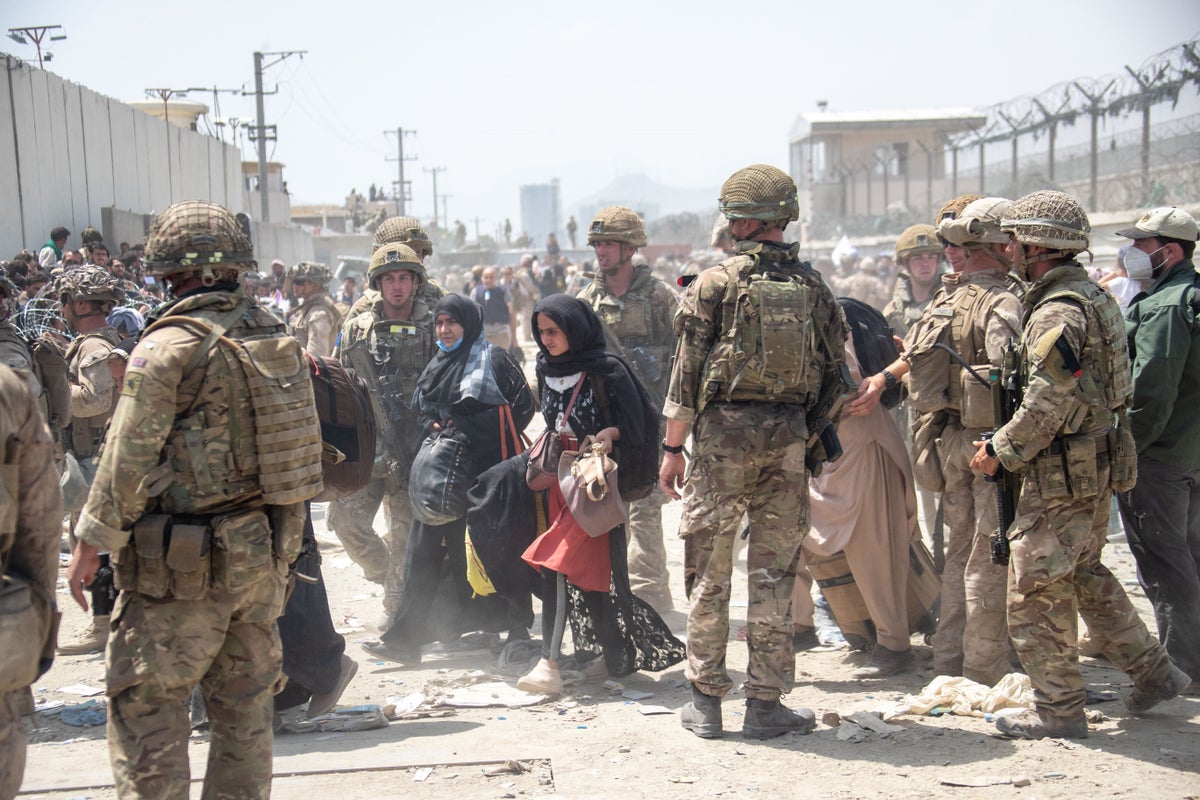
The metal of a cargo plane has a specific smell. It is a cocktail of hydraulic fluid, recycled oxygen, and the cold, metallic sweat of fear. For the men who spent years whispering into the ears of American commanders in the high mountain passes of the Hindu Kush, that smell used to mean safety. It meant the end of a patrol, the return to a base, a temporary reprieve from the Taliban’s long memory.
Now, for 1,100 of those same men, that smell might soon signal something else entirely. It might be the scent of a one-way trip to a country they have never seen, on a continent they do not know, as part of a geopolitical transaction that treats human loyalty like excess baggage.
Reports have emerged detailing a proposal by the Trump administration to relocate a specific group of Afghan allies—men who stood shoulder-to-shoulder with U.S. forces during the War on Terror—to a third-party nation in Africa. While the specific African country remains a subject of intense diplomatic hushes, the reality for the families involved is deafening. These are not strangers. These are the "terps," the fixers, the scouts. They are the human bridge between two worlds, currently suspended over an abyss.
The Ghost in the Machine
Consider a man we will call Ahmad. Ahmad is not a statistic, though he is currently filed under one in a government database. In 2012, Ahmad spent his days translating the nuance of village politics for a green Beret team in Helmand Province. He knew which elders were lying and which paths were rigged with pressure plates. He wasn't just a voice; he was a shield. When the U.S. withdrew, Ahmad became a target.
The promise was simple: "We have your back because you had ours." It was the Special Immigrant Visa (SIV) program, a bureaucratic golden ticket designed to bring those who served the U.S. military to the safety of American soil. But the ticket got stuck in the machine.
Years of vetting, interviews, and background checks followed. Ahmad and 1,100 others like him found themselves in a state of permanent "almost." They were moved out of Afghanistan to temporary transit hubs, often in the Middle East or Eastern Europe, waiting for the final stamp that would allow them to start over in a suburb in Virginia or a flat in Sacramento.
Then the wind shifted.
The proposal to redirect these allies to Africa isn't about their safety. It is about a shift in how the United States defines its borders and its obligations. By moving these individuals to a third country, the administration effectively clears a backlog without actually fulfilling the original promise of American residency. It is a logistical sleight of hand.
The Geography of Abandonment
Moving a person is easy. Moving a life is an act of surgery.
The logistical reality of sending Afghan refugees to an African nation involves more than just flight paths. It involves the total erasure of the context of their sacrifice. In the United States, there are established Afghan communities—pockets of Fremont, California, or Alexandria, Virginia—where the language is familiar and the trauma is shared. There are veterans' groups who view these men as brothers-in-arms and stand ready to help them find jobs and schools.
In a third-party nation, those networks do not exist. The "African solution" treats the refugee crisis as a game of Tetris. If the blocks don't fit in the American row, find another space on the board. Any space will do. But humans aren't blocks. They are threads. When you pull a thread out of the fabric it helped weave, the whole thing starts to unravel.
The administration argues that this move is a matter of national security and administrative efficiency. They point to the "extreme vetting" protocols and the sheer volume of arrivals as reasons to seek offshore processing or permanent relocation elsewhere. It is a cold, mathematical argument. It suggests that the risk of letting one "wrong" person in outweighs the moral cost of turning 1,100 "right" people away.
The Invisible Stakes of the Long Game
If you are a young man in a future conflict zone—perhaps in a jungle in Southeast Asia or a city in Eastern Europe—and a U.S. officer asks for your help, you will remember Ahmad.
Trust is a currency. In the intelligence world, it is the only currency that matters. When the U.S. military operates in foreign lands, it relies entirely on local knowledge. That knowledge is bought with the promise of protection. If the world sees that the "protection" offered by the United States eventually ends in a forced flight to a random destination halfway across the globe, the price of that knowledge goes up. Or, more likely, the supply vanishes.
We are watching the slow-motion bankruptcy of American credibility.
The 1,100 Afghans currently caught in this proposed shift are more than just refugees. They are a test case for the endurance of the American word. To the families waiting in transit camps, every day is a test of faith. They wake up in rooms they don’t own, in countries they didn’t choose, waiting for a letter that might now tell them their new home is a place they can’t find on a map.
The Silence of the Tarmac
There is a specific kind of silence that happens when a government decides a problem is no longer a problem, but a line item. It is the silence of a file being closed.
The proposal to send these 1,100 souls to Africa is a move toward a world where loyalty has an expiration date. It suggests that the blood spilled and the risks taken are valid only as long as the conflict is active. Once the cameras turn away and the troops come home, the allies become "legacy issues." They become "migrant flows." They become "administrative burdens."
Think back to the mountains. Think of the man who stayed awake so a tired American corporal could sleep. Think of the interpreter who spotted the tripwire in the dust. He did not do it for a plane ticket to a country he’s never heard of. He did it because he believed in a specific version of the future—one where he belonged to the team he was helping.
The cargo plane is warming up. The manifest is being printed. The smell of hydraulic fluid is in the air.
Somewhere in a transit camp, a man is looking at his children and wondering if the uniform he once respected still remembers his name. He is wondering if the country he bled for is about to give him a gift of distance, wrapped in the cold logic of "efficiency."
The debt is owed. The question is whether we intend to pay it in the currency of a new life, or simply export the obligation to a different shore. For 1,100 people, the answer isn't a matter of policy. It is the difference between finally coming home and being permanently lost.