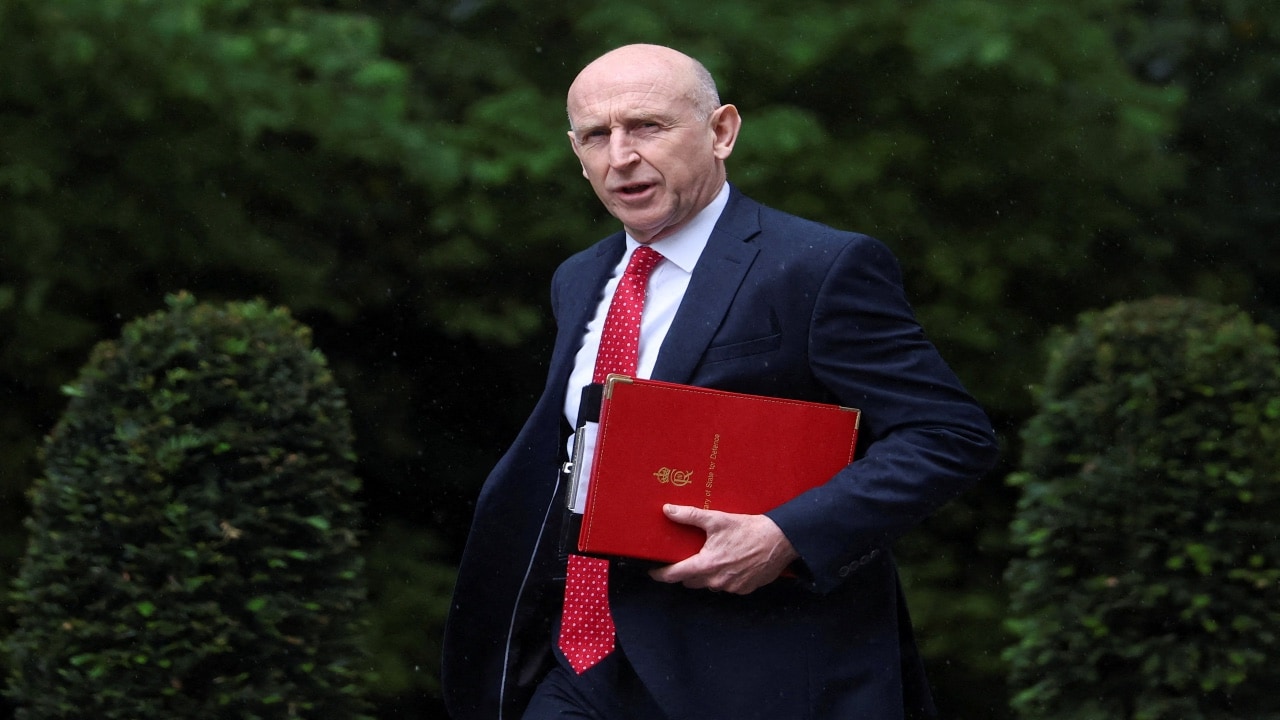
The government's defense strategy just suffered a catastrophic blow. John Healey's sudden resignation as Defence Secretary hasn't just shaken Westminster; it exposes a massive, dangerous rift over national security at a time when global tensions are boiling over. Healey didn't just walk away quietly. He left with a scathing parting shot, explicitly stating that Prime Minister Keir Starmer's military funding plans will make the country less safe.
For months, the Ministry of Defence and the Treasury have been locked in a bitter fiscal cage match over the long-delayed Defence Investment Plan. Now we know why. Healey wanted serious cash to ready the armed forces for a hot conflict. The Treasury offered a cut-price compromise.
This isn't your typical political disagreement. This is a direct warning from the man who knew the secrets, read the intelligence, and realized the math didn't add up to keeping the UK secure.
The Breaking Point Behind the Resignation
At the core of Healey's exit is the long-awaited Defence Investment Plan. The document was intended to map out British military procurement and strategic positioning for the next decade. Originally triggered by the Strategic Defence Review roughly a year ago, the publication has faced constant delays.
Healey received the final funding settlement from the Treasury. He looked at the numbers and realized they were completely inadequate. The Treasury offered an estimated £13 billion over four years. Healey’s initial costings calculated that the military needed closer to £28 billion just to stabilize and modernize its overstretched capabilities.
The compromise settlement pushes the UK’s defence spending to just 2.58% of GDP by 2030. That is a microscopic bump from the 2.6% the UK is already on track to hit next year through existing commitments. Healey, along with senior military chiefs, had been aggressively pushing for a firm target of 3% of GDP by 2030.
In a damning resignation letter posted publicly on X, Healey laid the blame squarely at the doors of No 10 and No 11 Downing Street. He wrote that the Prime Minister has been unable, and the Treasury has been unwilling, to commit the resources that the nation needs to defend the country at this time of rising threats.
Backloading Cash in a Frontloaded Crisis
Healey’s primary operational critique is that the Treasury’s funding model is completely backloaded. The government is planning to inject extra support after 2030. But the strategic emergency is happening right now.
The imperative to speed up readiness to fight sits squarely within the next two years. Pushing financial rescue packages into the next decade does absolutely nothing for current frontline capabilities. British forces are currently stretched across multiple high-stakes operational environments, including:
- Leading the critical naval security mission in the Strait of Hormuz against Iranian threats.
- Managing NATO's Arctic Security mission to counter Russian naval expansion.
- Sustaining heavy logistics, intelligence, and equipment pipelines for Ukraine.
- Planning for a prolonged British military training and monitoring presence in Ukraine if a ceasefire materializes.
Healey pointed out that Starmer himself argued at the Munich Security Conference that Russia could be in a position to launch an attack on a NATO ally as early as 2030. Yet, the current spending plans treat 2030 as the starting line for serious investment rather than the ultimate deadline. Without a funding plan that meets the moment, Healey argued he would be forced to make immediate decisions that directly reduce troop readiness and increase risks to personnel on active operations.
The Immediate Threat to UK Defence Jobs and Procurement
This funding shortfall isn't just an abstract debate for Whitehall mandarins. It has immediate, real-world consequences for the UK's domestic defence industrial base. The trade union Unite, which represents thousands of workers across the British aerospace and ship-building sectors, immediately raised the alarm following Healey’s departure.
The ongoing delays to the Defence Investment Plan have effectively frozen billions of pounds in sovereign manufacturing contracts. Production lines cannot move forward without formal sign-offs. Highly skilled engineering jobs are now directly at risk. Key military capital projects currently stuck in limbo include:
- A vital new tranche of Typhoon fast jets for the Royal Air Force.
- The next-generation Skynet military communications satellite program.
- Project Euston, which covers critical dry dock infrastructure upgrades needed to maintain the UK's nuclear submarine fleet.
- Additional procurement and maintenance pipelines for the A400M tactical transport aircraft.
Unite has publicly demanded that the government loosen its self-imposed fiscal rules, urging ministers to borrow specifically for capital infrastructure investment in national security. Instead, No 10 is attempting to plug the Defence Investment Plan funding gap by stripping money away from other departmental capital programs. It's a classic case of robbing Peter to pay Paul, and it pleases absolutely no one.
A Government in Compounding Turmoil
Losing a Defence Secretary under these conditions would be a nightmare for any administration, but for Starmer, the timing is disastrous. Healey wasn't an erratic backbencher; he was a core loyalist and a stabilizing force within the cabinet. His departure blows a massive hole in the government's claim to be the party of national security.
Downing Street tried to spin the exit, with government sources claiming the country is safer because of Starmer's choices, labeling the current plans as the largest sustained boost to defence spending since the Cold War. Education Secretary Bridget Phillipson went on television to echo those lines, expressing regret over losing a brilliant colleague while trying to keep the focus on the government's broader spending record.
But the political damage is done. Opposition Leader Kemi Badenoch seized on the resignation during Prime Minister's Questions, accusing Starmer of prioritizing welfare spending over the foundational duty of protecting the realm. She declared that the premiership is falling apart.
This cabinet crisis unfolds while Downing Street is already firefighting on multiple domestic fronts. The government is grappling with plummeting approval ratings, lingering fallout from the Mandelson affair, and widespread domestic unrest following high-profile violent crimes that have triggered severe rioting and overstretched local police forces. Adding a mutiny over military spending to this mix leaves the administration looking deeply vulnerable.
What Happens Now
The immediate fallout of Healey's resignation is structural chaos within the Ministry of Defence. The Royal United Services Institute noted that the exit completely destroys planning certainty. Defence contractors, foreign allies, and military planners are left entirely in the dark about what programs will survive the Treasury's knife.
Starmer must now rapidly find a replacement who is willing to defend a budget that the previous insider explicitly stated is unsafe. The new Defence Secretary will inherit an empty wallet, a furious defense sector, and a military apparatus explicitly told by their former boss that they are underfunded for the threats they face.
With a major NATO summit looming on July 7, the UK is now flying into crucial international security talks with its defense strategy in tatters and its credibility deeply compromised. Starmer's team must either urgently revise the funding framework to appease a revolting defense establishment or prepare to face an incredibly hostile reception from both domestic industries and international allies who expect Britain to carry its weight.