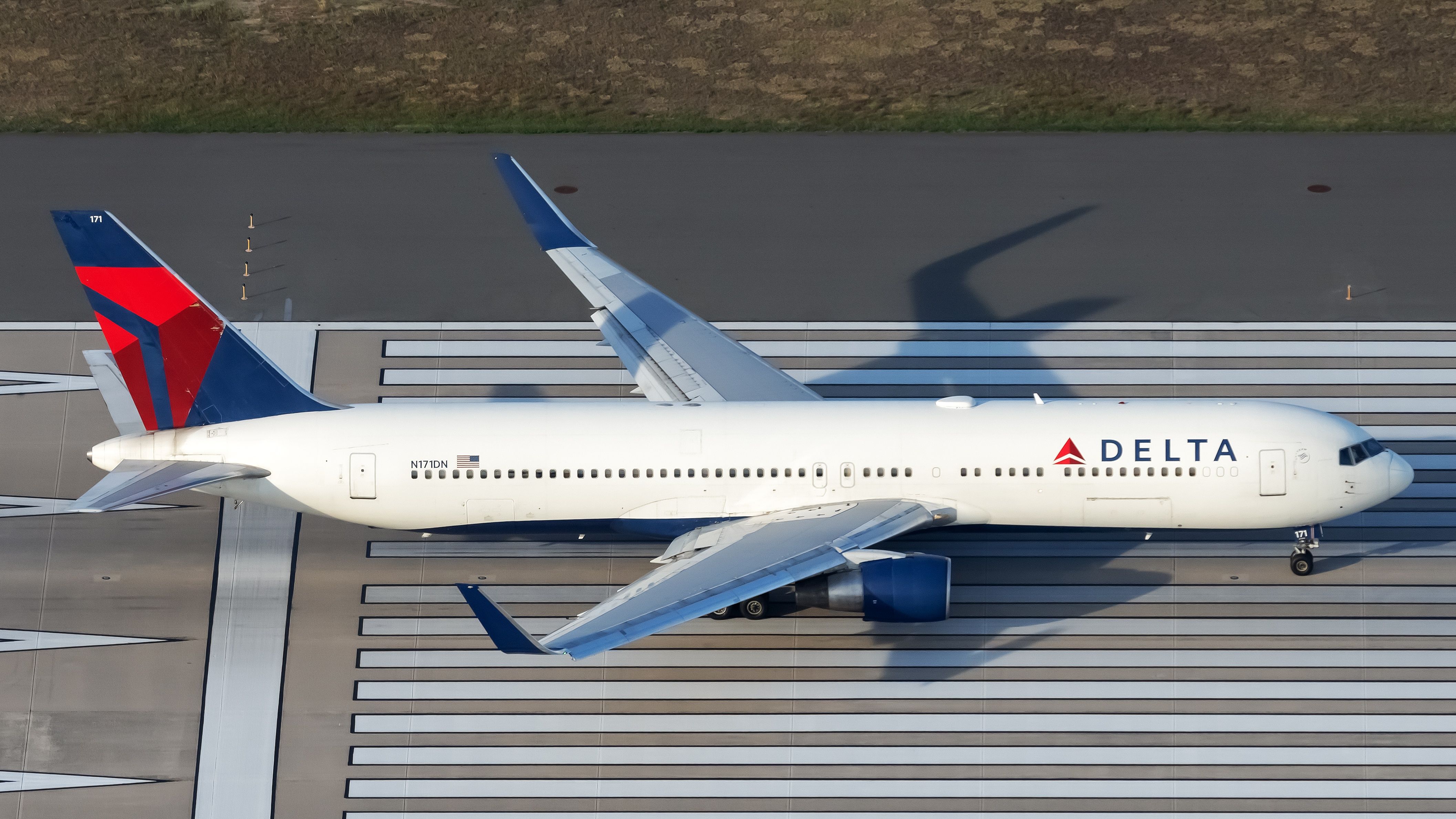
Airlines are not tech companies. They are high-capital, low-margin utility businesses with wings. Yet, when Delta Air Lines announces a "meaningful" cut to growth plans and crows about a $300 million boost from its Trainer refinery, the market treats it like a stroke of genius. It isn't. It is a desperate pivot.
The "lazy consensus" among analysts is that capacity discipline is a sign of maturity. They argue that by slowing down, Delta can protect its pricing power. They are wrong. When an airline cuts its growth, it is admitting that the incremental cost of flying the next passenger has finally overtaken the revenue that passenger provides. That is a ceiling, not a strategy.
The Refinery Illusion
Delta’s ownership of the Monroe Energy refinery in Trainer, Pennsylvania, is often cited as a masterclass in vertical integration. It’s a nice story. It’s also a massive distraction.
A $300 million "boost" sounds impressive until you look at the volatility of the crack spread—the difference between the price of crude oil and the petroleum products extracted from it. Delta isn't an energy company; they are a customer that bought its own grocery store because they didn't like the price of milk.
While that works when refining margins are fat, it creates a massive operational drag when they aren't. Managing a refinery requires a totally different set of competencies than managing a flight schedule. Every hour the C-suite spends discussing sulfur content and pipeline logistics is an hour they aren't fixing the crumbling reliability of the domestic hub-and-spoke system.
The $300 million isn't "found money." It is a hedge that carries its own balance sheet risk. If refining margins collapse, Delta is stuck with a heavy industrial asset that bleeds cash while they still have to buy fuel for the fleet. True vertical integration should reduce complexity. This increases it.
The Capacity Cut Trap
Delta’s decision to trim its growth targets is being framed as "prudent." Let’s call it what it actually is: an admission that the post-pandemic travel boom has hit a wall.
For the last three years, every airline could fill every seat because consumers were flush with stimulus cash and "revenge travel" energy. That era is over. By cutting growth, Delta is signaling that they can no longer find enough profitable routes to justify their previous expansion plans.
The danger here is the "Unit Cost" spiral. Airlines have massive fixed costs. You have to pay the pilots, the gate agents, and the lease on the A350 whether that plane flies ten hours a day or twelve. When you cut growth, your fixed costs are spread over fewer "Available Seat Miles" (ASMs). This drives your Cost per Available Seat Mile (CASM) higher.
If Delta’s revenue per seat doesn't grow faster than that rising cost, their margins will contract even as they "discipline" the market. You cannot shrink your way to greatness in an industry defined by scale.
The Premium Paradox
Delta has spent a decade branding itself as the "premium" domestic carrier. They want to be the Apple of the skies. They’ve invested heavily in SkyClubs, better snacks, and seatback screens.
But here is the brutal truth: In a recession, or even a mild cooling of the economy, "premium" is the first thing to go.
Business travel—the lifeblood of Delta’s high-margin front cabin—has fundamentally changed. Zoom and Teams didn't kill it, but they certainly trimmed the fat. The "road warrior" who flew every Tuesday is now a "hybrid warrior" who flies once a month.
Delta is betting that the luxury consumer will keep paying $900 for a domestic first-class seat to see their family. I’ve seen this play out before in 2008 and 2001. When the belt tightens, the "premium" traveler discovers that JetBlue or even a well-timed Southwest flight gets them to the same destination for half the price.
Delta’s high-cost structure depends on a permanent state of affluent excess. If that excess dips by even 5%, the "premium" strategy becomes a heavy anchor.
Why The "People Also Ask" Metrics Are Garbage
If you look up the health of an airline, you’ll see people asking about "Load Factor" (how full the planes are) and "Yield" (how much they charged per mile). These metrics are increasingly irrelevant.
A 90% load factor is meaningless if you had to discount half the seats to get people on the plane. Similarly, high yield doesn't matter if your labor costs—driven by new pilot contracts that saw 30-40% raises across the board—are eating the entire spread.
The only metric that matters right now is Free Cash Flow per Share relative to Debt Obligations.
Delta is carrying a massive debt load from the pandemic era. While they are paying it down, they are doing so in a high-interest-rate environment. Every dollar diverted to interest is a dollar not spent on the next generation of fuel-efficient aircraft.
The Real Risks Nobody Mentions
- Maintenance Backlogs: The average age of the global fleet is rising. Older planes break more often. Lowering growth targets means keeping older, less efficient airframes in the sky longer to avoid the capital expenditure of new ones.
- Labor Power: The unions have the upper hand. Delta’s "non-union" flight attendants are watching the pilots get massive raises. The pressure to hike wages across the entire staff is relentless. You can cut your flight schedule, but you can't easily cut your headcount without causing a PR nightmare and operational chaos.
- The Middle Seat Squeeze: As Delta focuses on the top-tier "Medallion" members, they are alienating the occasional traveler who actually provides the volume needed to sustain a hub. If you treat the "Main Cabin" like a cattle car while charging a premium price, you eventually lose the base.
Stop Buying The "Efficiency" Narrative
Efficiency in the airline business is usually a code word for "we've run out of ideas to grow revenue."
When a CEO tells you they are cutting capacity to "bolster the bottom line," they are telling you that the market is saturated. For a stock trading at its current multiples, saturation is a death sentence for growth investors.
The refinery is a shiny object. The premium branding is a coat of paint. The reality is a company grappling with the fact that the cost of labor, fuel, and equipment is rising faster than the public's willingness to pay for a "superior" flying experience.
If you want to invest in a refinery, buy an energy stock. If you want to invest in a travel company, wait for one that isn't retreating from its own market.
The move to cut growth isn't a sign of strength. It's a surrender to the math.
Sell the "discipline." Buy the reality.
Stop pretending a Pennsylvania refinery makes a Georgia airline a safe bet.