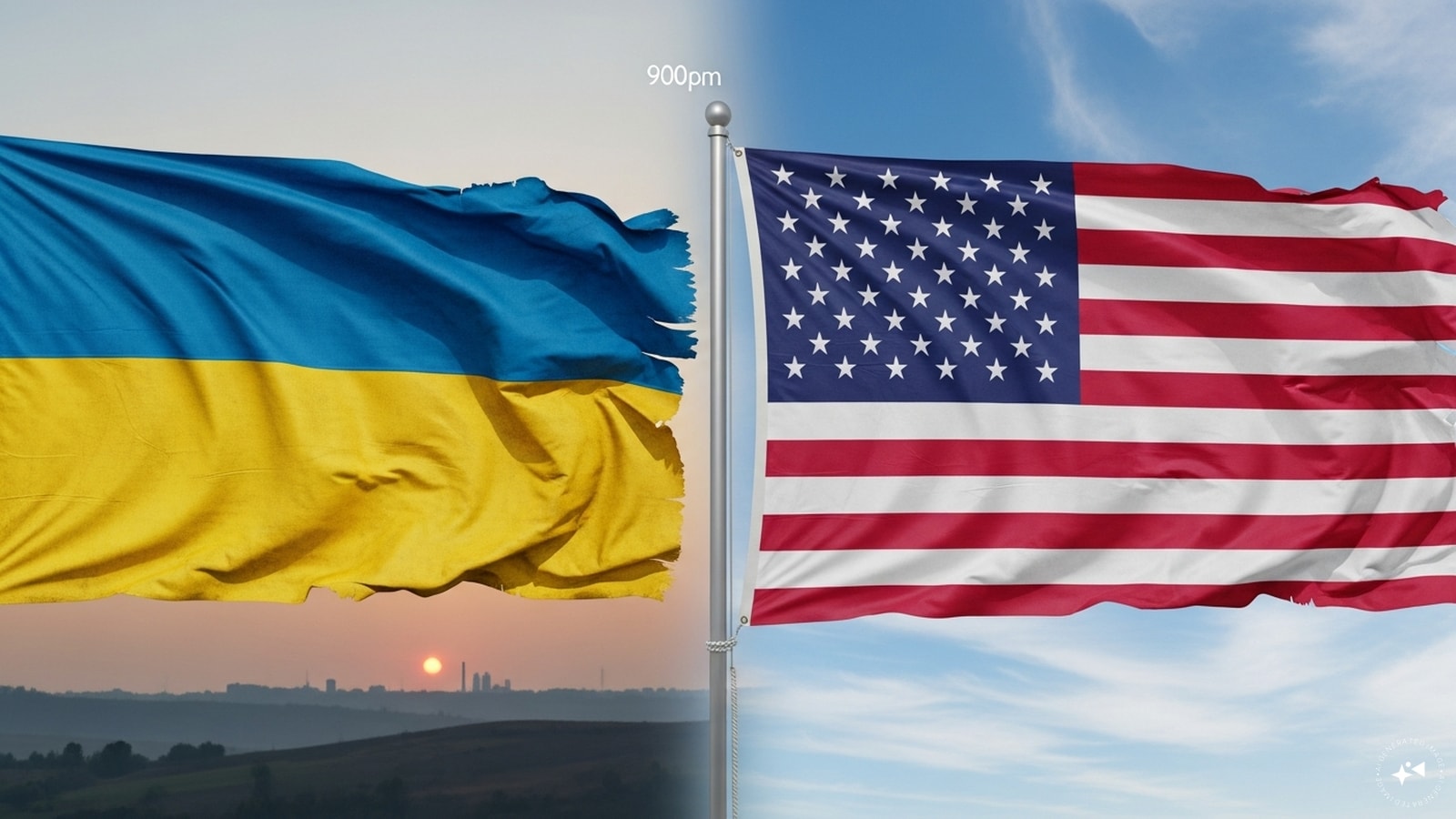
Mainstream media outlets love a predictable script. The moment Volodymyr Zelenskiy picks up the phone to call Donald Trump, the foreign policy establishment rushes to its typewriter to churn out the same tired narrative: Ukraine is appealing to "American resolve," seeking a bipartisan bridge, and hoping that a mix of diplomatic charm and moral obligation will maintain the flow of Washington's blank checks.
It is a comforting story. It is also entirely detached from geopolitical reality.
The conventional consensus views these high-level phone calls as strategic chess moves designed to secure long-term military commitments. They are not. They are desperate marketing pitches directed at an American political machine that has already shifted its gaze. For over three decades, I have watched Washington pivot from one "forever commitment" to the next, abandoning the old rhetoric the second the domestic political ROI dries up. The assumption that Ukraine can alter Donald Trump’s transaction-first view of global alliances through appeals to traditional internationalism is the central delusion of modern diplomacy.
The Flawed Premise of Bipartisan Continuity
The current media narrative rests on a fundamental misunderstanding of how the American electorate and the modern Republican party view foreign entanglements. The establishment press interprets a cordial phone call between Zelenskiy and Trump as a sign of potential continuity—a hint that Trump might be persuaded to adopt the traditional hawk stance if the framing is just right.
This is wishful thinking masquerading as analysis.
The political base driving the current populist wave does not care about the post-World War II security architecture. They do not view the preservation of NATO borders as an inherent good. To them, foreign aid is a zero-sum subtraction from domestic prosperity. When Zelenskiy calls for "American resolve," he is speaking a language that half of the American political apparatus no longer translates as patriotism, but rather as an expensive obligation with no exit strategy.
Consider the data that the optimistic commentators ignore. Congressional spending packages for foreign theaters face increasing friction with every successive vote. It is not a matter of persuasion; it is a matter of exhaustion. The public fatigue with protracted, grinding conflicts is real, and no amount of rhetorical framing from Kyiv can reverse a structural shift in American voter sentiment.
Why Transactional Diplomacy Destroys Long-Term Strategy
Let us dismantle the mechanics of the "transactional peace" that many assume Trump will broker. The prevailing theory suggests that a businessman-president will simply sit both parties down, cut a deal, freeze the front lines, and walk away with a victory.
This view ignores the brutal reality of how revisionist powers operate.
Conventional View:
[Diplomatic Call] -> [Bipartisan Agreement] -> [Sustained Funding] -> [Peace]

The Reality Flow:
[Appeals to Resolve] -> [Domestic Political Friction] -> [Diminishing Aid] -> [Forced Concessions]
In geopolitical negotiation, you cannot buy leverage with rhetoric. If Washington signals that its primary goal is a rapid exit from the theater, it hands every ounce of leverage to Moscow. A deal struck under the pressure of an arbitrary deadline is not a peace treaty; it is a structured capitulation.
I have seen corporate boards make this exact mistake during hostile takeovers. The weaker party, desperate for a ceasefire, agrees to terms that look acceptable on paper today but completely hollow out their operational capabilities tomorrow. Russia does not view a frozen conflict as an end state. It views it as a tactical pause to reconstitute forces, fix logistical bottlenecks, and wait for Western attention to drift permanently toward the Indo-Pacific.
Dismantling the People Also Ask Mythos
The public discourse surrounding this conflict is clogged with questions that rest on flawed assumptions. If you look at the queries dominating search engines, the naivety of the collective consensus becomes glaringly obvious.
Will a phone call between Zelenskiy and Trump change the trajectory of the war?
Absolutely not. Geopolitics is dictated by industrial capacity, troop rotation cycles, ammunition production rates, and economic endurance. A 20-minute conversation between a sitting wartime president and a US political candidate does not manufacture 155mm artillery shells. It does not alter the fact that Europe’s defense industrial base is decades away from being able to sustain a high-intensity continental war without US logistical scaffolding. To think a phone call alters these physical realities is to mistake public relations for statecraft.
Can American resolve force Russia to the negotiating table?
This question assumes Russia cares about American rhetoric. Moscow measures American resolve by looking at the defense budget allocations, the deployment of actual hardware, and the willingness of the American public to endure economic pain. When the US political landscape is deeply divided, and prominent voices are openly advocating for a full retrenchment, Russia reads the signal clearly. The "resolve" is a dwindling resource, and time is the one asset Moscow has in abundance.
The Hard Truth Ukraine Must Face
If relying on American political continuity is a dead end, what is the alternative? The answer is brutal, unpalatable, and entirely missing from the competitor's sanitised reporting.
Ukraine must stop treating Washington as a permanent guarantor of its sovereignty and begin preparing for a decoupled security environment. This means shifting strategy from a war of liberation—which requires an endless supply of Western offensive armor and air superiority that is not coming—to a war of asymmetric denial.
- Abandon the 1991 Border Rhetoric: Publicly maintaining that the only acceptable outcome is a total return to the 1991 borders is a luxury supported only by an uninterrupted flow of foreign cash. If that cash is contingent on shifting political winds in Washington, the strategic objectives must scale down to match the reliable resource stream.
- Hyper-Localize Production: Relying on foreign supply chains for basic munitions during a war of attrition is strategic malpractice. Leverage what remains of domestic industrial capacity to build a massive, decentralized drone and missile network that makes further territorial gains prohibitively expensive for Russia, regardless of who sits in the White House.
- Force Europe's Hand: Stop allowing Western European capitals to hide behind the skirt of American leadership. If Washington scales back its commitment, Berlin, Paris, and London must either step into the vacuum with real money and real manufacturing power, or accept a Russian sphere of influence on their doorstep.
This approach has massive downsides. It guarantees a long, bloody, localized stalemate. It means accepting, for the foreseeable future, the loss of occupied territory. It means the dream of swift integration into the Western security umbrella is dead.
But it has one distinct advantage over the current strategy: it is based on the world as it actually exists, not the world depicted in Washington press releases.
The era of the American blank check is over, regardless of the polite language used during diplomatic phone calls. The sooner Kyiv—and the media establishment—stops treating every interaction with American political figures as a potential salvation, the sooner a sustainable, cold-eyed strategy of survival can begin. Stop looking for resolve where there is only a desire for an exit.