The air in Rawalpindi during the late-night strategy sessions does not smell like diplomacy. It smells like stale coffee, cheap cigarettes, and the distinct, metallic tang of cold panic.
When the Middle East caught fire, the sparks did not take long to cross the Arabian Sea. For decades, Pakistan has played a delicate, agonizing balancing act between two titans: Saudi Arabia, its financial lifeline, and Iran, the heavily armed neighbor sharing its western border. But as missiles arched over the Persian Gulf and the shadow of an all-out regional war deepened, neutrality ceased to be an option. Riyadh called in its chits. Islamabad had to answer.
The response was not a diplomatic memo. It was the roar of jet engines cutting through the pre-dawn darkness.
By deploying a full squadron of fighter jets and thousands of ground troops to the kingdom, Pakistan did not just move military assets. It stepped onto a geopolitical tightrope stretched over a volcano. To understand why a nuclear-armed nation buried under economic crisis would send its sons to guard foreign sand, you have to look past the official press releases. You have to look at the invisible lines of debt, faith, and survival that tie Islamabad to the House of Saud.
The Weight of the Blank Check
Consider a young flight lieutenant. Let’s call him Tariq.
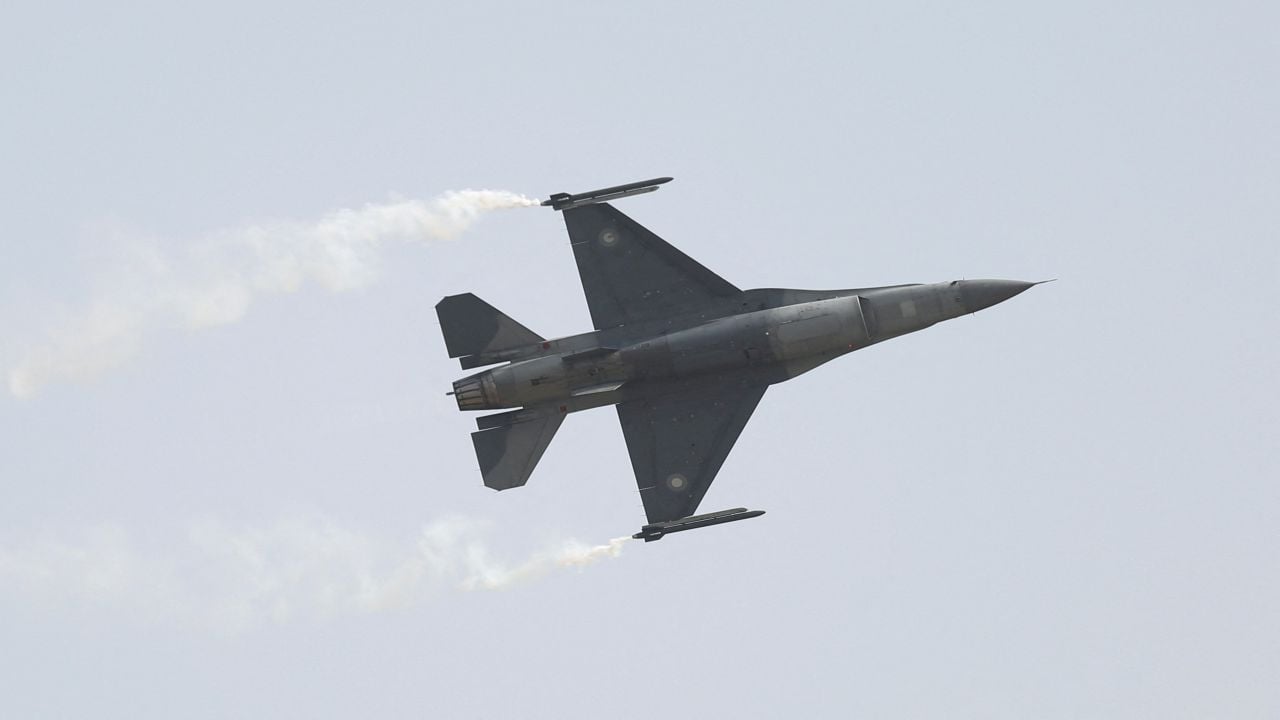
Tariq did not spend his youth studying the intricate sectarian fractures of the Middle East. He learned to fly JF-17 Thunders and F-16s to defend his own borders. Yet, under the terms of a quiet, decades-old understanding, he now finds himself strapped into a cockpit, scanning radar screens over the harsh, unfamiliar terrain of northern Saudi Arabia. Below him lie vital oil installations, desalination plants, and cities that the kingdom fears could become targets for Iranian drones or proxy ballistic missiles.
Every time Tariq takes off, the stakes are staggering. If his radar locks onto an incoming target, a single pull of the trigger could pull Pakistan directly into a war it cannot afford, against a neighbor it cannot escape.
This is the human cost of a financial lifeline. For years, when Pakistan’s foreign reserves plummeted to catastrophic lows, the flight to Riyadh was a well-worn path for Pakistani prime ministers. Saudi Arabia provided billions in deferred oil payments, direct cash deposits, and economic cushions. But that generosity was never a charity. It was a premium paid on a security insurance policy.
Now, with Iran and Saudi Arabia locked in an existential standoff, the premium has come due.
The Border that Bleeds
To the west of Pakistan’s capital lies Balochistan, a vast, arid province that bleeds into Iran. This border is not a neat line on a map. It is a porous, volatile frontier plagued by smugglers, insurgents, and cross-border skirmishes.
When Islamabad made the decision to send thousands of troops across the sea to protect Saudi sovereignty, a collective shudder went through the security apparatus in Balochistan. The math is simple, and terrifying. For every soldier stationed in the Saudi desert, there is one fewer boot on the ground at home. More importantly, the deployment sends a loud, unmistakable message to Tehran: In the grand calculus of Islamic solidarity, we chose them.
The Iranian reaction to this troop movement is rarely broadcast in public statements. Instead, it manifests in the shadows. Intelligence officials know that a disgruntled Iran can easily turn up the heat on Pakistan’s western flank. It takes very little effort for Tehran to look the other way while militant groups cross the border, or to tighten the economic screws on the informal trade that keeps the Balochistan economy alive.
Pakistan is effectively defending a house across the street while its own backyard is being rigged with explosives.
The Ironclad Pact of 1982
This is not the first time Pakistani boots have trodden on Saudi sand. The relationship is governed by a foundational document signed in 1982—a bilateral security protocol that essentially transformed the Pakistani military into the ultimate guarantor of the Saudi royal family's domestic security.
During the Iran-Iraq war in the 1980s, more than 15,000 Pakistani troops were stationed in the kingdom. They were not there to invade; they were there as a shield. The dynamic remains unchanged today. The Pakistani military brings something the Saudi armed forces, despite their glittering, multi-billion-dollar Western weaponry, have historically lacked: battle-hardened operational experience.
Pakistani soldiers have spent the last two decades fighting asymmetric warfare in some of the most unforgiving terrain on earth. They know how to survive. They know how to hold a line. To the Saudi leadership, a Pakistani brigade is not just additional manpower. It is a psychological firewall against chaos.
But history rarely repeats itself without adding new complications. In the 1980s, Pakistan was under the iron fist of a military dictatorship, insulated from public opinion. Today, the country is a hyper-connected, volatile democracy.
The Internal Fracture
Step inside a tea stall in Karachi or a university campus in Lahore, and the cracks in this strategy become glaringly obvious. Pakistan is home to the world’s second-largest Shia Muslim population. For millions of citizens, a war aligned with Saudi Arabia against Shia-majority Iran is not a strategic necessity; it is a sectarian nightmare.
The government in Islamabad must constantly engage in a delicate linguistic dance. They insist that the deployed troops are strictly for "defensive and training purposes." They swear that no Pakistani soldier will ever cross into Yemeni airspace or take part in offensive operations against Iranian soil.
But war is messy. It ignores the neat boundaries drawn by lawyers and diplomats.
If a Saudi airbase housing Pakistani personnel is struck by an Iranian-made missile, the distinction between defense and offense evaporates in a flash of cordite. The pressure on Pakistan to retaliate would be immense. The pressure from the streets at home to withdraw would be equally deafening. It is a trapdoor waiting to spring open.
The Unspoken Equation
Behind the curtain of military movements lies an even darker, unspoken reality. Pakistan is the only Muslim-majority nation with a nuclear arsenal. Saudi Arabia knows this. Iran knows this. The entire world knows this.
While no one is suggesting that Pakistan would deploy strategic weapons to the Gulf, the mere presence of its military creates a nuclear umbrella by proxy. It raises the cost of aggression for Iran. Tehran must now calculate whether an escalation against Saudi targets risks drawing in a nation with a professional standing army of over half a million men and a nuclear triad.
It is a high-stakes poker game played with human lives as the chips.
The economic crisis at home means Pakistan cannot simply say no to its patrons. The country is caught in a cycle of restructuring loans, begging for bailouts, and trying to keep the lights on. In the brutal logic of global power, when you cannot pay your debts with money, you pay with geopolitical alignment. You pay with the physical presence of your young men in foreign deserts.
The deployment continues. The transport planes fly out of airbases in Punjab, loaded with equipment, engineers, and infantrymen. They leave behind families who watch the news with knotted stomachs, wondering if the next escalation in the Gulf will transform their sons from peacekeepers into casualties of a war that belongs to someone else.
As midnight falls over the Gulf, the radar screens in Tariq’s cockpit hum with green light. The horizon is quiet for now. But in this part of the world, peace is just the brief, agonizing silence between explosions.