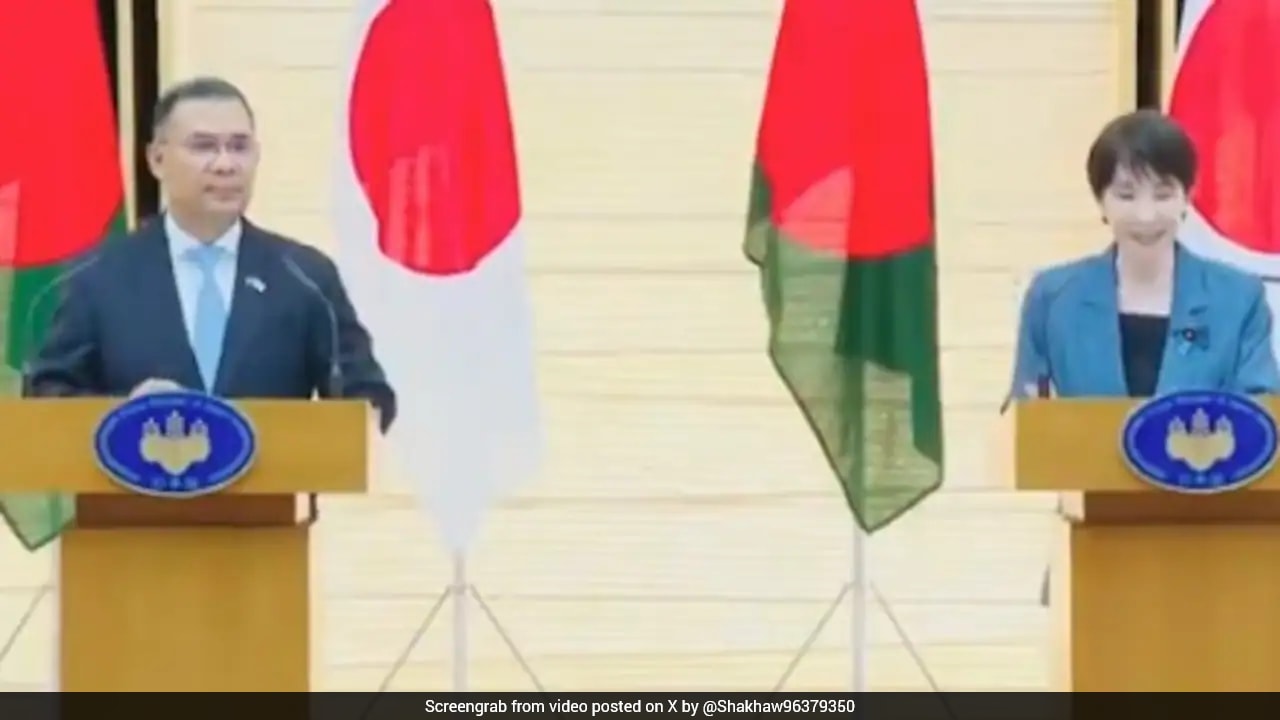
When the Bangladeshi Prime Minister lands in Tokyo to sit across from Japanese Prime Minister Sanae Takaichi with an open invitation for Japanese investors, the diplomatic pageantry masks an urgent economic survival strategy. Bangladesh is confronting a shrinking cushion of foreign exchange reserves, an impending graduation from United Nations Least Developed Country status that threatens its duty-free export privileges, and the lingering structural fallout from domestic political upheaval. Tokyo, meanwhile, is actively seeking reliable manufacturing alternatives outside China while expanding its security and infrastructure footprint across the Bay of Bengal. This summit is not a routine courtesy call; it is a high-stakes bid by Dhaka to trade geopolitical alignment and market access for the hard currency and industrial technology it desperately needs to stabilize its economy.
Most mainstream dispatches treat these bilateral summits as predictable exercises in diplomatic optimism. They dutifully transcribe the joint communiques, highlight the smiles at the Akasaka Palace, and list the usual promises of mutual cooperation. Yet if you spend enough decades tracking capital flows across South and East Asia, you learn to ignore the podium speeches and watch the sovereign debt ledgers instead.
The Structural Trap Behind Dhaka's Tokyo Pitch
Bangladesh spent the better part of fifteen years riding an economic wave built on low-cost garment manufacturing and steady remittance inflows. That model has hit a hard wall. Inflation has eroded domestic purchasing power, energy shortages have intermittently throttled factory output, and the banking sector remains weighed down by staggering volumes of non-performing loans.
When Dhaka approaches Tokyo today, it is negotiating from a position of acute necessity. The country is scheduled to graduate from the UN Least Developed Country category, a milestone that sounds celebratory on paper but carries severe commercial penalties in practice. Once graduation takes effect, Bangladeshi exports will lose automatic tariff-free access to major Western markets, abruptly eroding the razor-thin price advantage that keeps its ready-made garment factories humming.
To survive that cliff, Bangladesh must diversify its export base away from textiles and move up the manufacturing value chain into light engineering, electronics, pharmaceuticals, and agro-processing. Domestic conglomerates lack both the capital reserves and the proprietary technical know-how to execute this transition alone. Foreign direct investment is no longer a supplementary growth driver; it is the sole viable lifeline.
Why Japan Holds the Specific Keys Dhaka Needs
Not all foreign capital carries the same weight in Dhaka. While Chinese state-backed enterprises have poured billions into Bangladeshi bridges, power plants, and tunnels over the past decade, those arrangements have largely taken the form of commercial loans rather than equity investments. Sovereign debt must be repaid in foreign currency regardless of whether the underlying infrastructure generates immediate cash flow.
Japanese engagement operates on a fundamentally different financial architecture. Through the Japan International Cooperation Agency and the Japan Bank for International Cooperation, Tokyo provides ultra-low-interest, long-tenure concessional loans paired with strict technical oversight. More importantly, Japanese private sector investment brings supply chain integration. When a major Japanese manufacturer sets up an assembly plant in South Asia, it brings along a tier-two and tier-three ecosystem of component suppliers, quality control standards, and long-term export off-take agreements.
The centerpiece of this strategy is the Bangabandhu Sheikh Mujib Shilpa Nagar and the dedicated Bangladesh Special Economic Zone at Araihazar, developed directly with Japanese partners. Dhaka's pitch to Prime Minister Takaichi is straightforward: the industrial land is cleared, the utility hookups are being prioritized, and the regulatory red tape is supposedly being cleared away specifically for Japanese corporate tenants.
Sanae Takaichi and the Geopolitical Calculus in Tokyo
Understanding why Sanae Takaichi is receptive to this overture requires looking at Tokyo's own strategic anxieties. As a prominent conservative hawk who has consistently emphasized economic security, supply chain resilience, and countering regional coercion, Takaichi views South Asia through a distinctly geopolitical lens.
For Tokyo, the Bay of Bengal is not an obscure backwater; it is the critical maritime connective tissue linking the Indian Ocean to the Pacific. Under Japan's Free and Open Indo-Pacific framework, ensuring that littoral states like Bangladesh do not fall entirely into Beijing's debt-trap orbit is a core national security objective.
This is where the Bay of Bengal Industrial Growth Belt, known in diplomatic shorthand as the BIG-B initiative, becomes the central chess piece. Conceived years ago to link Dhaka with the coastal belt around Cox's Bazar and Matarbari, BIG-B aims to transform the region into a manufacturing and logistics hub serving both South and Southeast Asia.
The Strategic Value of Matarbari Deep Sea Port
If you want to understand the real substance of the Takaichi-Dhaka talks, look at Matarbari. Located on the southeastern coast of Bangladesh, the Japanese-funded Matarbari Deep Sea Port is designed to accommodate massive container vessels that currently cannot dock at the shallower, chronically congested Chittagong port.
For Japan, Matarbari is far more than a civil engineering project. It is an alternative maritime gateway that bypasses traditional chokepoints and connects directly to landlocked regions in northeastern India, Nepal, and Bhutan. By anchoring the port's construction, financing, and operational management, Tokyo secures long-term strategic leverage over regional trade arteries.
When the Bangladeshi leadership invites Japanese investors to pour money into the country, they are implicitly offering Tokyo deeper operational integration into this coastal corridor. Takaichi's administration recognizes that private Japanese capital will not flow into Bangladesh on goodwill alone; it requires state-backed guarantees, bilateral trade agreements, and firm security assurances.
The Friction Points Nobody Mentions in Press Releases
A veteran analyst looks at the gap between diplomatic intentions and on-the-ground execution. And in Bangladesh, that gap has historically been wide enough to swallow entire investment cycles. While the Bangladeshi Prime Minister can stand in Tokyo and promise a red-carpet welcome, the reality waiting for Japanese executives in Dhaka is notoriously unforgiving.
Consider the currency repatriation bottleneck. Over the past two years, foreign airlines, multinational consumer goods companies, and industrial joint ventures operating in Bangladesh have faced agonizing delays converting local taka earnings into US dollars or Japanese yen to remit dividends back to their parent headquarters. Nothing chills boardroom enthusiasm in Tokyo faster than the prospect of trapped capital.
Bureaucratic Inertia and Customs Nightmares
Japanese corporate culture prizes predictability, regulatory transparency, and strict adherence to timelines. Bangladesh's administrative apparatus frequently delivers the exact opposite.
Foreign investors routinely cite arbitrary tax assessments by the National Board of Revenue, sudden policy reversals on import duties for raw materials, and protracted customs clearance delays at ports as primary deterrents. Even when top political leadership issues directives to fast-track Japanese projects, mid-level bureaucrats often stall implementation unless greased by informal payments or relentless high-level intervention.
For a hypothetical Japanese mid-sized automotive parts manufacturer considering a $50 million plant outside Dhaka, the math becomes precarious. Even if labor costs are a fraction of those in Thailand or Vietnam, a three-week customs delay on imported precision tooling can wipe out an entire quarter's operating margin.
Energy Reliability and Infrastructure Gaps
You cannot run modern automated factories on intermittent power. Despite massive additions to its electricity generation capacity, Bangladesh has struggled with primary fuel shortages—specifically imported liquefied natural gas and coal—due to its foreign exchange crunch. Industrial zones have suffered unscheduled load-shedding, forcing manufacturers to rely on expensive diesel generators that destroy cost competitiveness.
Prime Minister Takaichi's economic advisors are acutely aware of these operational hazards. In bilateral negotiations, Tokyo's demands are rarely limited to polite requests; they involve granular conditions regarding guaranteed gas supply allocations for Japanese economic zones, binding dispute resolution mechanisms, and sweeping tax holidays.
The China Factor and the Quiet Tug-of-War
Dhaka's outreach to Tokyo cannot be separated from its complex balancing act with Beijing. For years, Bangladesh practiced a delicate diplomatic hedge, taking infrastructure loans from China while leaning on Japan for concessional development aid and Western markets for export revenue.
That equilibrium is becoming harder to maintain. China has aggressively lobbied Dhaka to sign a bilateral Free Trade Agreement and to expand Chinese participation in port and telecom infrastructure. However, absorbing massive volumes of Chinese imports under a free trade deal would decimate Bangladesh's fragile domestic manufacturing sector, which cannot compete with subsidized Chinese industrial overcapacity.
Japan offers a cleaner ideological and economic fit. Tokyo does not demand geopolitical subservience, nor does it flood local markets with cheap consumer goods that bankrupt domestic small businesses. Instead, Japanese firms focus on capital-intensive manufacturing, heavy engineering, and infrastructure maintenance.
By elevating ties with Takaichi's government, Dhaka is signaling to both Beijing and Washington that it intends to anchor its industrial modernization to the Japanese model rather than becoming an economic satellite of China.
The Economic Partnership Agreement Endgame
Beneath the headlines about investor invitations lies the most consequential technical negotiation between the two nations: the Japan-Bangladesh Economic Partnership Agreement (EPA).
Because Bangladesh is losing its Least Developed Country trade preferences, securing bilateral trade treaties before the transition deadline is existential. An EPA with Japan would lock in zero-tariff or reduced-tariff access for Bangladeshi garments, leather goods, and agricultural products entering the Japanese market, while lowering barriers for Japanese machinery, electronics, and capital goods entering Bangladesh.
Negotiating an EPA with Tokyo is notoriously rigorous. Japan demands strict compliance with intellectual property protections, labor rights standards, environmental regulations, and rules-of-origin verification. Unlike loose memoranda of understanding that politicians sign for photo opportunities, an EPA is a legally binding treaty that forces domestic regulatory reform.
If the Bangladeshi delegation in Tokyo manages to accelerate the EPA timeline alongside securing fresh commitments from the Japan External Trade Organization (JETRO), the visit will yield tangible structural dividends. If they return only with non-binding pledges of "exploring investment opportunities," the trip will be remembered as an expensive exercise in public relations.
What Japanese Boardrooms Are Actually Watching
In Tokyo's Marunouchi financial district, corporate executives do not make capital allocation decisions based on prime ministerial handshakes. They look at risk-adjusted returns and comparative regional benchmarks.
Right now, Bangladesh is competing directly against Vietnam, India, and Indonesia for the exact same pool of relocating Japanese manufacturing capital. Vietnam already possesses deep supply chain integration, free trade agreements with both the European Union and Japan, and a track record of rapid customs clearance. India offers a massive domestic consumer market and aggressive state-level production-linked incentives.
To beat those competitors, Bangladesh has only one decisive structural advantage: demographic scale combined with low unit labor costs. With a young population exceeding 170 million and a rapidly urbanizing workforce, the country offers a labor pool that aging East Asian economies desperately lack.
Yet cheap labor alone no longer wins high-value investment. Modern Japanese factories require technically trained technicians, reliable port logistics, and digitalized customs networks. Until Dhaka proves it can guarantee dollar repatriation, stabilize its banking sector, and enforce rule-of-law protections for foreign equity holders, Japanese conglomerates will continue to treat Bangladesh as a cautious frontier bet rather than a primary manufacturing hub.
The cameras in Tokyo will capture the formal banquets, the bilateral flags, and the optimistic statements about a shared Asian future. None of that moves a single yen into a Bangladeshi industrial park. The real verdict on this summit will be written six months from now in the quiet boardrooms of Osaka and Nagoya, when Japanese chief financial officers decide whether Dhaka's promises are bankable enough to wire the first tranche of capital.