The warning did not arrive as a quiet memo in a government inbox. It landed with the clinical precision of a threat intelligence briefing. Anthropic's disclosure that an automated influence architecture had been intercepted while scoping Malaysian digital space exposed a raw nerve in Southeast Asian state security. The operation relied on large language models to spin up thousands of synthetic social media profiles and mirror-image news portals designed to sway public sentiment. Yet, focusing solely on the synthetic articles or the automated persona generation misses the structural hazard entirely. The true exposure is not about what artificial intelligence can write. It is about the unvetted, sprawling data pipelines that feed it.
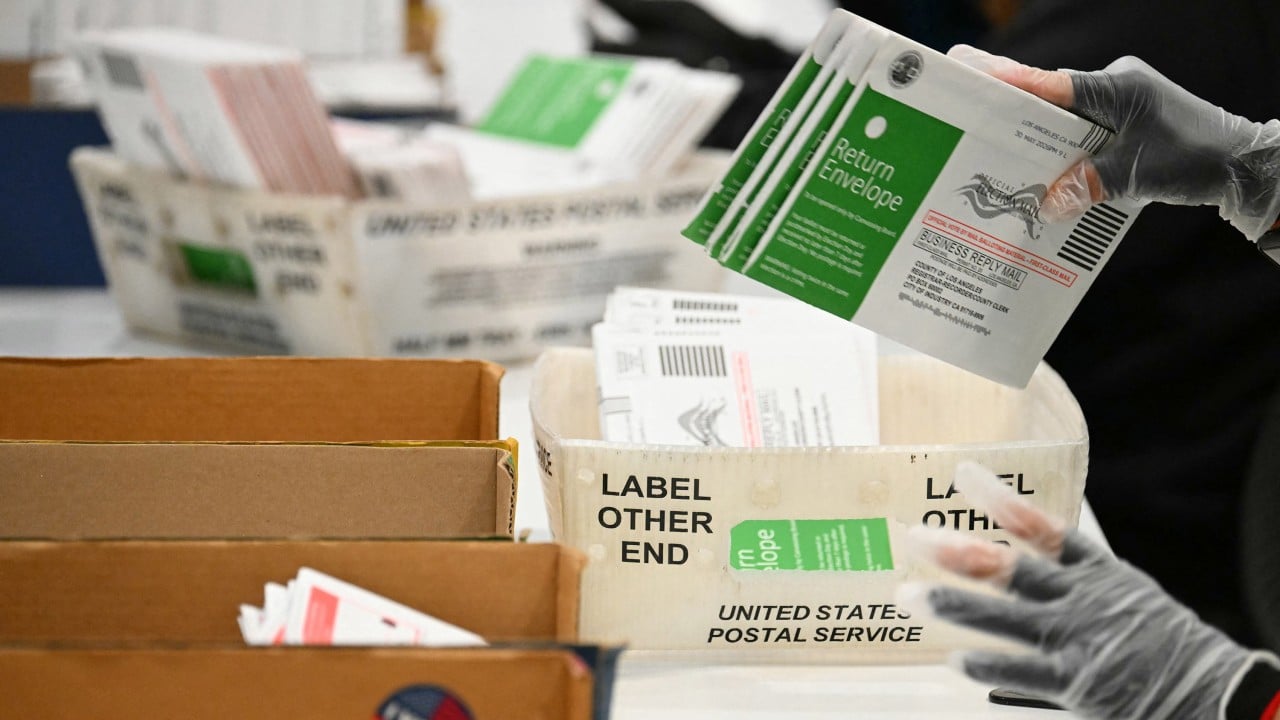
For years, political campaigns across the region treated voter data security as an administrative afterthought. Lists of registered citizens, demographic profiles, and localized voting trends routinely changed hands through loose commercial contractors or sat unprotected on misconfigured cloud servers. When malicious actors or commercial influence firms hook language models into these raw datasets, the nature of political interference transforms. This is no longer about a few low-level operatives manually manufacturing outrage on messaging apps. It is about automated targeting tuned with surgical accuracy to the exact socio-economic and ethnic anxieties of individual constituencies.
Look at the mechanics of how these campaigns operate under the hood. A typical automated influence network does not start by shouting extreme partisan talking points. It begins by mapping the local information ecosystem. By feeding regional news archives, public social media feeds, and proprietary voter registries into an LLM, operators can instantly identify local grievances—be it water scarcity in an industrial belt or housing tensions in a peri-urban district. The model then generates tailored narratives that mimic local vernacular, down to regional slang and political shorthand. To an ordinary voter scrolling through a smartphone on a morning commute, the content looks organic. It carries the linguistic fingerprints of authenticity because the machine learned from the community's own digital exhaust.
The policy response from regulatory bodies has been predictably sluggish. In parliamentary chambers and ministerial offices, the immediate reaction to such disclosures usually triggers a scramble for new takedown protocols and warnings about fake news. Ministers remind citizens to exercise caution online, while communications commissions investigate whether existing laws cover algorithmic manipulation. But this defensive posture misunderstands the adversary. Traditional content moderation is designed to catch a lie after it is posted. Automated influence operations operate at a volume and velocity that makes reactive moderation obsolete. By the time a regulatory agency verifies that a network of thousands of accounts is synthetic, the narrative has already mutated, jumped platforms, and saturated chat groups where encryption shields it from scrutiny.
Worse still is the legal vacuum surrounding data provenance. When security researchers trace these operations, they repeatedly hit a wall of jurisdictional ambiguity. A shell company registered in one jurisdiction can contract software services from another, deploying infrastructure across cloud providers located in third-party nations to target voters in Malaysia. Domestic statutes built to penalize defamation or traditional election offenses struggle to reach across borders to hold offshore technology operators accountable. More fundamentally, authorities often cannot answer the most basic question when an incident breaks: exactly how did foreign-linked platforms acquire the granular citizen data used to calibrate their models?
This brings us to the core vulnerability that few officials are willing to address publicly. The expansion of digital governance, national identity databases, and online citizen portals has created massive repositories of high-value personal information. Every time a government or a commercial vendor digitizes public interaction without enforcing strict cryptographic boundaries and access audits, they build a library for future manipulators. An influence machine is only as dangerous as the data it consumes. If an adversary can scrape or acquire voter registries, consumer habits, and demographic clustering data, the language model becomes an engine for behavioral engineering.
Addressing this threat requires abandoning the comforting illusion that election security can be solved by monitoring social media feeds for bad grammar or obvious deepfakes. True resilience demands treating data protection as national security infrastructure. That means placing strict limits on how political parties and third-party vendors collect, store, and cross-reference voter information. It means imposing heavy, non-negotiable penalties on data leakage, regardless of whether the breach came from a negligent vendor or a malicious cyber intrusion.
Until the state treats the security of underlying data registries with the same gravity it affords physical border defense, technological countermeasures will remain little more than security theater. The algorithms will continue to evolve, finding new ways to slip past the perimeter, weaponizing the very openness that democratic societies claim to cherish.