When Washington released its latest presidential determination naming India among twenty-three major drug transit or illicit drug-producing countries, the headline appeared to capture a contradiction. How could a nation subjected to an official US narcotics watchlist simultaneously receive explicit praise from the White House for its aggressive crackdowns on opium cultivation? To understand this friction, one must look past the superficial shock value of geopolitical designations and examine the structural realities of global trade corridors, pharmaceutical manufacturing hubs, and the pragmatic requirements of modern statecraft.
The primary driver behind India's inclusion on the transit list is not active government complicity in the narcotics trade, but rather geography, commerce, and industrial scale. Positioned tightly between the historic opium production zones of the Golden Crescent and the lucrative markets of the West, the Indian subcontinent naturally serves as a high-volume corridor for international shipping. Furthermore, India stands as a global powerhouse in generic pharmaceutical manufacturing and chemical synthesis. These massive legitimate production capacities, while vital for global healthcare, inherently generate vulnerabilities. Precursor chemicals utilized in legal medicine can occasionally be diverted by transnational smuggling syndicates into the illicit fabrication of synthetic narcotics. Washington's statutory framework mandates that any nation meeting these geographical and commercial criteria be flagged, regardless of how aggressively its domestic law enforcement agencies operate. You might also find this similar story insightful: When the Lights Go Out Without a Shot.
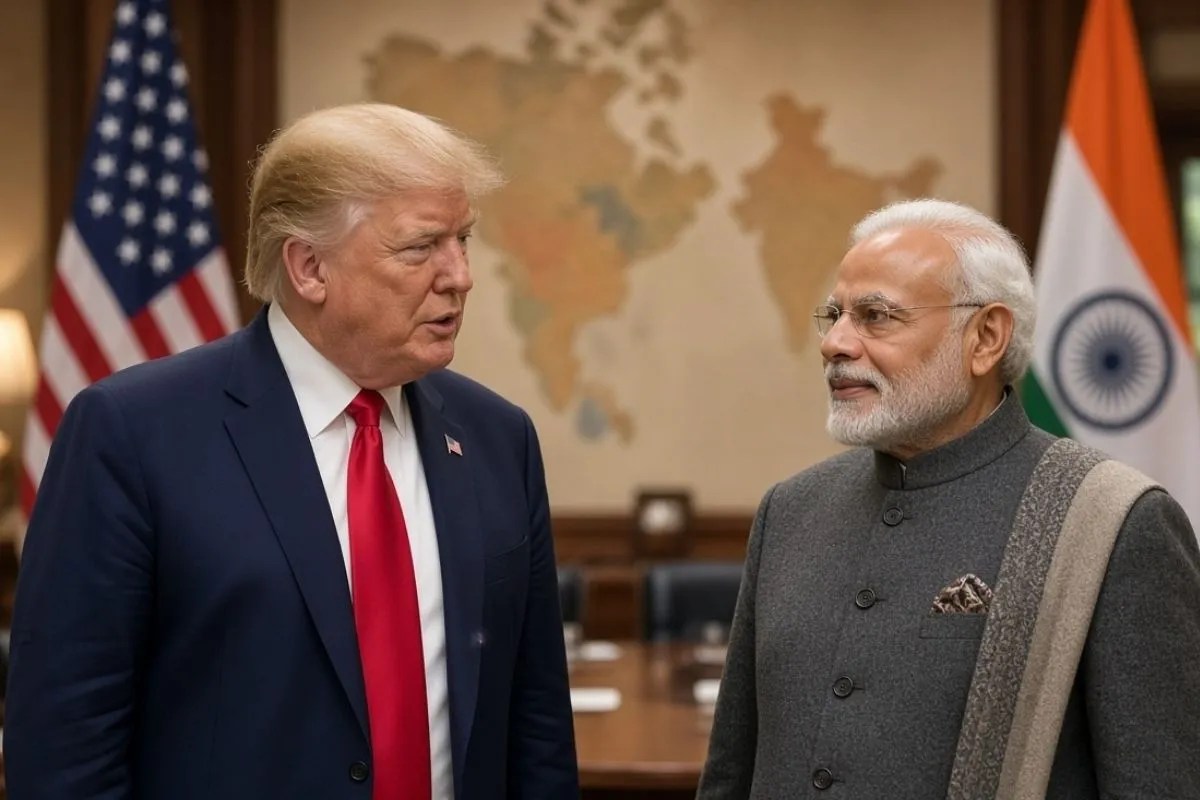
The simultaneous praise heaped upon Prime Minister Narendra Modi’s administration by the White House highlights a critical distinction recognized by foreign policy analysts. Designation on the transit list is an administrative categorization rooted in objective commercial and geographic factors rather than a punitive indictment of state failure. Successive reports from the US administration have repeatedly acknowledged that a government can execute diligent, aggressive narcotics control measures and still land on the statutory list simply due to the sheer volume of legitimate trade passing through its borders.
By contrast, Washington's tone toward other regional actors demonstrates a stark divide. While nations like Afghanistan, Bolivia, Burma, and Colombia faced severe rebukes for being demonstrably failing states in narcotics suppression, India's targeted efforts to curb illicit opium poppy cultivation and tighten supply chain integrity drew official commendation. Concurrently, the White House directed its harshest rhetorical fire elsewhere, identifying nations like China as the primary global origin points for the precursor chemicals that fuel the international synthetic fentanyl crisis. As highlighted in latest reports by TIME, the effects are significant.
For New Delhi, navigating this bureaucratic labeling requires a balance between national sovereignty and strategic alignment with Western intelligence agencies. The Narcotics Control Bureau of India has steadily increased joint operations, sharing actionable intelligence with international counterparts to dismantle cross-border drug syndicates. Yet, the sheer porosity of maritime trade routes and the complexity of monitoring thousands of chemical manufacturing units mean that complete isolation from transit risks remains mathematically impossible.
Ultimately, the designation functions less as a diplomatic reprimand and more as a reflection of the complicated mechanics of global trade. As transnational cartels continuously adapt their smuggling vectors through South Asia, the partnership between Washington and New Delhi will rely heavily on shared intelligence and synchronized regulatory enforcement rather than static diplomatic labels.
The underlying vulnerability of global supply chains persists, ensuring that the friction between massive industrial output and illicit diversion will remain a central challenge for international security analysts for years to come.
This video provides additional context regarding how the United States balances geopolitical diplomacy with official narcotics designations concerning India and other regional players.